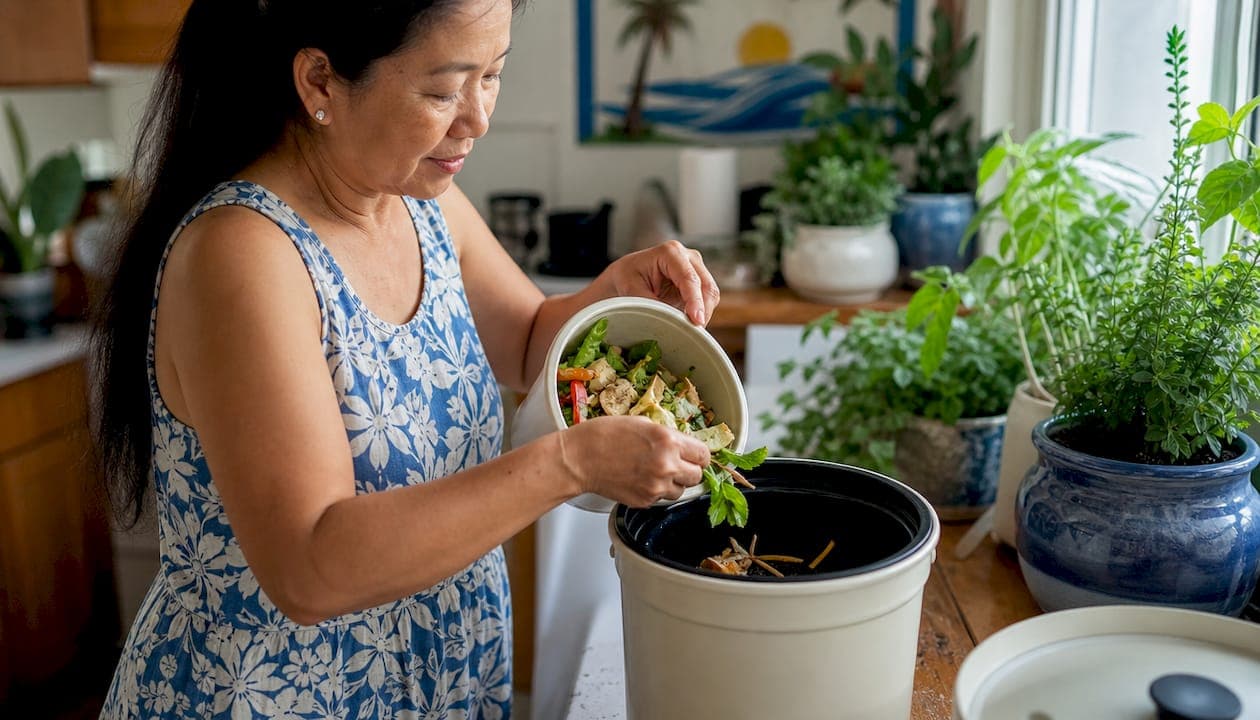
The big island composting travel lifestyle is the practice of managing organic waste sustainably while visiting Hawaii by applying tropical composting principles and respecting local guidelines. The Big Island's volcanic soil, limited landfill capacity, and rich biodiversity make responsible waste management more than a personal choice. It's a direct contribution to the health of the land you're visiting. Whether you're staying for a long weekend or a full two weeks, you can compost effectively here with the right tools, a clear understanding of local rules, and a willingness to engage with the island's eco-conscious community.
What are the essentials for composting while traveling on the Big Island?
Composting while traveling on the Big Island starts with the right container. A countertop compost crock with a ventilated lid handles daily kitchen scraps without odor buildup. For longer stays or farm-style accommodations, a small outdoor bin with drainage holes works better for the volume of tropical fruit waste you'll generate.
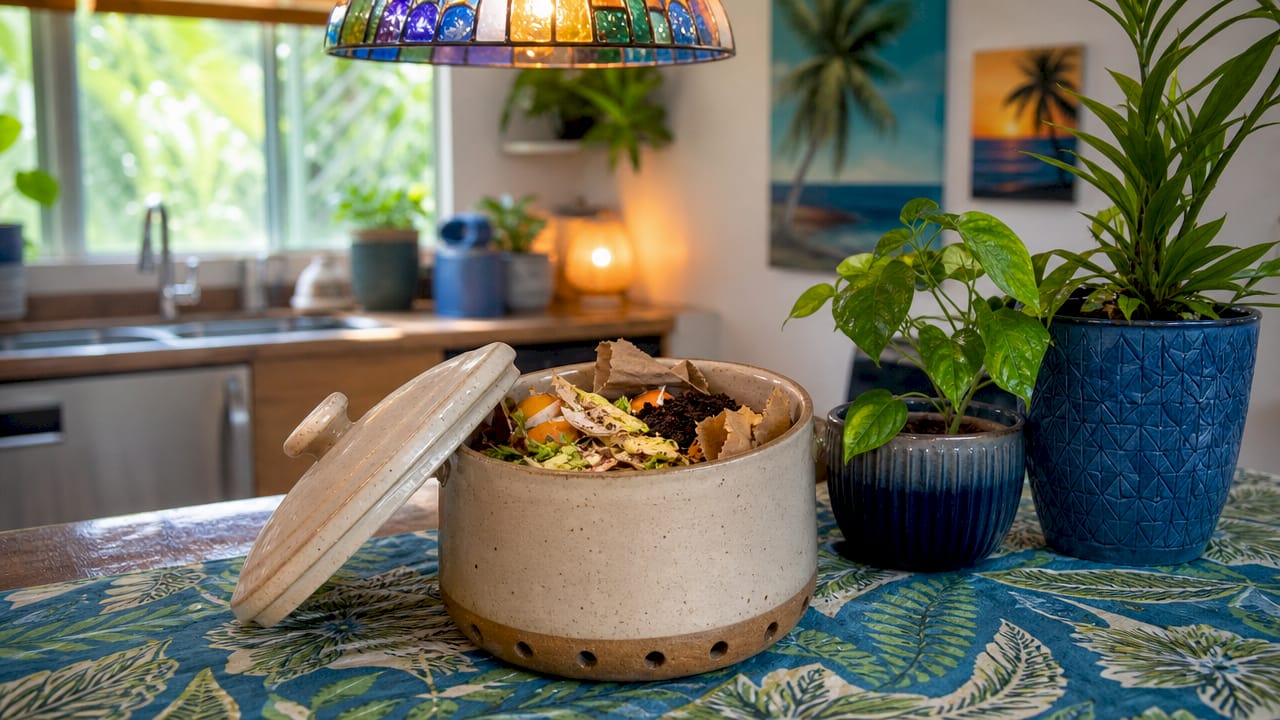
Backyard composting in Hawaii produces nutrient-rich compost in 3–6 months when managed with a 1:3 green to brown ratio. That ratio matters even on short trips. Too many greens (fruit peels, vegetable scraps) without enough browns (dry leaves, cardboard) creates a wet, smelly pile fast in Hawaii's heat.
| Tool | Best for | Pros | Cons |
|---|---|---|---|
| Countertop compost crock | Short stays, rentals | Compact, odor-controlled | Fills quickly with tropical fruit |
| Small outdoor bin | Stays of 5+ days | Higher capacity, natural aeration | Needs shade placement |
| Bokashi system | Rentals with no outdoor space | Discreet, handles cooked food | Requires bokashi bran |
| Worm bin (vermicomposting) | Eco-lodges, farm stays | Rich output, low odor | Sensitive to heat and moisture |
Sourcing brown materials as a tourist is the most common challenge. Ask your host for dry cardboard boxes, newspaper, or yard waste clippings. Most accommodations on the Big Island have yard trimmings available. Torn cardboard breaks down quickly and balances the high moisture content of tropical fruit scraps like mango and papaya.
Pro Tip: Before you unpack, check whether your accommodation has a compost bin or crock already set up. If not, a small paper bag lined with dry leaves works as a temporary collection vessel until you can source a proper container locally.
How can travelers manage organic waste responsibly given Hawaii's local rules?
Hawaii's composting rules are specific, and getting them wrong contaminates entire batches of community compost. The most critical rule: no plastics of any kind, including items labeled "compostable" or "biodegradable." Hawaii's G.R.O.W. program launched in april 2026 with a clear message: "If it didn't grow, don't put it in the green cart." That rule applies to travelers just as much as residents.
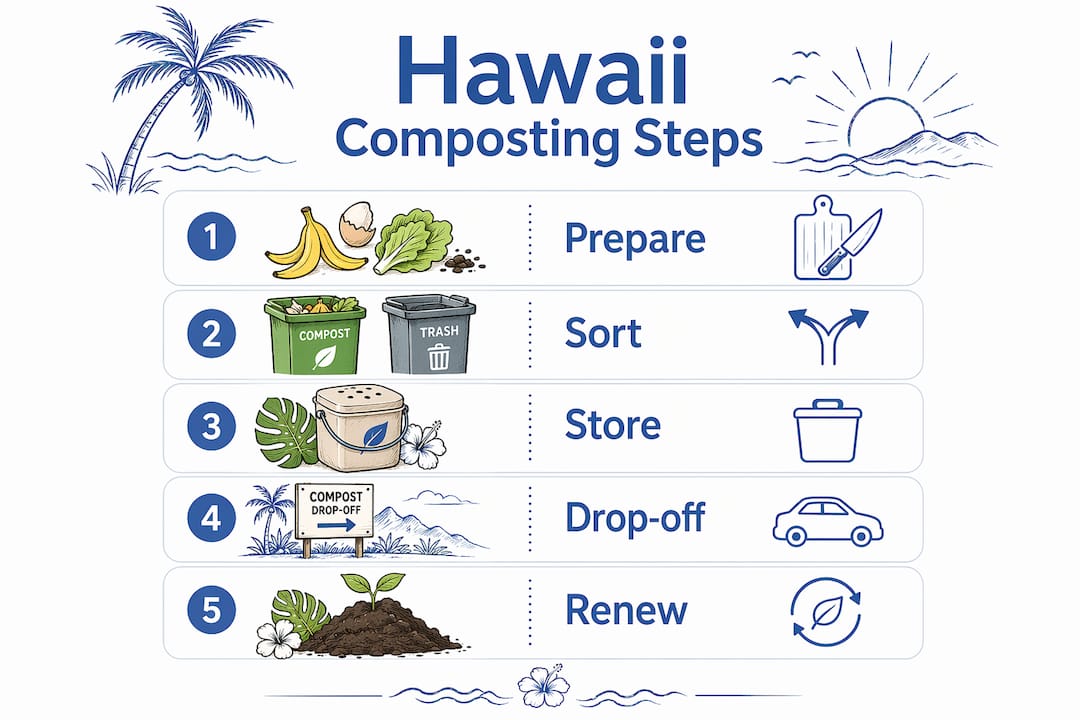
The G.R.O.W. program accepts a wide range of organic materials but draws a hard line at synthetic items. Compostable-branded plastics are a frequent source of contamination because travelers assume the label makes them acceptable. It does not. Compostable plastics are noncompliant with local systems and must go in the regular trash.
Here's a clear breakdown of what you can and cannot compost on the Big Island:
Do compost:
- Fruit and vegetable scraps (including tropical fruits like mango, papaya, and banana peels)
- Coffee grounds and paper filters
- Eggshells
- Dry leaves, grass clippings, and yard waste
- Plain cardboard and newspaper (no glossy coatings)
- Tea bags (paper only, no staples)
Do not compost:
- Any plastic, even if labeled compostable or biodegradable
- Meat, fish, or dairy products (unless using a bokashi system)
- Oily or heavily seasoned food
- Pet waste
- Treated wood or glossy paper
Pro Tip: Call or email your accommodation before arrival and ask directly: "Do you have a compost bin or access to a community composting drop-off?" This one question saves you from scrambling on arrival and helps you pack the right supplies.
Community programs like Honolulu G.R.O.W. give travelers a legitimate off-site disposal option when on-site composting is not available. If your rental lacks infrastructure, collect scraps in a sealed container and drop them at a participating facility. Local farmers' markets and community gardens sometimes accept organic waste too. Ask around at the market in Captain Cook or Kealakekua.
What composting methods work best in Hawaii's tropical climate?
Hawaii's climate is not like anywhere else you've composted before. High humidity and consistent warmth accelerate decomposition, which sounds ideal. The problem is that the same conditions also accelerate odor, pest activity, and anaerobic breakdown if you don't manage your pile carefully.
Shade, airflow, and moisture control
Shade placement is non-negotiable for outdoor bins. Direct sun in Hawaii's climate overheats worm bins and kills the microbes doing the work. Tropical vermicomposting requires shaded, ventilated, and well-drained bins to prevent overheating and moisture buildup. Place your bin under a tree, on a covered lanai, or against a shaded wall. Turn the pile every few days to introduce oxygen and prevent the anaerobic conditions that cause foul smells.
Managing fibrous tropical fruit waste
Mangoes, papayas, and pineapples produce fibrous waste requiring frequent bin emptying. A countertop crock fills in two days during mango season. Chop fruit scraps into smaller pieces before adding them. This speeds breakdown and reduces the chance of fruit fly infestations. Dry leaves and cardboard serve as the best carbon sources to balance the moisture load from tropical fruit.
Bokashi as a travel-friendly alternative
Bokashi fermentation is the most practical system for travelers staying in rentals. A small bokashi bucket with an airtight lid handles cooked food, meat scraps, and citrus that traditional compost bins reject. Bokashi systems are ideal for rentals with limited space and produce a pre-compost liquid that local gardens welcome. You can find bokashi bran at health food stores in Kona and Hilo.
Pro Tip: If your worm bin smells sour or attracts flies, add a thick layer of dry cardboard on top immediately. This cuts off oxygen to pests and rebalances the carbon-to-nitrogen ratio within 24–48 hours.
How to incorporate composting into a sustainable travel lifestyle on the Big Island?
Composting is one piece of a larger picture. Sustainable travel involves comprehensive impact reduction, and composting works best when paired with other green habits. Eco-conscious travelers who compost but ignore water use, single-use plastics, or local food sourcing miss much of the benefit.
Start with your accommodation choice. Farm stays and eco-lodges on the Big Island offer composting infrastructure for guests, with stays of 7–10 days giving you the most meaningful sustainable impact. These properties often have established compost systems, on-site gardens that use the finished compost, and staff who can guide you through local practices. Luanainn, perched in the foothills of Mauna Loa overlooking Kealakekua Bay, sits in exactly the kind of setting where this lifestyle clicks into place naturally.
Pair composting with these habits for a genuinely low-impact stay:
- Bring a reusable water bottle and refill it. Hawaii's tap water is safe and clean in most areas.
- Shop at local farmers' markets in Kealakekua and Captain Cook to reduce packaging waste and support local growers.
- Choose reef-safe sunscreen to protect the marine ecosystems you'll snorkel through.
- Walk or bike to nearby spots when possible. The Kona coast has several areas accessible without a car.
- Eat at locally owned restaurants that source ingredients from island farms.
A 7–10 day stay gives you enough time to establish a composting rhythm, engage with local community programs, and actually see the results of your efforts. Shorter trips still make a difference, but the habits stick better with more time. Check out Big Island eco adventures that pair well with a zero-waste mindset, from tide pool exploration to cultural sites that reward slow, respectful travel.
Key Takeaways
The most effective approach to Big Island composting travel is combining the 1:3 green to brown ratio, strict plastic exclusion, and shade-managed bins suited to Hawaii's tropical heat and humidity.
| Point | Details |
|---|---|
| Use the 1:3 green to brown ratio | Balance fruit scraps with dry cardboard or leaves to prevent odor and pests. |
| No plastics in any compost stream | Compostable-labeled plastics are banned from Hawaii's G.R.O.W. program and local compost systems. |
| Choose shade for all outdoor bins | Direct sun overheats worm bins and kills beneficial microbes in Hawaii's climate. |
| Bokashi works best for rentals | Airtight bokashi systems handle cooked food and fit small spaces without outdoor access. |
| Pair composting with broader habits | Sustainable travel on the Big Island requires reducing water use, supporting local businesses, and minimizing plastic alongside composting. |
What I've learned from composting on the Big Island
The first time I tried composting during a stay on the Big Island, I underestimated how fast a tropical climate moves. Back home, a compost pile takes weeks to show real activity. Here, you get results in days. You also get fruit flies in days if you're not careful.
The biggest lesson I took away was this: brown materials are your best friend, and they're harder to find than you'd think as a visitor. I ended up asking the property host for cardboard boxes from their last grocery delivery. It worked perfectly. That small conversation also opened up a longer talk about the property's composting setup, which I never would have known about otherwise. Ask. Hosts who care about sustainability love that question.
I've also seen travelers get frustrated when they realize their "compostable" takeout containers can't go in the green cart. Hawaii's rules feel strict until you understand why. Plastic fragments in finished compost contaminate soil and eventually reach the ocean. On an island with no room for error, that matters more than anywhere else.
My honest advice: don't wait until you arrive to figure this out. Pack a small bokashi bucket or a compost crock with a lid. Research the G.R.O.W. program or your local drop-off before you land. And give yourself permission to be imperfect. Composting while traveling is not about doing it flawlessly. It's about doing it at all.
— Nicole
Luanainn: a home base for eco-conscious travelers
Luanainn sits on Napo'opo'o Road in the foothills of Mauna Loa, overlooking Kealakekua Bay. The setting makes it a natural fit for travelers who want their stay to reflect their values. You can gaze at pastel sunrises over the mountain, watch the light shift across the bay at sunset, and know that the place you're sleeping in takes the land seriously.

Luanainn supports eco-conscious guests with accommodations designed around comfort and connection to the natural environment. The location puts you close to local farmers' markets, community composting resources, and the kind of slow, respectful travel that actually leaves the island better than you found it. Check out the sustainable stay options at Luanainn and see which room fits your green travel goals. You can also browse vacation packages built around the Big Island experience.
FAQ
What is the green to brown ratio for composting in Hawaii?
The recommended ratio is 1 part green material to 3 parts brown material. This balance prevents excess moisture and odor in Hawaii's humid tropical climate.
Can I use compostable plastic bags in Hawaii's compost bins?
No. Hawaii's G.R.O.W. program and most local compost systems ban all plastics, including items labeled compostable or biodegradable. Place these in the regular trash.
What composting method works best for short-term rentals on the Big Island?
A bokashi fermentation system works best for rentals. It fits small spaces, handles cooked food and citrus, and produces no odor when sealed correctly.
Where can I drop off compost scraps if my accommodation has no bin?
Community programs like Honolulu G.R.O.W. offer organic waste drop-off options. Local farmers' markets and community gardens on the Big Island sometimes accept food scraps as well.
How long does composting take in Hawaii's tropical climate?
With proper aeration and a 1:3 green to brown ratio, backyard composting in Hawaii produces finished compost in 3–6 months. The warm, humid climate speeds up decomposition compared to mainland conditions.