
Hawaii cultural etiquette is defined as the set of customs, legal obligations, and community values that govern respectful behavior on the islands. Getting this right matters more than most travelers expect. The Aloha Spirit is codified in Hawaii law under HRS §5-7.5, establishing kindness, humility, unity, and patience as guiding values. That is not a slogan on a postcard. It is a legal framework. Beyond social customs, Hawaii enforces strict protections for wildlife and sacred sites, with fines that can reach tens of thousands of dollars. This guide gives you the practical knowledge to visit with genuine respect.
What does the Hawaii cultural etiquette travel guide cover?
Visiting Hawaii well means understanding the customs that shape daily life here. These are not formalities. They reflect a living culture tied deeply to the land, or ʻāina, and to the people who have called these islands home for generations.
Language and greetings
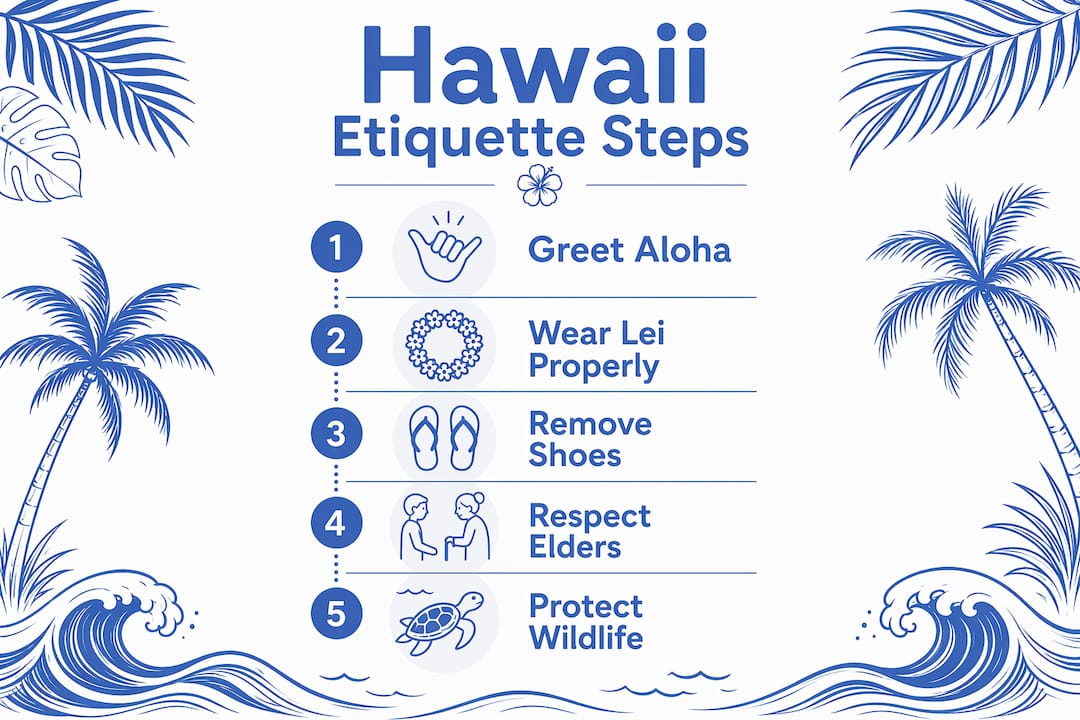
"Aloha" means far more than hello or goodbye. It carries love, peace, and compassion in a single word. Use it genuinely, not as a tourist reflex. "Mahalo" means thank you, and locals notice when visitors use it with sincerity. The shaka gesture, a hand signal with the thumb and pinky extended, signals warmth and goodwill. Throw one back when a driver lets you merge. It goes a long way.
Lei etiquette
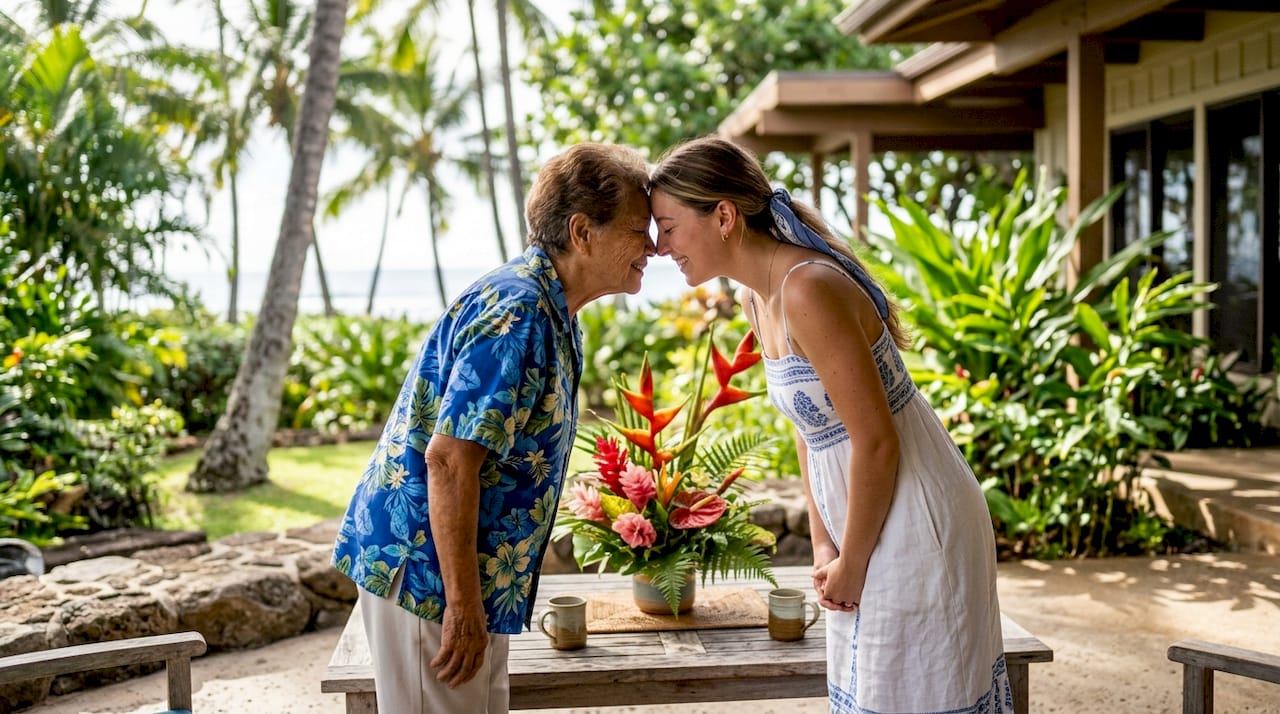
Receiving a lei is an honor. Accept it graciously, wear it draped evenly over both shoulders, and never remove it in front of the person who gave it to you. Removing a lei in front of the giver signals rejection. If you are pregnant and receive a lei, tradition calls for an open-ended lei, symbolizing an unobstructed path for the baby. That detail reflects how deeply gift-giving is woven into Hawaiian cultural meaning.
Removing your shoes
Taking off shoes before entering a home is a universal custom in Hawaii, rooted in plantation-era Asian traditions brought by immigrant communities. Many local businesses follow the same practice. If you see a row of shoes at the door, that is your cue. Do not wait to be asked.
Respecting elders and island time
Kupuna, or elders, hold a position of deep respect in Hawaiian communities. Greet them first, speak with patience, and listen more than you talk. Hawaii also runs on "island time," a relaxed pace that locals embrace without apology. Rushing, demanding faster service, or acting entitled marks you immediately as someone who does not understand the culture.
Pro Tip: If a local interaction feels slow by mainland standards, treat it as an invitation to be present. Breathe. Look around. That is the point.
How should you protect Hawaii's wildlife and natural environment?
Hawaii's natural environment carries the same cultural weight as its temples and traditions. Federal and state laws back that up with serious consequences for violations.
Sea turtles and monk seals
Harassing or touching Hawaiian green sea turtles is illegal under the federal Endangered Species Act and carries fines up to $25,000. Stay at least 10 feet away at all times. The honu, or green sea turtle, is considered a guardian spirit in Hawaiian culture. Treat it accordingly.
Hawaiian monk seals carry even stricter protections. Federal fines can reach $50,000 with potential jail time for violations. Maintain a minimum 50-foot distance, and move further back if a seal shows signs of stress. These animals are critically endangered, and every interaction matters.
Reef-safe sunscreen is the law
Hawaiʻi Act 104 bans sunscreens containing oxybenzone and octinoxate. The law took effect in 2021. Only mineral-based, reef-safe sunscreens are permitted. This is not a suggestion. Retailers on the islands stock compliant options, and you can bring your own from home. Coral reefs support the entire marine ecosystem that makes Hawaii's waters worth entering.
Trails, stones, and sacred land
Stay on marked trails. Do not remove stones, sand, or plants from natural or sacred sites. Locals take this seriously, and so does the law. Kapu signs mark areas that are off-limits, and ignoring them can result in fines and real harm to the community. Visitors often underestimate the legal weight behind kapu signs and the cultural damage that comes from ignoring them.
- Keep 10 feet from green sea turtles at all times
- Keep 50 feet or more from Hawaiian monk seals
- Use only mineral-based, reef-safe sunscreen
- Stay on marked trails and obey all kapu signs
- Never remove stones, sand, or natural materials from any site
What is the proper etiquette at Hawaiian sacred sites?
Heiau are ancient Hawaiian temples, and they are not ruins. They are living sacred sites. Heiau are legally protected under Hawaii Revised Statutes §711-1107, and damaging or desecrating them is a criminal offense. That legal status reflects a cultural reality: these places are still active in the spiritual life of Hawaiian communities.
Treating a heiau as a photo opportunity rather than a sacred space is one of the most common and most harmful mistakes visitors make. The structures are fragile, the ground is consecrated, and the community that maintains these sites deserves your full respect.
How to behave at a heiau
When you visit a heiau, stay quiet and stay on the path. Do not touch any structures. Do not remove stones, even small ones. The act of taking a stone from a sacred site is considered deeply disrespectful and, in many cases, illegal. If a cultural practitioner is present, greet them respectfully and follow their lead without question.
Photography at cultural sites and ceremonies
Always ask permission before photographing cultural practices or people at sacred sites. If you are attending a ceremony, put the camera away unless you are explicitly told photography is welcome. The Pono principle, which centers integrity and balance, offers a useful guide here. Ask yourself whether taking a photo serves respect or convenience. If the answer is convenience, put the camera down.
- Stay quiet and on designated paths at heiau
- Never touch structures or remove any materials
- Ask permission before photographing people or ceremonies
- Follow the lead of any cultural practitioners present
- Treat kapu signs as firm boundaries, not suggestions
How can you be a respectful visitor in everyday situations?
Respect in Hawaii is not limited to sacred sites and wildlife zones. It shows up in how you drive, shop, talk, and move through communities every day.
-
Slow down and be present. Hawaii is not a theme park. Locals stress this point directly. Rushing from one attraction to the next, treating every beach as a backdrop for content, and ignoring the people around you signals entitlement. Slow down. Notice where you are.
-
Support local businesses. Choosing a family-owned restaurant over a chain, buying from a local market, or booking with a small accommodation keeps money in the community and supports cultural preservation. The Luanainn approach to hosting reflects exactly this value: small, personal, and rooted in place.
-
Learn basic Hawaiian pronunciation. Using local language basics correctly shows respect for the history and meaning of places. The okina (ʻ) and kahako (macron) in Hawaiian words change pronunciation and meaning. Saying "Haleakalā" correctly is a small act that locals notice and appreciate.
-
Use the mahalo wave while driving. Hawaii's driving etiquette features the mahalo wave instead of honking. Using your horn casually is considered rude and marks you as an outsider immediately. When someone lets you in, raise a hand in thanks.
-
Leave places better than you found them. Pick up trash, even if it is not yours. Do not leave anything behind at beaches, trails, or parks. This practice aligns with the Hawaiian value of mālama ʻāina, caring for the land.
Pro Tip: Exploring one island deeply rather than island hopping gives you more cultural engagement and far less travel stress. Choose one place and really settle into it.
Key Takeaways
Respectful travel in Hawaii requires following both legally mandated rules and deeply rooted cultural customs that protect the land, wildlife, and community.
| Point | Details |
|---|---|
| Aloha Spirit is law | HRS §5-7.5 codifies kindness, humility, and patience as guiding values for all in Hawaii. |
| Wildlife laws carry real penalties | Fines reach $25,000 for turtle violations and $50,000 for monk seal offenses. |
| Reef-safe sunscreen is required | Hawaiʻi Act 104 bans oxybenzone and octinoxate; use mineral-based sunscreen only. |
| Sacred sites demand full respect | Heiau are legally protected; stay on paths, stay quiet, and never remove stones. |
| Slow down and support locals | Embrace island time, shop local, and use the mahalo wave instead of honking. |
What I have learned about practicing aloha as a real value
The biggest mistake I see visitors make is treating aloha as atmosphere rather than obligation. Hawaii law actually codifies it, which tells you something important: this is not a mood. It is a standard of behavior that the community holds seriously.
Entitlement is the fastest way to damage your experience and your relationship with the people around you. Visitors who rush, demand, and ignore local cues do not just offend. They close doors. The locals who would have shared a story, pointed you to a hidden beach, or invited you to a family gathering simply step back.
My honest advice is to choose one island and stay long enough to feel its rhythm. The Big Island, where Luanainn sits above Kealakekua Bay with views that shift from sunrise to sunset, rewards that kind of patience. You stop being a tourist passing through and start being a guest worth knowing.
Humility is the real entry point to Hawaiian culture. Come with curiosity, not a checklist. The experience you get back will be worth far more than any itinerary you planned.
— Nicole
A base that respects the culture you came to experience
Choosing where you stay shapes how you travel. Luanainn, perched in the foothills of Mauna Loa and overlooking Kealakekua Bay, offers the kind of quiet, grounded experience that aligns with everything this guide covers.
The inn sits on Napoʻopoʻo Road, where sunsets shift color every evening and mornings open with pastel light over the mountain. Staying here means supporting a small, locally rooted property rather than a large chain. You can browse the room options to find the right fit, or check the vacation packages for curated stays that make the most of the Big Island. Luanainn is the kind of place that makes slowing down feel natural.
FAQ
What is the Aloha Spirit law in Hawaii?
The Aloha Spirit is codified in Hawaii law under HRS §5-7.5, defining values of kindness, humility, unity, agreeableness, and patience as guiding principles for behavior in the state.
How close can you get to sea turtles in Hawaii?
Stay at least 10 feet from Hawaiian green sea turtles at all times. Getting closer or touching them violates the federal Endangered Species Act and can result in fines up to $25,000.
Is it illegal to use regular sunscreen in Hawaii?
Yes. Hawaiʻi Act 104 bans sunscreens containing oxybenzone and octinoxate. Only mineral-based, reef-safe sunscreens are legally permitted in Hawaii.
What should you do when you receive a lei?
Accept the lei graciously, wear it draped evenly over both shoulders, and never remove it in front of the giver. Removing a lei in the giver's presence signals rejection and disrespect.
What does kapu mean and why does it matter?
Kapu means forbidden or sacred. Kapu signs mark protected or restricted areas at natural and cultural sites. Ignoring them can result in legal fines and causes real harm to Hawaiian communities and sacred spaces.