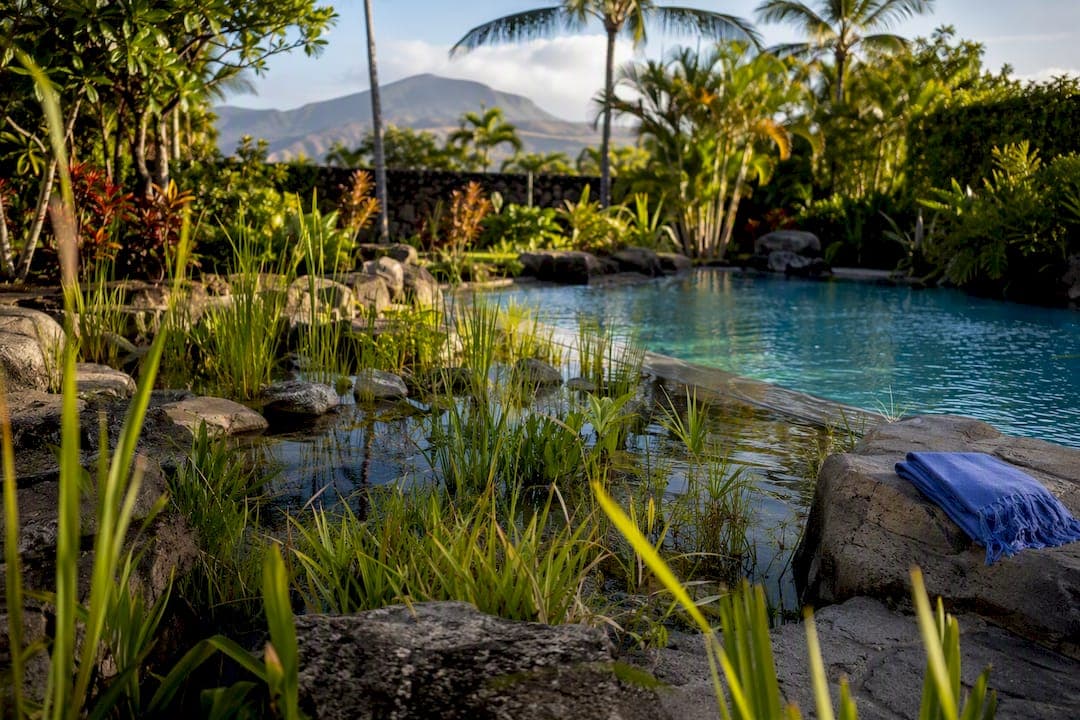
A natural swimming pool is a contained backyard water feature that stays clean through plants, gravel, and microbes instead of chlorine or ozone. It works, and thousands of homeowners across Europe and the U.S. swim in one every summer. The trade-offs are real, though: you need more space than a standard pool, a bit more hands-on care, and a willingness to let the water look a little more like a pond than a hotel pool.
TL;DR:
- Regeneration zones typically require 30 to 70 percent of the pool area, making biofilm systems more space-efficient for small yards.
- Biofilm filter pools tend to produce clearer water at a lower cost and footprint compared to traditional planted regeneration zone systems.
- Regular maintenance includes weekly debris removal, monthly water testing, and seasonal plant management to keep biological systems balanced.
- Costs vary widely, with DIY builds being cheaper, while professional biofilm pools are often less expensive than large planted options; permits may add time and expense.
- Biological filtration reduces chemical usage but requires diligent operation, testing, and habits like showering before swimming to prevent pathogen risks.
Table of Contents
- What Is a Natural Swimming Pool and How Does It Work?
- Regeneration Zones vs. Biofilm Systems: Which Fits Your Yard?
- How Do You Design and Size a Natural Pool?
- Is a Chemical-Free Pool Safe to Swim In?
- What Does a Natural Pool Cost, and How Long Does It Take?
- Natural Pool Maintenance: A Season-by-Season Checklist
- Should You DIY Your Natural Pool or Hire a Builder?
- What Does a Real Chlorine-Free Pool Look Like Day to Day?
- Is a Natural Pool Right for Your Yard?
- Want to See a Chemical-Free Pool in Action Before You Build One?
- Sources
What Is a Natural Swimming Pool and How Does It Work?
Think of it as a small, private wetland you can swim in. Water stays contained in a lined vessel, and instead of being dosed with chemicals, it gets pushed through a regeneration zone or an engineered biofilter where plants, gravel, and bacteria strip out nutrients before the water cycles back to the swimming area.
The system depends on a few moving parts working together:
- Plants and root systems pull nitrogen and phosphorus out of the water, starving algae of the food it needs to bloom.
- Biofilm (a living layer of bacteria on gravel or filter media) breaks down organic waste and skin oils.
- Continuous circulation keeps oxygen moving, which is what keeps the whole system from turning stagnant and swampy.
Plant-led systems lean on a dense regeneration zone; biofilm-led systems shrink that footprint by concentrating the biology into a compact filter chamber.
Regeneration Zones vs. Biofilm Systems: Which Fits Your Yard?
A planted regeneration zone is the traditional approach: reeds, rushes, and gravel beds doing the filtration work in plain sight. A biofilm filter tucks that same biological process into a mechanical chamber, so the swimming area can look almost like a conventional pool.
- Footprint: Regeneration zones often need 30 to 70 percent of the total pool area dedicated to plants. Biofilm systems need a fraction of that.
- Clarity: Biofilm setups tend to run clearer and more consistent, closer to what most people expect from a pool.
- Cost: Biofilm filter pools are frequently the less expensive option compared to large planted regeneration-zone builds, though both vary hugely by site and labor.
- Best fit: Regeneration zones suit larger lots where the planted area doubles as garden or habitat. Biofilm systems suit smaller yards where you want swimming space, not wetland scenery.
Pro Tip: If your yard is under a quarter acre, ask any designer to quote both approaches. Biofilm systems frequently save enough footprint to fit a real patio and lounge area around the water.
How Do You Design and Size a Natural Pool?
Good design starts with math, not aesthetics. Get the ratios and materials right first, then let the look follow.
- Size the plant zone relative to the swim zone. Traditional builds reserve at least half the surface area for plants to keep algae and nutrients in check; biofilm systems relax that ratio significantly.
- Choose your liner. Bentonite clay is affordable and self-sealing but needs steady moisture. Synthetic liners (PVC or EPDM) resist punctures and last decades. Waterproofed concrete costs more upfront but holds its shape on sloped or rocky sites.
- Plan circulation. Most designs use a separate filter vessel, a submerged wall dividing swim and plant zones, or straightforward pump-driven recirculation. All three depend on clean gravel and properly buried piping for long-term reliability.
- Read your site. Full sun feeds algae faster; partial shade helps. Grade for runoff so lawn fertilizer never drains toward the water, and check that slope and soil type won't undermine your liner over time.
Is a Chemical-Free Pool Safe to Swim In?
Biological filtration handles nutrients and algae well. A peer-reviewed review of treatment wetlands confirms that macrophytes and microbial communities in regeneration zones reliably strip out excess nutrients and particulate matter, which is most of what keeps water swimmable. The same research is candid about the limits: eliminating certain human-origin pathogens remains a genuine design challenge for biological systems, unlike a chlorinated pool that sanitizes on contact.
That gap is why sensible operating habits matter more here than in a conventional pool.
Roughly 30 to 70 percent of a planted natural pool's footprint does the biological heavy lifting that chlorine would otherwise handle.
Practical safeguards worth building into your routine:
- Test water for pH, alkalinity (KH), and clarity on a regular schedule, and send samples to a lab periodically for a pathogen check.
- Keep aeration running, whether through a waterfall, diffuser, or recirculation loop, since oxygen starvation is what tips a healthy system toward algae and odor.
- Ask swimmers to shower before entering. It's a small habit that meaningfully cuts the organic load the biofilter has to process.
- Call a water-testing lab or pool designer if clarity drops suddenly or algae returns despite normal maintenance. That's usually a sign the biological balance, not just the surface, needs attention.
What Does a Natural Pool Cost, and How Long Does It Take?
Budgets swing widely depending on system type and how much labor you do yourself.
- DIY builds can run low if you're supplying your own labor and sourcing liner and gravel yourself.
- Biofilm filter pools, professionally installed, often cost less than large planted alternatives of similar swim area.
- Planted regeneration-zone pools, especially professionally designed ones, sit at the higher end because of the larger footprint and landscaping involved.
Before breaking ground, check local building permits and any rules on water discharge or runoff, since draining or overflow water needs somewhere responsible to go. Expect excavation and installation to take a few weeks, but budget several months to a full season before the plant and microbial ecosystem fully stabilizes. Once established, ongoing costs run lower than a chlorinated pool. You're not buying chemicals every month, just electricity for the pump and occasional plant upkeep.
Natural Pool Maintenance: A Season-by-Season Checklist
Ongoing care is lighter than a chemical pool but not hands-off. Here's the rhythm most owners settle into:
- Weekly: Skim debris, confirm circulation is running, and eyeball water clarity.
- Monthly: Prune overgrown plants, inspect skimmers and pump equipment, and run a basic pH and KH test.
- Seasonally: Winterize before freezes, divide or replant crowded vegetation each spring, and clean gravel beds that have accumulated sediment.
- As needed: If algae blooms, look first for a nutrient source. Fertilizer runoff, overfeeding fish, or a lagging plant zone are the usual culprits.
Pro Tip: Keep a simple log of your monthly pH and KH readings. A slow drift over several weeks is far easier to fix than a sudden crash you only notice once the water's already cloudy.
Should You DIY Your Natural Pool or Hire a Builder?
Small, shallow ponds with simple liners are realistic DIY projects if you're comfortable with excavation and basic plumbing. Larger swim-depth pools, complex liner work, or anything needing engineered circulation call for a specialist.
If you do hire out, vet builders with a short list of questions:
- Can you walk me through your water-testing plan after installation?
- What's your experience with regeneration zones versus biofilm systems specifically?
- What's included in handover documentation, and who do I call if clarity issues show up later?
Be wary of anyone promising a maintenance-free pool or skipping the testing conversation entirely. Build in a budget contingency of 10 to 20 percent. Natural pool projects have a way of turning up surprises once excavation starts.
What Does a Real Chlorine-Free Pool Look Like Day to Day?
Guests can enjoy a chlorine-free pool along with a hot tub and infrared sauna as part of the property's eco-friendly amenities. What people usually notice first is what's missing: no chemical smell, softer-feeling water, and often a dragonfly or two nearby. See it for yourself in the amenities overview or the full property gallery.
Is a Natural Pool Right for Your Yard?
A natural pool makes sense if you have the space, patience for monthly maintenance, and a budget that accounts for a proper regeneration zone or biofilter, not a shortcut version of either. The biodiversity payoff is real: dragonflies, frogs, and birds tend to show up uninvited within a season. When water quality questions arise, test first and call a professional before guessing.
— Nicole
Want to See a Chemical-Free Pool in Action Before You Build One?
Reading about biofilters and regeneration zones only gets you so far. Luana inn's chlorine-free pool sits alongside a hot tub, infrared sauna, and quiet spaces built for the kind of guest who cares how their water gets clean, not just that it is.

If you're weighing whether a natural pool fits your own backyard, a stay here gives you something no article can: a chance to swim in one, ask questions about how it's kept, and soak up a Kealakekua Bay sunset while you think it over. Check available dates and book your stay at Luana inn to see chemical-free water done right.
Sources
For deeper technical grounding, the treatment wetlands review in Water covers the science behind regeneration zones and their pathogen limitations. For hands-on design and cost guidance, HGTV's natural pool primer and Mother Earth News' build guide are solid starting points, alongside the Wikipedia overview for basic terminology.