
A bed and breakfast is a small, owner-operated lodging that provides overnight accommodation and a morning meal included in the nightly rate. Known in the industry as a B&B, this style of lodging typically offers 2 to 10 guest rooms, making it far more intimate than a standard hotel. The owner usually lives on-site and serves as your host, guide, and breakfast cook all at once. If you've ever wondered what sets a B&B apart from a chain hotel or a vacation rental, the answer comes down to three things: scale, hospitality, and that morning meal.
What is a bed and breakfast, exactly?
A bed and breakfast is defined by two non-negotiable features: a place to sleep and a breakfast served each morning. The breakfast is included in the price, which immediately separates a B&B from most hotels where breakfast costs extra. That meal can range from a simple continental spread of pastries and fruit to a full cooked plate with locally sourced eggs, meats, and produce. The breakfast is not just a perk. It is the social and cultural centerpiece of the stay.
B&Bs operate on a hospitality-first model that puts genuine local connection at the core of the guest experience. Your host knows the best hiking trail, the quietest beach, and the restaurant that locals actually eat at. That kind of insider knowledge is built into the stay, not sold as an add-on.
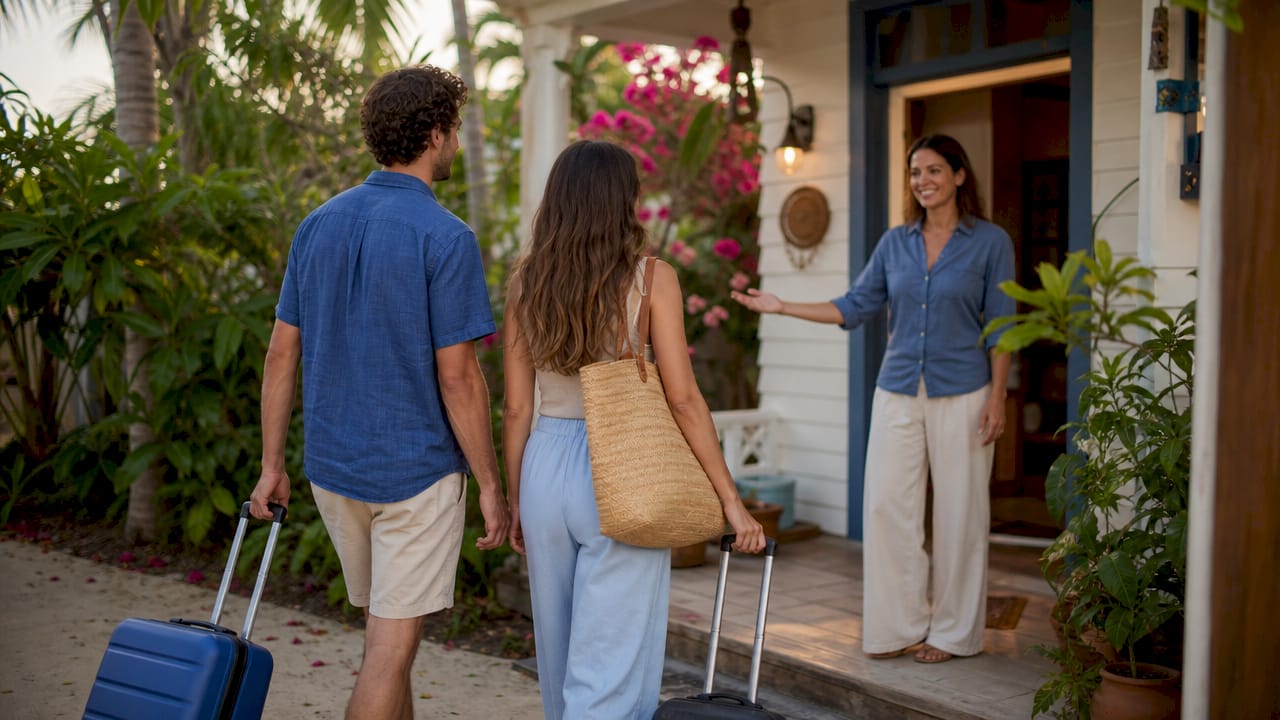
How does a bed and breakfast work day to day?
Most B&Bs operate out of historic homes, converted farmhouses, or residential properties with character. The owner manages everything: reservations, cleaning, cooking, and guest relations. That hands-on approach shapes every part of your stay.
Here is what you can typically expect:
- Breakfast timing: Served at a set time each morning, often between 7:30 AM and 9:30 AM. You sit down to eat, not grab and go.
- Room variety: Guest rooms vary significantly in size, decor, and view. Some have clawfoot tubs. Others have garden views or ocean panoramas. Returning guests often request their favorite room by name.
- Check-in windows: Innkeepers enforce specific check-in times, typically something like 3:00 PM to 6:00 PM. There is no front desk staffed around the clock.
- Regulations: B&Bs must meet food service, fire safety, and zoning requirements. That means your stay is regulated, inspected, and held to health standards.
- Booking: Most B&Bs now list on digital platforms while keeping the personal touch of on-site ownership. Unlike a vacation rental, your host is present and available.
Pro Tip: Always message your host before arrival to confirm your check-in time. A quick note goes a long way at a small property where the owner is cooking your breakfast and managing the rooms solo.
The atmosphere at a B&B tends to be quiet and unhurried. You are not sharing a lobby with a conference group or waiting in line at a buffet. The pace is slower, and that is exactly the point.
How does a bed and breakfast compare to a hotel?
The primary distinction between a B&B and a hotel is the emphasis on personal hospitality and local connection rather than standardized convenience. Hotels deliver consistency. B&Bs deliver character.
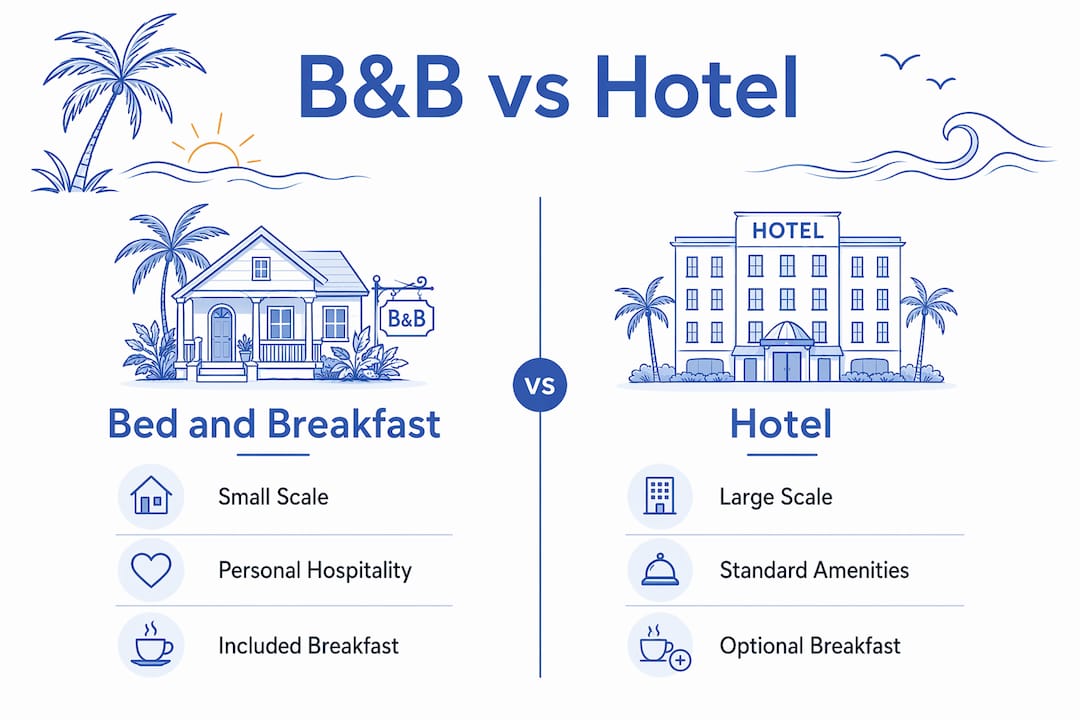
| Feature | Bed and breakfast | Hotel |
|---|---|---|
| Room count | Typically 2–10 rooms | Often dozens to hundreds |
| Breakfast | Included, home-cooked | Usually extra, often buffet |
| Check-in | Set window, owner-managed | 24-hour front desk |
| Atmosphere | Personal, home-like | Standardized, branded |
| Host interaction | Daily, often at breakfast | Minimal, transactional |
| Amenities | Limited (no pool or gym typical) | Pools, gyms, room service |
| Room style | Unique per room | Uniform across floors |
Hotels offer predictability. You know exactly what you are getting from a chain property in any city. B&Bs offer the opposite: a room that has its own personality, a host who knows your name, and a breakfast table where you might end up talking to a couple from another country for an hour. B&B guests prioritize cultural immersion and atmosphere over facilities, and that trade-off suits certain travelers very well.
The absence of amenities like pools or gyms is not a flaw. It reflects a deliberate choice to focus on hospitality and place over facilities.
Who should consider staying at a bed and breakfast?
A B&B suits travelers who want more than a place to sleep. If you travel to connect with a destination rather than just pass through it, a B&B delivers that in a way a hotel rarely can.
You will love a B&B if you:
- Enjoy conversation. Communal breakfast tables bring guests and hosts together each morning. Hosts often make introductions and spark conversations that turn strangers into travel companions.
- Want local knowledge. Your host lives there. They know which road to take at sunset and which beach has the clearest water.
- Travel as a couple or solo. The intimate scale feels personal without being isolating.
- Appreciate unique spaces. Every room has its own character. You are not sleeping in a room that looks identical to the one next door.
A B&B may not be the right fit if you:
- Need a 24-hour gym or room service.
- Prefer complete privacy with no shared common areas.
- Arrive late at night and need flexible check-in.
- Travel with a large group that needs multiple connecting rooms.
Pro Tip: Read recent guest reviews specifically for comments about the host. The host makes or breaks a B&B stay. A warm, knowledgeable innkeeper turns a good trip into a great one.
The social atmosphere at a B&B is a feature, not a side effect. If you want to feel like a local rather than a tourist, that morning table is where it starts.
What's usually included, and what's the etiquette?
Knowing what to expect at a bed and breakfast saves you from awkward surprises. Most B&Bs include breakfast, basic toiletries, and Wi-Fi in the nightly rate. Some offer afternoon tea, evening wine, or local snacks depending on the property.
Here are five practical things to know before you arrive:
- Communicate your arrival time. Your host is not sitting at a desk waiting. Message ahead and confirm your window. If you are running late, call. It is a small courtesy that matters at a small property.
- Respect quiet hours. B&Bs are residential in feel. Late-night noise carries. Most properties have quiet hours after 10:00 PM.
- Show up for breakfast. You paid for it, and your host prepared it. If you need to skip a morning, let them know the night before so food is not wasted.
- Ask questions at the table. The breakfast conversation is one of the best parts of a B&B stay. Your host can point you toward places no travel app lists.
- Treat the space with care. You are in someone's home or a lovingly maintained property. Treat it the way you would want a guest to treat your own space.
Services vary widely between properties. One B&B might offer a full farm-to-table breakfast with fresh-pressed juice. Another might keep it simple with toast, fruit, and coffee. Check the property listing or ask your host directly so your expectations match the experience.
Key Takeaways
A bed and breakfast is the best lodging choice for travelers who value personal hospitality, included breakfast, and a genuine connection to the place they are visiting.
| Point | Details |
|---|---|
| B&B definition | Small, owner-operated lodging with 2–10 rooms and breakfast included in the rate. |
| Breakfast is central | Breakfast is home-cooked and included, unlike most hotels where it costs extra. |
| Host presence matters | The owner lives on-site and provides local knowledge, personal service, and set check-in windows. |
| B&B vs. hotel | B&Bs offer character and hospitality; hotels offer standardized amenities and 24-hour service. |
| Best fit for travelers | Ideal for couples, solo travelers, and cultural enthusiasts who want atmosphere over facilities. |
Why I think B&Bs are the most underrated way to travel
Most travelers default to hotels because they feel safe and predictable. I get it. But after years of staying in both, I am convinced that a well-chosen B&B gives you something a hotel simply cannot replicate: the feeling that someone actually cares whether you have a good trip.
The breakfast table is where I have gotten my best travel tips. Not from a concierge reading from a laminated card, but from a host who grew up in the area and knows the back roads, the tide schedules, and the local spots that never make it onto any list. That kind of knowledge changes a trip.
The one thing I always tell first-time B&B guests is to adjust your expectations around amenities and lean into what a B&B does well. You are not there for the gym. You are there for the view from your window, the smell of a real breakfast being cooked, and the chance to slow down. The travelers who struggle with B&Bs are usually the ones who wanted a hotel and booked a B&B by accident.
Choose a B&B that matches your travel style. Read the host's reviews, look at the room photos on the rooms overview, and ask questions before you book. A great B&B stay starts with the right match between guest and host.
— Nicole
A real B&B experience on the Big Island of Hawaii
If you want to see what a bed and breakfast looks like at its best, Luanainn is worth a look. Perched in the foothills of Mauna Loa and overlooking Kealakekua Bay, Luana Inn offers the kind of stay this article describes: a small, personal property where breakfast is included, the host is present, and the setting does the talking.

You wake up to pastel sunrises over the mountain, spend your days exploring the bay, and end the evening watching the sky change colors over the water. The amenities at Luanainn are built around comfort and the natural beauty of the Big Island, not a generic hotel checklist. If you are planning a trip to Hawaii and want something more personal than a resort, this is the kind of place that stays with you long after you leave.
FAQ
What does a bed and breakfast include?
A bed and breakfast includes overnight accommodation and a morning meal in the nightly rate. Most also provide basic toiletries and Wi-Fi, though services vary by property.
How is a bed and breakfast different from a hotel?
A B&B is smaller, owner-operated, and focused on personal hospitality, while a hotel offers standardized amenities and 24-hour service. Breakfast is included at a B&B and usually costs extra at a hotel.
What should I expect at check-in at a B&B?
Check-in at a B&B follows a set window, often 3:00 PM to 6:00 PM, because the owner manages the property alone. Always confirm your arrival time with the host in advance.
Are bed and breakfasts good for solo travelers?
Yes. The intimate scale and communal breakfast table make B&Bs a natural fit for solo travelers who want social interaction and local guidance without the anonymity of a large hotel.
Do bed and breakfasts have private bathrooms?
Many B&Bs offer private en-suite bathrooms, but some share bathrooms between rooms. Check the property listing before booking to confirm the setup for your specific room.