
A holistic travel experience is defined as a conscious, integrated approach to travel that nourishes your mind, body, and spirit while respecting and contributing positively to the environment and local cultures. Unlike standard tourism, which treats destinations as backdrops for sightseeing, this approach treats travel as a form of personal growth and reciprocal exchange. The Wellness Travel Hub describes it as a shift from transactional to transformational travel, where every choice, from your accommodation to your daily itinerary, reflects your values. The Sustainability Directory defines the core of this practice as reciprocity: your wellbeing as a traveler is inseparable from the wellbeing of the places you visit.
What is a holistic travel experience made of?
The core components of mindful travel fall into five clear categories. Each one shapes how you show up as a traveler and what you take home.
- Mindfulness and intention. You set a clear purpose before you book. This means knowing whether you want restoration, education, spiritual growth, or cultural connection. Without this, trips default to passive consumption rather than real change.
- Nature immersion and physical activity. Swimming in open water, hiking through forests, or simply sitting with a view of the ocean all activate your body's stress recovery systems. Physical engagement with natural environments is a core element of holistic travel practices.
- Authentic cultural engagement. You eat where locals eat, attend community events, and learn at least a few words of the local language. This kind of engagement builds empathy and creates memories that last far longer than a resort pool.
- Sustainable choices. Low-impact transport, locally owned accommodations, and spending at community markets all reduce your footprint and strengthen local economies. These choices are not optional add-ons. They are central to the practice.
- Digital detox periods. Scheduled screen-free time, even just a few hours each day, allows your mind to fully absorb the experience around you. Without it, you risk being physically present but mentally elsewhere.
Pro Tip: Pack a small journal and spend 10 minutes each morning writing one intention for the day. This simple habit anchors your mindset and keeps passive scrolling from replacing real experience.
The relationship between traveler and destination is reciprocal by design. When you choose vendors that support local ecosystems, you leave the place better than you found it. That is the standard mindful travel sets for itself.
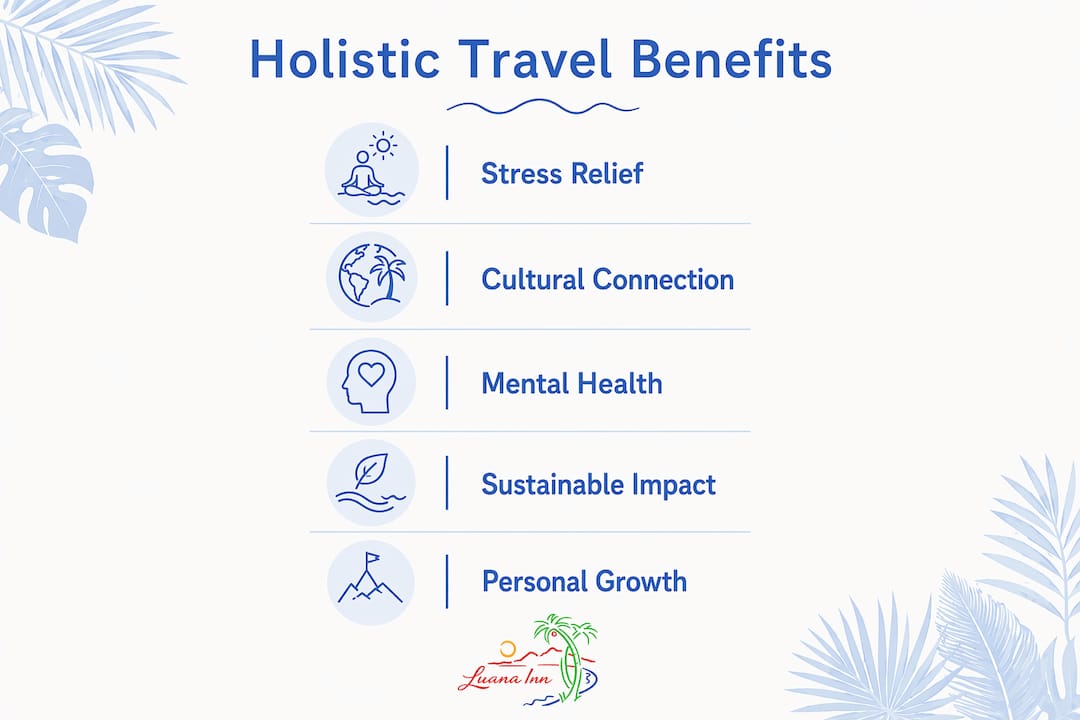
How does holistic travel benefit your mental health?
Travel supports long-term health by activating biological systems and building stress resilience through novel environments and social interaction. This is not a vague wellness claim. Navigating unfamiliar places, tasting new foods, and forming connections with people from different backgrounds all stimulate cognitive flexibility and emotional regulation.
"Positive, intentional travel acts as a reset mechanism, mitigating everyday stress and burnout by placing you in environments that demand presence and reward curiosity." — MindBodyGreen
Pacing matters as much as destination. Itinerary design directly affects how much cognitive and emotional benefit you receive from a trip. A schedule packed with back-to-back activities leaves no room for your nervous system to process what it has experienced. Spacing out activities with quiet time, a slow breakfast, or an unplanned walk gives your brain the integration it needs.
Meaningful social and cultural interactions add another layer of benefit. Sharing a meal with a local family, joining a traditional ceremony, or simply having a long conversation with your host produces a sense of connection that counters the isolation many travelers feel even in crowded tourist spots. The Wellness Tourism industry consistently emphasizes that comprehensive wellbeing, not just physical relaxation, is what separates restorative travel from ordinary vacation.

How to travel holistically: a practical planning guide
Effective mindful travel starts before you leave home. These steps give your trip a clear structure.
- Write your "why." Spend 15–30 minutes before booking to clarify your travel intentions. Are you seeking rest, creative inspiration, spiritual renewal, or cultural learning? Your answer shapes every decision that follows.
- Choose aligned accommodations. Look for properties that reflect your values. Small, locally owned bed and breakfasts, eco-lodges, and farm stays tend to offer more authentic connection than large resort chains. Luana inn, for example, sits above Kealakekua Bay on the Big Island of Hawaii, offering guests direct access to nature, stunning sunrises over Mauna Loa, and a pace of life that supports genuine rest.
- Balance activity with reflection. For every two or three planned activities, schedule one open block. Use it for journaling, a slow walk, or simply sitting with the view. This is what researchers call an integration phase, and it is what separates a transformative trip from an exhausting one.
- Select local vendors deliberately. Eat at family-owned restaurants, hire local guides, and buy crafts directly from makers. Reciprocal travel requires selecting vendors that contribute positively to local ecosystems and communities.
- Build in a digital detox window. Designate at least two hours each day as screen-free. Use that time to observe, connect, and absorb your surroundings without the filter of a camera or social feed.
- Plan your return integration. The shift back to daily life is where many travelers lose the benefits they gained. Schedule a quiet day at home after your trip. Write down three things you want to carry forward from the experience.
Pro Tip: Before you book, search for accommodations that list specific sustainability practices, not just vague "eco-friendly" labels. Ask directly: Do they source food locally? Do they employ community members? The answers reveal whether the property genuinely aligns with mindful travel values.
What pitfalls should you avoid in holistic travel?
The word "holistic" appears on marketing materials far more often than it reflects genuine practice. Researchers warn that the term is frequently misused, creating accountability gaps that leave travelers paying for superficial wellness services instead of meaningful transformation.
- Passive consumption disguised as wellness. A spa day at a large resort is relaxing, but it does not constitute mindful travel on its own. Transformation requires active engagement, reflection, and intention, not just comfort.
- Choosing high-impact, westernized resorts. Properties that import most of their food, employ few local staff, and offer a sanitized version of local culture undermine the reciprocal foundation of this approach. Authentic options exist at every price point.
- Neglecting your impact on the community. Success in mindful travel is measured by positive contribution to the community and ecosystem, not just personal rejuvenation. If your choices drain local resources or price out residents, the experience is incomplete.
- Over-scheduling without integration time. Filling every hour with activities is the most common mistake. Without scheduled reflection, experiences remain surface-level and the mental health benefits diminish significantly.
- Treating sustainability as optional. Low-impact transport, minimal plastic use, and water conservation are not extras. They are the baseline of responsible, conscious travel.
How does holistic travel create reciprocal wellbeing?
Holistic travel elevates the act of visiting a place into a complex, interconnected system that accounts for personal, ecological, social, and economic wellbeing simultaneously. The traveler's internal awareness, their motivation and mindset, directly influences the quality of their impact on the destination. A traveler who arrives with curiosity and respect generates a very different outcome than one who arrives with entitlement.
The contrast between travel styles makes this concrete:
| Travel Style | Focus | Community Impact | Environmental Impact |
|---|---|---|---|
| Mass tourism | Volume and convenience | Often extractive | High carbon, high waste |
| Ecotourism | Nature access | Moderate, nature-focused | Lower, but variable |
| Community-based tourism | Local economy | Direct and positive | Low impact by design |
| Mindful travel | Whole-system wellbeing | Reciprocal and intentional | Actively minimized |
Slow travel amplifies these benefits. Staying in one place for a week or longer, rather than hopping between cities every two days, allows you to form real relationships, learn local rhythms, and spend money in ways that circulate within the community. The Sustainability Directory frames this as leaving a destination better than you found it, which is the clearest measure of whether your trip was genuinely mindful.
Key Takeaways
A holistic travel experience requires intention, reciprocity, and integration at every stage, from planning to return home.
| Point | Details |
|---|---|
| Define your intention first | Write your travel "why" before booking to avoid passive, unfocused trips. |
| Reciprocity is the standard | Measure success by your positive contribution to the community, not just personal renewal. |
| Pacing drives mental health benefits | Schedule integration phases after activities to allow your mind to process and restore. |
| Avoid marketing traps | Verify that "holistic" claims reflect genuine sustainability and cultural authenticity. |
| Slow travel deepens connection | Longer stays in fewer places build real relationships and circulate money locally. |
What I've learned from traveling with intention
I used to plan trips the way most people do: pick a destination, fill the calendar, and call it a vacation. The problem was I came home more tired than when I left. It took a few years of experimenting with slower, more deliberate travel before I understood what was actually missing. It was not more activities or better hotels. It was purpose.
The shift that changed everything was writing down what I actually needed from a trip before I booked anything. Rest? Creative reset? A chance to connect with a culture I knew nothing about? Once I had that answer, every other decision became easier and more satisfying. I stopped choosing destinations based on what looked impressive in photos and started choosing based on what aligned with where I was in my life.
What I find most underrated in this space is the integration phase. Most travelers skip it entirely. They pack their last day with shopping and rush to the airport. But the processing that happens in quiet moments, a slow morning coffee, a walk without a destination, a journal entry on the flight home, is where the real value of the trip gets locked in. Without it, even the most beautiful experience fades faster than it should.
My honest advice: you do not need a big budget or a remote destination to travel this way. You need a clear intention, a willingness to slow down, and a genuine interest in the places and people you visit. That combination works anywhere.
— Nicole
Experience mindful travel at Luana inn

Luana inn sits above Kealakekua Bay in the foothills of Mauna Loa, offering the kind of setting that makes mindful travel feel natural rather than effortful. You wake up to pastel sunrises over the mountain, spend your days exploring pristine waters and local beaches like Ke'ei Beach and Manini Beach, and wind down watching the light change over the bay. The pace here is unhurried by design. Luana inn's wellness and spa offerings give you space to restore, while the surrounding South Kona community offers genuine cultural connection at every turn. If you are ready to experience what conscious travel actually feels like, browse available rooms and packages and plan your stay on the Big Island.
FAQ
What is holistic travel in simple terms?
Holistic travel is an intentional approach to visiting a place that nourishes your mind, body, and spirit while respecting the local environment and community. It prioritizes personal growth and reciprocal impact over passive sightseeing.
How is mindful travel different from regular tourism?
Mindful travel requires active intention, cultural engagement, and sustainable choices, while regular tourism typically focuses on convenience and entertainment. The key difference is whether the traveler seeks transformation or simply distraction.
What are the main benefits of holistic travel?
Travel builds stress resilience, improves cognitive flexibility, and supports emotional wellbeing when paced thoughtfully and paired with meaningful social interaction. Integration time and nature immersion amplify these benefits significantly.
How do I start practicing holistic travel practices?
Write your travel intention before booking, choose locally owned accommodations, schedule daily screen-free time, and plan at least one open reflection block for every two activities. These four steps form the foundation of conscious travel.
What makes a destination good for experiencing holistic tourism?
The best destinations for this style of travel offer direct access to nature, authentic local culture, and accommodations that support community economies. Places like Hawaii's Big Island, with its natural diversity and rich cultural heritage, provide an ideal setting.