
Eco-friendly lodging is accommodation designed to minimize ecological harm while delivering enriching, memorable travel experiences. Known formally as sustainable lodging, it covers everything from small bed and breakfasts to large resorts that reduce energy use, conserve water, cut waste, and support local communities. Certifications like Green Key and LEED give travelers a reliable way to verify those claims. Over one-third of travelers across all age groups now plan to stay at certified sustainable properties within the next 12 months. That shift shows sustainable travel options are no longer a niche preference. They are a mainstream expectation.
What is eco friendly lodging, and what defines it?
Eco-friendly lodging is defined as accommodation that integrates resource efficiency, waste management, renewable energy, local sourcing, and community support into every aspect of its operations, not just the visible guest-facing areas. That last part matters. A property that swaps out plastic straws but ignores its energy consumption is not genuinely sustainable. True green hotels and eco tourism lodging treat environmental responsibility as a core operating principle, not a marketing add-on.
The term "eco-friendly accommodations" covers a wide range of property types: treehouses, farm stays, boutique bed and breakfasts, wilderness lodges, and urban guesthouses. What unites them is a shared commitment to reducing their footprint while giving guests a richer connection to the place they are visiting. Luanainn, perched in the foothills of Mauna Loa and overlooking Kealakekua Bay on Hawaii's Big Island, is a strong example of this kind of property. It offers guests a peaceful, nature-connected stay without the waste and excess of large resort operations.
What practices and features define eco-friendly lodging?
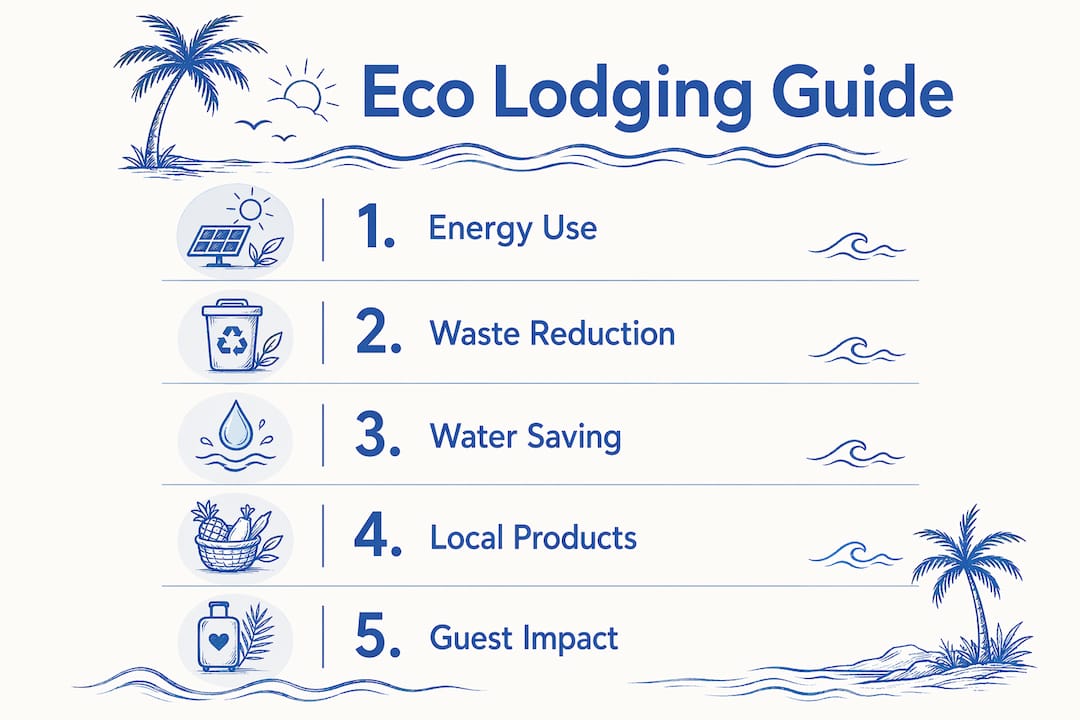
The most credible sustainable lodging options share a core set of operational practices. These go well beyond recycling bins in the hallway.

Energy efficiency is the foundation. Properties that use solar panels, wind power, or passive building design reduce their grid dependence significantly. Solar power integration and rainwater harvesting can reduce energy consumption by up to 30% compared to conventional properties. That reduction translates directly into lower emissions and lower operating costs.
Water conservation is equally critical. Low-flow showerheads, dual-flush toilets, and greywater recycling systems all cut water use without affecting guest comfort. In water-scarce destinations, these features are not optional. They are the difference between a property that sustains its environment and one that depletes it.
Waste management separates genuine eco-friendly accommodations from greenwashed ones. Look for:
- Active composting programs for food waste
- Elimination of single-use plastics throughout the property
- Partnerships with local recycling facilities
- Linen and towel reuse policies with real guest participation rates
Local sourcing rounds out the picture. Properties that buy food, materials, and services from nearby producers shrink their supply chain emissions and keep money circulating in the local economy. This is where environmentally friendly travel intersects with community development.
Pro Tip: Ask your lodging provider what percentage of their food comes from local suppliers. A specific answer signals genuine commitment. A vague one signals marketing.
What are the benefits of choosing eco-friendly lodging?
The benefits of eco-friendly travel accommodations reach further than most travelers expect. The environmental gains are real, but the personal and social rewards are just as compelling.
For the environment, the math is straightforward. Independent hotels and locally owned guesthouses typically carry 40–50% lower carbon footprints than large international chains. That gap comes from localized supply chains and less reliance on energy-intensive systems. Choosing a locally owned property is one of the highest-impact decisions you can make as a traveler.
For your health, eco-friendly accommodations often use non-toxic cleaning products, natural ventilation, and chemical-free linens. Guests report better sleep and fewer allergy symptoms in properties built with natural materials and passive design. That is not a coincidence. It is the result of deliberate material and design choices.
For the local community, the benefits compound. Travelers who choose independently owned lodges that integrate local staff and suppliers avoid the extractive patterns of mass tourism and report higher satisfaction. You get a more authentic experience. The community gets a more equitable share of tourism revenue.
"Gen Z travelers prioritize both functional value (price) and emotional value (authentic, community-connected experiences) when choosing sustainable stays. The most effective eco-lodging communicates health benefits and genuine local connection, not just carbon metrics." Frontiers in Psychology, 2026
The benefits of eco lodging also include unique accommodation styles you simply cannot find at a chain hotel. Staying at a hilltop bed and breakfast overlooking a bay, waking up to pastel sunrises over a volcano, or watching dolphins from your porch are experiences that mass tourism cannot replicate.
How do you spot authentic eco-friendly lodging and avoid greenwashing?
Greenwashing is the practice of marketing a property as eco-friendly without the operational substance to back it up. It is widespread, and it costs travelers both money and peace of mind. Here is how to cut through it.
-
Check for third-party certification. Green Key, LEED, and EarthCheck are the most recognized standards. These programs require documented evidence of sustainability practices, not just self-reporting. A property that displays one of these certifications has passed an independent audit.
-
Go beyond the badge. Green certifications provide a baseline, but travelers should also look at how properties handle food waste, linen policies, and passive building design. A LEED-certified building with a buffet that throws away half its food every night is not living up to its label.
-
Read the sustainability report. Credible properties publish annual or quarterly reports showing actual energy use, water consumption, and waste diversion rates. If a property cannot share numbers, treat that as a red flag.
-
Ask specific questions before you book. Vague answers reveal vague commitments. Strong questions include: What percentage of your energy comes from renewables? Do you compost food waste? How do you involve local suppliers?
-
Look at operational signals. Properties with real eco-commitments train their staff on sustainability, track their resource use internally, and make those results visible to guests. Check the property amenities page for concrete details rather than generic green language.
Pro Tip: Search for the property name alongside "sustainability report" or "green certification" before booking. Genuine eco-lodges make this information easy to find.
What practical steps can travelers take to support sustainable lodging?
Choosing a certified property is a great start. How you structure your trip amplifies or undercuts that choice.
-
Stay longer in one place. Infrastructure and itinerary choices like booking one base for a longer stay reduce your carbon footprint more effectively than small in-room actions like towel reuse. A two-week stay at one property beats seven two-night stays at seven different ones, every time.
-
Choose independent, locally owned properties. Skip the international chain and book the family-run guesthouse or the small bed and breakfast. The carbon footprint difference is significant, and the experience is almost always richer.
-
Use platforms that verify sustainability claims. Platforms specializing in sustainable stays make it easier to find verified eco-friendly options without spending hours researching each property individually.
-
Consolidate your group. Booking one villa or one larger property for a group generates far less waste and energy use per person than booking multiple separate rooms across different hotels.
-
Prioritize community-connected properties. Look for lodging that employs local staff, sources food locally, and participates in community conservation programs. Your spending becomes a direct investment in the destination.
The biggest carbon footprint reductions come from structural choices, not micro-efforts. Rethinking how you book matters more than remembering to turn off the lights.
Key Takeaways
Eco-friendly lodging reduces environmental harm through verified operational practices, not surface-level gestures, and travelers who choose independently owned, certified properties make the highest-impact sustainable travel choices.
| Point | Details |
|---|---|
| Definition matters | True eco-friendly lodging integrates energy, water, waste, and community practices into all operations. |
| Certifications are a starting point | Green Key, LEED, and EarthCheck verify claims, but operational signals like food waste policies matter too. |
| Independent properties win on footprint | Locally owned guesthouses carry 40–50% lower carbon footprints than large international chains. |
| Stay structure beats micro-actions | Longer, consolidated stays reduce emissions more than small in-room habits like towel reuse. |
| Authentic experience is a real benefit | Community-connected lodging delivers higher traveler satisfaction alongside genuine environmental impact. |
Why surface-level green claims are the real problem
I have talked to a lot of travelers who feel good about their eco choices because they stayed somewhere with bamboo toiletries and a card about saving water. That is not eco-friendly lodging. That is marketing. The properties that actually move the needle are the ones where the owner knows their monthly energy bill by kilowatt-hour, sources breakfast from a farm three miles away, and can tell you exactly where their food scraps go.
What I find most encouraging in 2026 is that travelers are getting sharper. They are asking harder questions before they book. They are reading sustainability reports. They are choosing longer stays in one place instead of hopping between five destinations in ten days. That structural shift matters more than any single green feature a property can advertise.
The intersection of personal well-being and environmental impact is also real. Staying somewhere quiet, natural, and locally rooted is genuinely better for you. Better sleep, cleaner air, food that tastes like the place you are visiting. Those are not abstract sustainability benefits. They are things you feel on day two of your stay.
My honest advice: stop looking for the greenest-sounding property and start looking for the most transparent one. Transparency is the only reliable signal of genuine commitment.
— Nicole
Eco-friendly stays on Hawaii's Big Island
If you are ready to experience what genuine sustainable lodging feels like, Luanainn is worth a close look. Perched in the foothills of Mauna Loa and overlooking Kealakekua Bay, this bed and breakfast offers the kind of quiet, nature-connected stay that mass tourism simply cannot deliver. You wake up to pastel sunrises over the mountain, gaze at ever-changing sunsets over the bay, and feel genuinely rooted in one of Hawaii's most beautiful and ecologically rich communities.

Luanainn keeps things personal, local, and unhurried. That is exactly what sustainable travel options should feel like. Explore rooms and availability and see why travelers who stay here tend to stay longer than they planned.
FAQ
What is eco-friendly lodging in simple terms?
Eco-friendly lodging is accommodation that reduces environmental harm through practices like renewable energy use, water conservation, waste reduction, and local sourcing. It also supports the communities where it operates.
How do I know if a hotel is genuinely eco-friendly?
Look for third-party certifications like Green Key, LEED, or EarthCheck, and ask the property for specific data on energy use, waste management, and local sourcing. Transparent sustainability reporting is the clearest sign of genuine commitment.
Are eco-friendly accommodations more expensive?
Not always. Independent, locally owned properties often cost less than large international chains and carry significantly lower carbon footprints. The value comes from the experience and the impact, not a premium price tag.
What certifications should I look for in green hotels?
Green Key, LEED, and EarthCheck are the most credible international standards. Each requires independent audits and documented performance data, making them more reliable than self-reported eco claims.
Does staying longer in one place really make a difference?
Yes. Longer, consolidated stays reduce your overall carbon footprint more than any small in-room habit. Choosing one base for a week beats multiple short stays at different properties every time.