
Sustainable accommodation is defined as lodging designed and operated to reduce environmental impact, support local economies, and uphold social responsibility throughout every aspect of its operation. The term covers a wide range of green accommodation types, from solar-powered guesthouses and zero-waste bed and breakfasts to LEED-certified boutique hotels. Certifications like Green Key, GSTC (Global Sustainable Tourism Council), and EarthCheck set the standards that separate genuine eco-friendly lodging from properties that simply market themselves as green. If you care about where your travel dollars go and what footprint you leave behind, understanding sustainable accommodation is the most practical place to start.
What is sustainable accommodation, and what defines it?
Sustainable accommodation is lodging that actively reduces its environmental footprint while contributing positively to the surrounding community and economy. The concept draws from three pillars: environmental responsibility, social equity, and economic sustainability. All three must work together. A property that installs solar panels but imports all its food and pays staff below local living wages does not qualify as truly sustainable.
The environmental side covers energy, water, waste, and materials. Socially responsible properties hire locally, respect Indigenous culture, and engage guests in conservation. Economically, they keep money circulating within the destination rather than sending profits to distant corporate headquarters. Authentic sustainability integrates all three dimensions so that financial benefits stay in local communities.

Key features and practices to look for
Genuine sustainable properties share a recognizable set of practices:
- Energy efficiency: Solar panels, LED lighting, smart thermostats, and passive cooling design reduce grid dependence.
- Water conservation: Low-flow fixtures, rainwater harvesting, and greater recycling cut consumption significantly.
- Waste reduction: On-site composting, elimination of single-use plastics, and partnerships with local recycling programs lower landfill contributions.
- Sustainable materials: Some properties go further than standard eco-measures. Innovative construction choices like moon wood, harvested at specific lunar cycles to increase density and durability, reduce long-term resource strain.
- Local sourcing and employment: Purchasing food from nearby farms and hiring from the surrounding community keeps economic benefits close to home.
- Third-party certification: Labels like Green Key, LEED, and EarthCheck verify claims through independent audits rather than self-reporting.
Pro Tip: Ask any property you consider to name its specific certification body and the year of its last audit. A credible property answers that question immediately.
How do sustainable accommodations benefit travelers and destinations?
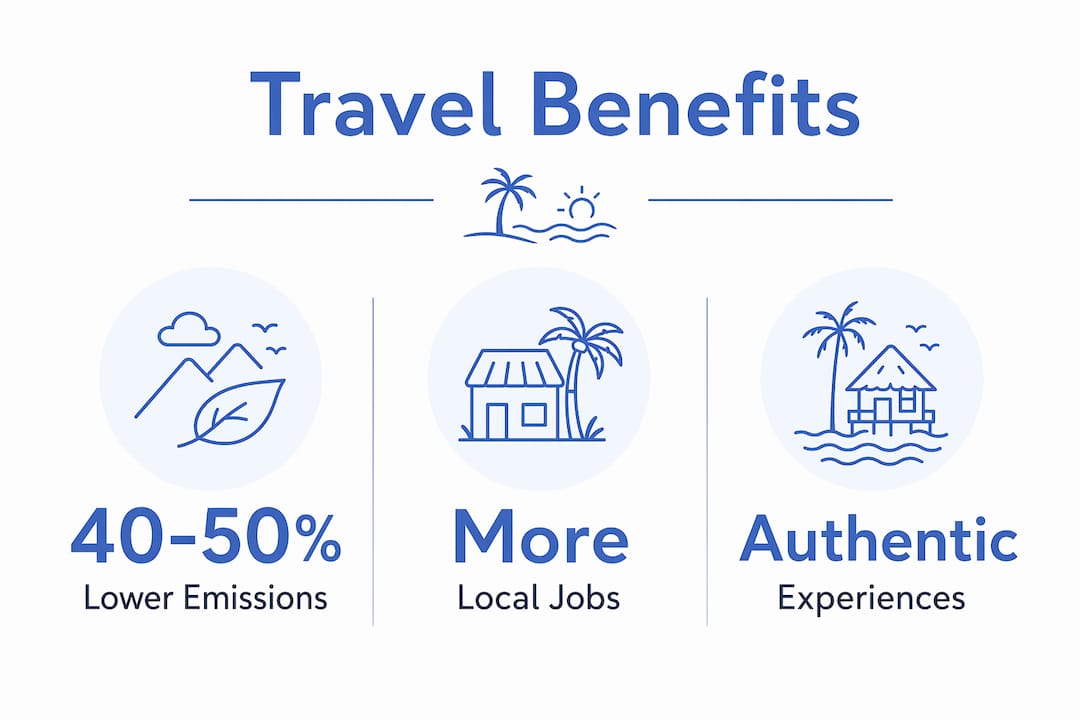
The benefits of sustainable hotels and locally owned properties extend well beyond a clear conscience. The environmental, cultural, and economic advantages are concrete and measurable.
Independent hotels and locally owned guesthouses carry 40–50% lower carbon footprints than large chain hotels. That gap exists because smaller properties consume less energy per guest, source food locally, and avoid the supply chains that drive emissions in large operations. Choosing a locally owned inn over a chain property is one of the highest-impact decisions you can make as a traveler.
"Slow travel, spending at least a full week in one place, is a key strategy to reduce travel-related emissions and enhance cultural immersion. The fewer flights and transfers you take, the lower your overall footprint."
The cultural benefits are equally real. Staying in a locally run property puts you in direct contact with people who know the land, the food, and the stories. You eat at the restaurants your host recommends, you visit the beaches that locals actually love, and you leave with a richer experience than any resort itinerary provides.
| Benefit | What it means for you |
|---|---|
| Lower carbon footprint | 40–50% less emissions compared to large chain hotels |
| Economic impact | Your spending stays in the local community |
| Authentic experience | Direct access to local culture, food, and knowledge |
| Destination preservation | Sustainable practices protect the places you love to visit |
| Cost value | Smaller properties often offer better rates and personal service |
Economic leakage is a real problem in conventional tourism. Tourism profits leaving the community create a situation where destinations bear the environmental cost of visitors without receiving proportional financial benefit. Sustainable lodging breaks that cycle by ensuring locals benefit through employment and direct sourcing.
How do you spot genuine eco accommodation and avoid greenwashing?
Greenwashing is the practice of marketing a property as eco-friendly without the practices or credentials to back it up. It is widespread, and it costs travelers both money and the environmental impact they were trying to avoid. The good news is that genuine sustainable properties are easy to verify once you know what to check.
Over 33% of travelers plan to stay in sustainability-certified accommodations within the next 12 months as of 2026. That growing demand has also increased the incentive for properties to make false claims. Knowing how to read those claims protects you.
Follow these steps to verify a property's credentials:
- Check for third-party certification. Labels like LEED, Green Key, and EarthCheck require independent audits. Self-awarded "eco" badges mean nothing without external verification.
- Ask about audit frequency. Sustainability certification is assessed through audits every two years, not a single one-time event. A property that was certified five years ago and has not been audited since may no longer qualify.
- Request specific metrics. Ask for waste diversion rates, percentage of local staff, and the share of food sourced within a set radius. Vague answers like "we care about the environment" signal greenwashing.
- Look for transparency on their website. Genuine properties publish their sustainability reports, name their certification bodies, and list their local partners.
- Check for local employment and sourcing. Specific metrics like waste diversion and local hiring are the clearest indicators that a property fights economic leakage rather than contributing to it.
Pro Tip: Search the certification body's website directly to confirm a property's listed status. Certifications can lapse, and some properties continue to display expired badges.
Practical ways to build sustainable travel options into your trip
Choosing eco-friendly lodging is the foundation, but how you plan the rest of your trip shapes your total impact just as much.
- Stay longer in one place. Staying at one location for at least two weeks lowers transit emissions significantly. Every flight and transfer adds to your footprint. Slow travel, spending a full week or more in a single destination, also deepens your cultural connection to the place.
- Book locally owned properties. Skip the global booking platforms when you can and contact properties directly. You often get a better rate, and the property keeps more of the revenue.
- Verify credentials before you book. Use platforms like EcoBnb, which specialize in listings from solar-powered cottages to zero-waste guesthouses, to find properties with verified sustainability credentials.
- Spend locally once you arrive. Eat at locally owned restaurants, hire local guides, and buy from local markets. Your accommodation choice matters, but so does every dollar you spend on the ground.
- Pack light. Heavier luggage increases fuel consumption on flights. Traveling with less is a simple, underrated way to reduce your per-trip emissions.
- Ask your host for guidance. Locally owned properties are your best resource for finding the experiences that support the community rather than drain it.
The combination of a verified sustainable property and a slow, locally engaged travel style produces the lowest environmental footprint and the richest experience. Neither element works as well without the other.
Key Takeaways
Sustainable accommodation is the single most impactful lodging choice a traveler can make to reduce emissions, support local economies, and preserve destinations for future visitors.
| Point | Details |
|---|---|
| Core definition | Sustainable accommodation reduces environmental impact while supporting local communities and economies. |
| Carbon footprint advantage | Locally owned properties carry 40–50% lower carbon footprints than large chain hotels. |
| Certification matters | Third-party labels like Green Key, LEED, and EarthCheck verify claims through independent audits every two years. |
| Greenwashing is common | Ask for specific metrics like waste diversion rates and local hiring percentages to confirm genuine credentials. |
| Slow travel amplifies impact | Staying at least one to two weeks in one place lowers transit emissions and deepens cultural engagement. |
What I've learned after years of watching travelers choose where to stay
The conversation around sustainable accommodation has changed a lot. A few years ago, travelers asked whether a property recycled. Now they ask for audit dates and local sourcing percentages. That shift is real progress, but it has also created a new problem: sustainability has become a marketing category, not just a practice.
What I've found is that the most genuinely sustainable properties rarely lead with that word. They talk about their farmers, their staff, their watershed. They show you the solar array and introduce you to the person who manages it. The checklist approach to sustainability, where a property ticks boxes to earn a badge and then stops, misses the point entirely. Real sustainability is a continuous process, not a credential you hang on the wall.
The travelers who get the most out of eco-friendly lodging are the ones who treat it as a relationship, not a transaction. They stay longer, ask more questions, and leave the place better than they found it. That is the version of sustainable travel worth pursuing. Properties like Luanainn on the Big Island of Hawaii embody that spirit, where the setting, the community, and the experience are inseparable from each other.
— Nicole
Eco-conscious stays at Luanainn on the Big Island
Luanainn sits in the foothills of Mauna Loa, overlooking Kealakekua Bay, one of the most ecologically significant stretches of coastline in Hawaii. The inn is locally owned and deeply connected to the community around it. You wake up to pastel sunrises over the mountain, gaze at sunsets that change every evening, and step outside to a place where the natural world is not a backdrop but the whole point.
If you are ready to put sustainable travel options into practice, Luanainn offers the kind of stay that makes the philosophy real. Browse the vacation packages designed for longer, slower visits, or take a look at the rooms overview to find the right fit for your trip. Booking directly with a locally owned property is one of the most effective choices you can make as an eco-conscious traveler.
FAQ
What is sustainable accommodation in simple terms?
Sustainable accommodation is lodging that reduces environmental harm, supports local communities, and operates with social and economic responsibility. It goes beyond recycling bins to include energy sourcing, local hiring, and verified third-party certification.
How do I find verified eco-friendly lodging?
Look for properties certified by recognized bodies like Green Key, LEED, or EarthCheck, and confirm their certification status directly on the certifying organization's website. Platforms like EcoBnb also specialize in pre-vetted sustainable listings.
Are sustainable hotels more expensive?
Not necessarily. Locally owned sustainable properties often cost less than large chain hotels and provide more personal service. The value comes from the experience and the knowledge that your spending benefits the local community directly.
What is greenwashing in accommodation?
Greenwashing is when a property markets itself as eco-friendly without credible practices or independent certification to support the claim. The clearest red flag is vague language with no specific metrics, audit dates, or named certification bodies.
How does slow travel connect to sustainable accommodation?
Staying in one place for at least one to two weeks dramatically reduces transit emissions from flights and transfers. Slow travel also allows deeper engagement with local culture and economy, which amplifies the positive impact of choosing a sustainable property.