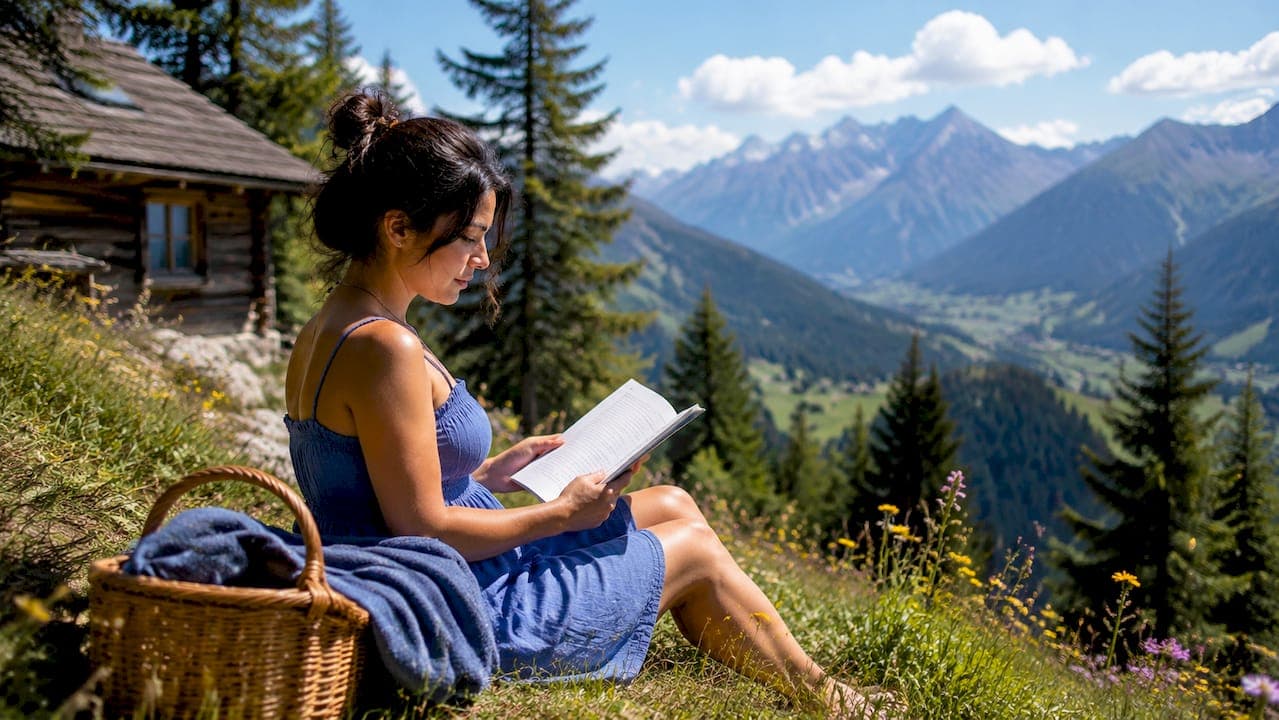
Mountain lodging beats beachfront stays by delivering cooler temperatures, richer sensory experiences, better value accommodations, and a quieter atmosphere that genuinely restores you. While beach vacations have obvious appeal, the mountain retreat model, known in hospitality as the "elevated lodging experience," consistently outperforms coastal options on comfort, memory formation, and overall value. Whether you are planning a family getaway or a solo escape, the advantages of mountain lodging are concrete and measurable. Luana inn, perched in the foothills of Mauna Loa and overlooking Kealakekua Bay, offers exactly this kind of elevated, restorative stay.
Why mountain lodging beats beachfront on climate and comfort
Temperature is the single biggest factor separating a great vacation from an exhausting one. Mountain destinations run 5 to 10 degrees Celsius cooler than coastal hotspots during peak summer. That gap means the difference between spending your afternoon indoors with the AC cranked and actually enjoying the outdoors.
At elevations around 1,500 meters, temperatures typically stay in the 20–25°C range during summer months. That is the sweet spot for hiking, reading on a deck, or simply sitting outside without feeling drained. Beach destinations in the same season regularly push past 32°C with high humidity, which turns even a short walk into an ordeal.
The cooler air also changes how you sleep. Heat and humidity are two of the most common disruptors of deep sleep, and mountain air eliminates both. You wake up actually rested, not just technically horizontal for eight hours.
Here is what cooler mountain climates make possible that beachfront stays often cannot:
- Comfortable morning hikes without needing to start before sunrise to beat the heat
- Outdoor meals and deck time throughout the day, not just at dawn or dusk
- Better sleep quality thanks to naturally cool, dry nighttime air
- More active itineraries because physical exertion does not carry the same heat risk
- Longer usable days where the whole group can be outside and engaged
The contrast with beachfront is stark. Coastal humidity clings to everything, from your clothes to your mood. Mountain air feels clean and light, and that physical comfort shapes every hour of your stay.
Do mountain vacations create stronger memories than beach trips?
Cognitive psychology gives a clear answer: yes. Mountain vacations produce stronger long-term memories because they generate higher episodic novelty through sensory variety, physical engagement, and emotional peaks. Memory research consistently links recall strength to how novel and emotionally charged an experience feels at the time.
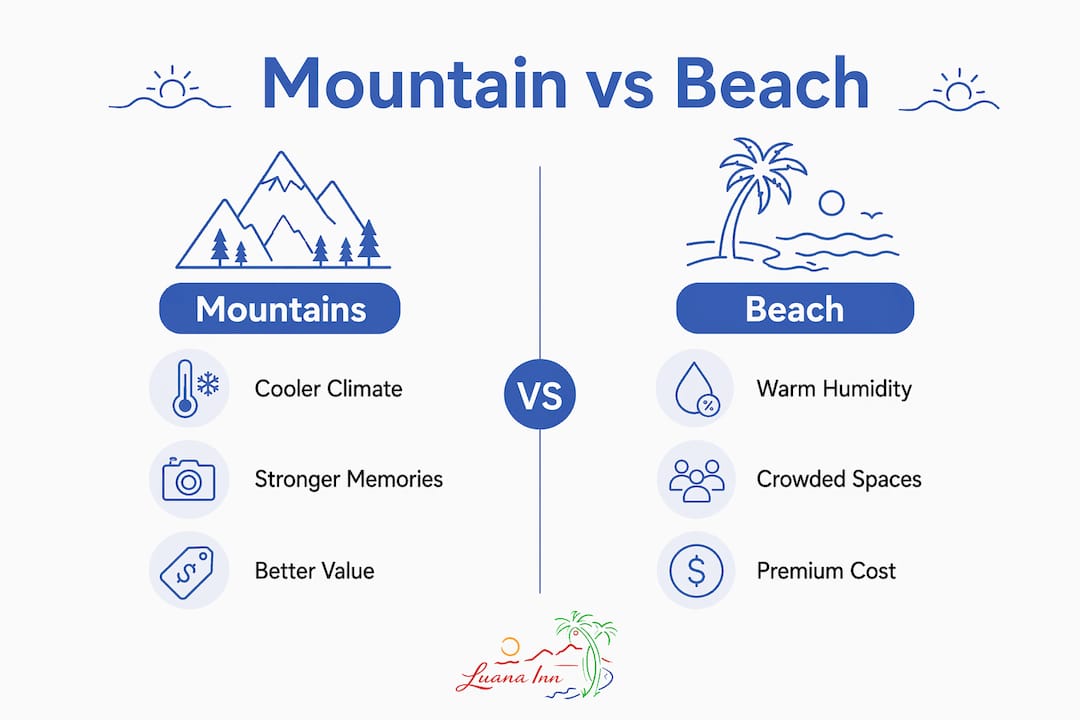
Beach vacations tend to follow a predictable loop: arrive, apply sunscreen, lie down, repeat. That repetition feels relaxing in the moment, but it produces fewer distinct memory anchors. Your brain files similar experiences together, which is why beach days from different years blur into one another.
Mountain experiences break that pattern at every turn. Consider what you actually encounter:
- Elevation change that shifts your breathing, your view, and your sense of scale
- Forest scents from pine, cedar, and damp earth that trigger vivid sensory recall
- Wildlife encounters like spotting a deer at dusk or hearing an owl at night
- Weather variety including morning mist, afternoon sun, and cool evening air
- Physical milestones such as reaching a summit or crossing a stream
"The brain encodes memories more deeply when experiences combine novelty, emotion, and physical engagement. Mountain environments deliver all three simultaneously, which is why travelers often describe mountain trips as the vacations they remember most clearly, years later."
That memory advantage matters for families especially. Children who experience varied, physically engaging environments build stronger shared reference points with their parents and siblings. Those shared memories become the stories families retell for decades. The Great Smoky Mountains alone attract $3.93 billion in visitor spending in 2026, a figure that reflects just how strongly families vote with their wallets for mountain experiences.
Are mountain stays actually better value than beachfront hotels?
Mountain lodging delivers more for your money. Mountain locations avoid premium beachfront fees, which means the same budget that buys a standard hotel room at the coast often gets you a private cabin with a hot tub, a full kitchen, and a game room in the mountains.
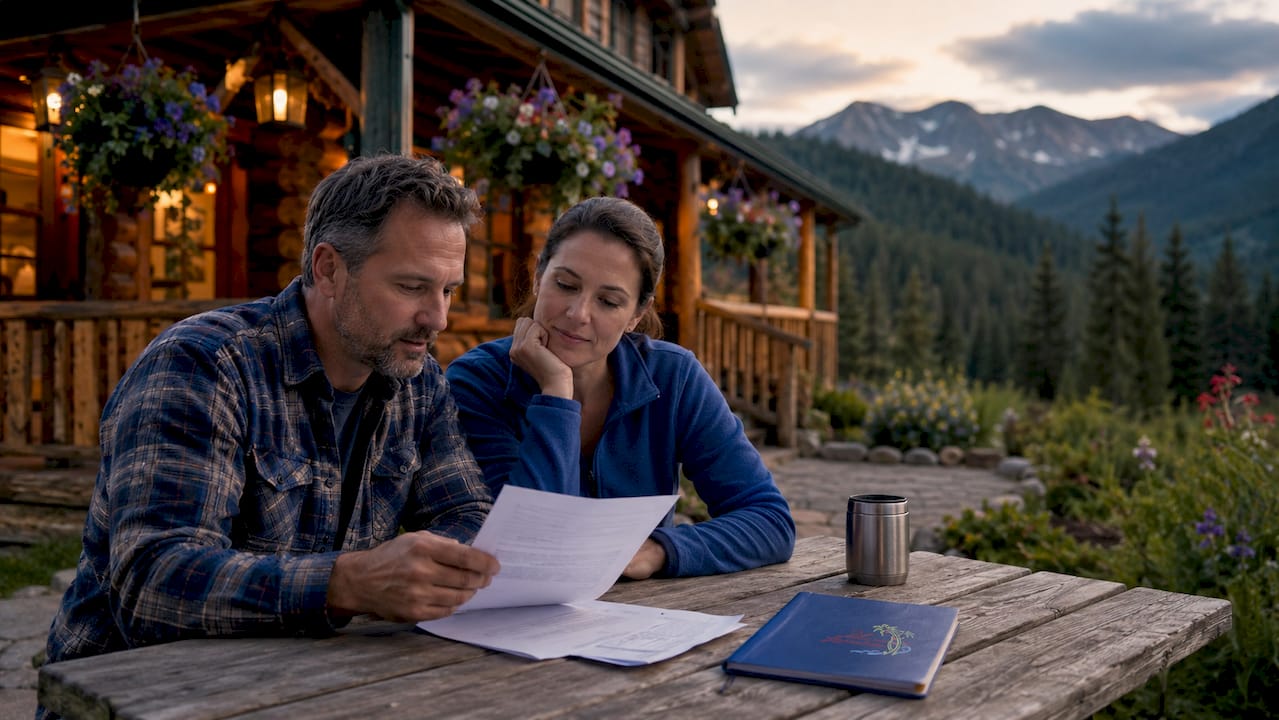
Beachfront properties charge a location premium that has nothing to do with the quality of the room itself. You pay for the view and the address. Mountain properties price on amenities and experience, which shifts the value equation in your favor.
| Feature | Typical mountain lodging | Typical beachfront hotel |
|---|---|---|
| Private outdoor space | Deck or porch included | Often shared or unavailable |
| Kitchen access | Full kitchen standard | Kitchenette or none |
| Parking fees | Usually free | Often $20–$40 per night |
| Noise level | Quiet, private | Shared hallways, pool noise |
| Ancillary costs | Low (free trails, parks) | High (paid attractions, rentals) |
| Property upkeep | High (dual-season use) | Variable (single-season wear) |
The ancillary cost difference is real. Mountain destinations like national parks and state forests offer free or low-cost access to trails, waterfalls, and scenic overlooks. Beach destinations frequently charge for parking, chair rentals, water sports equipment, and paid beach access. Those fees add up fast for a family of four.
Mountain properties also benefit from dual-season demand, meaning owners maintain them year-round for both summer and winter guests. That ongoing upkeep produces better-maintained cabins and more reliable amenities than single-season coastal rentals, which often sit empty for months and show the wear.
Pro Tip: Book mountain lodging with a full kitchen. Cooking one or two meals per day in your cabin saves significantly compared to eating out every meal at a beach resort, and it adds to the cozy, home-away-from-home feel that makes mountain stays so restorative.
You can explore the kinds of mountain lodging amenities that make this value difference tangible before you book.
What makes mountain retreats more restorative than beach resorts?
Quiet is the most underrated vacation amenity, and mountain lodging delivers it consistently. Private mountain cabins provide a "silence reset" that crowded beach resorts simply cannot match. No shared hallways, no pool speakers, no neighboring room conversations bleeding through thin walls.
That quiet has a direct effect on sleep quality and stress recovery. Your nervous system responds to ambient noise even when you are not consciously aware of it. A beach resort with constant foot traffic, music, and ocean-adjacent wind noise keeps your body in a low-level alert state. Mountain lodging removes those triggers.
The layout of mountain properties also changes how groups interact. Shared spaces like decks, kitchens, and game rooms pull people together naturally rather than scattering them across a resort campus. When your group cooks together, plays cards together, and watches the sunset from the same deck, the trip becomes genuinely connective.
Here is what that restorative environment looks like in practice:
- No shared walls means you sleep through the night without interruption
- Private decks give you outdoor space that belongs only to your group
- Common kitchens create natural gathering moments throughout the day
- Low foot traffic means you can walk outside in quiet without navigating crowds
- Natural soundscapes like wind through trees and birdsong replace urban noise
Pro Tip: When booking a mountain retreat for a group, prioritize properties with a covered outdoor deck. That single feature extends your usable outdoor time into evenings and light rain, and it becomes the natural center of your group's daily rhythm.
Luana inn's curated retreat packages are built around exactly this kind of restorative, group-centered experience.
Key Takeaways
Mountain lodging beats beachfront stays because it combines cooler temperatures, stronger memory-making conditions, better value accommodations, and a quieter, more restorative atmosphere that genuinely improves your vacation.
| Point | Details |
|---|---|
| Cooler, more comfortable climate | Mountain destinations run 5–10°C cooler than coastal hotspots, making outdoor time enjoyable all day. |
| Stronger vacation memories | Novelty, physical engagement, and sensory variety in mountains produce more vivid long-term memories. |
| Better value for your budget | Mountain lodging avoids beachfront premiums and includes more amenities for the same or lower cost. |
| More restorative atmosphere | Private cabins with no shared walls and natural quiet deliver measurably better sleep and stress recovery. |
| Stronger group bonding | Shared mountain spaces like decks and kitchens create natural connection that fragmented beach resorts cannot replicate. |
My honest take on choosing mountains over the beach
I have stayed in both settings more times than I can count, and the pattern is consistent. Beach vacations feel exciting in the planning stage and pleasant in the first day or two. By day three, the heat, the crowds, and the sameness of the routine start to wear. You end up retreating indoors more than you expected.
Mountain stays work differently. The environment keeps offering you something new: a different trail, a different view, a different quality of light in the morning. That variety keeps you engaged without requiring you to plan every hour. The logistical conveniences of mountain lodging, like dedicated gear storage and shuttle access to trailheads, also reduce the daily friction that quietly drains vacation energy.
I am not dismissing the beach entirely. If your goal is pure sun exposure and ocean swimming, a beachfront stay serves that specific need well. But if you want to come home feeling genuinely rested, with clear memories and a sense that the trip actually meant something, the mountain retreat model wins every time.
The travelers I see return to mountain lodging year after year are not chasing novelty. They are chasing the specific feeling of waking up cool and quiet, stepping outside into clean air, and having a full day of real options in front of them. That feeling is hard to replicate at the coast.
— Nicole
Luana inn: where mountain calm meets ocean views

Luana inn sits in the foothills of Mauna Loa, overlooking the stunning Kealakekua Bay on Hawaii's Big Island. It combines the restorative quiet and elevated perspective of mountain lodging with the visual beauty of the Pacific below. You get pastel sunrises over the mountain, ever-changing sunsets from the hillside, and the kind of stillness that actually lets you exhale.
The rooms at Luana inn are designed for travelers who want comfort without noise, beauty without crowds, and a base that makes the whole island feel accessible. Whether you are planning a peaceful solo stay or a small group getaway, Luana inn offers the elevated lodging experience this article describes. Book your stay and feel the difference that mountain calm makes.
FAQ
Why does mountain lodging feel more restful than beachfront?
Mountain lodging offers private spaces with no shared walls and natural quiet, which removes the ambient noise that disrupts sleep and recovery at busy beach resorts.
Are mountain vacations more affordable than beach trips?
Mountain stays typically cost less per night than comparable beachfront hotels because they avoid location premiums, and ancillary costs like parking and attraction fees are usually lower or free.
Do mountain destinations stay comfortable in summer?
At elevations around 1,500 meters, mountain temperatures typically stay in the 20–25°C range during peak summer, which is 5–10°C cooler than most coastal hotspots.
Why do families remember mountain trips more vividly?
Cognitive psychology research links memory strength to novelty, emotion, and physical engagement. Mountain environments deliver all three through elevation change, wildlife encounters, and varied terrain, producing stronger long-term recall than repetitive beach routines.
Is mountain lodging well-maintained compared to beach rentals?
Mountain properties experience dual-season demand from summer hikers and winter guests, which drives year-round upkeep and results in better-maintained accommodations than single-season coastal rentals.