
Yes, an infrared sauna after your workout can genuinely help you recover, but the honest picture is more textured than most gym-floor advice suggests. Small trials show reduced muscle soreness and better-preserved jump power the next day, while blood markers of tissue damage barely budge. The single most important habit: cool down for 10 to 15 minutes and rehydrate before you ever step inside the cabin.
TL;DR:
- Infrared sauna use can reduce perceived muscle soreness and slightly preserve jump performance but does not speed up muscle tissue repair or increase hypertrophy.
- Most studies involve short sessions of 10 to 30 minutes at 43 to 50°C, with benefits mainly affecting feelings of recovery rather than cellular healing.
- Proper cool down, hydration, and gradual session buildup are crucial to avoid dizziness or cardiovascular strain when using saunas post-workout.
- The evidence indicates that saunas help with short-term power preservation and soreness relief but should not replace nutrition, sleep, or load management for recovery.
- Sauna frequency should match your goals: occasional sessions for soreness or structured 10-minute thrice-weekly use for performance support, with medical advice for high-demand schedules.
Table of Contents
- What the Research Shows About Infrared Sauna After Workout Recovery
- Benefits Reported After a Post-Workout Infrared Sauna Session
- Is It Safe? Hydration, Heart Health, and Who Should Skip It
- The Post-Workout Sauna Protocol: Timing, Temperature, and Hydration
- How Often Should You Use an Infrared Sauna After Training?
- Your Pre- and Post-Sauna Checklist
- Infrared Sauna Recovery at Luana Inn
- The Editorial Take: What Actually Matters Here
- Book a Recovery-Focused Stay With Sauna Access
- Sources
What the Research Shows About Infrared Sauna After Workout Recovery
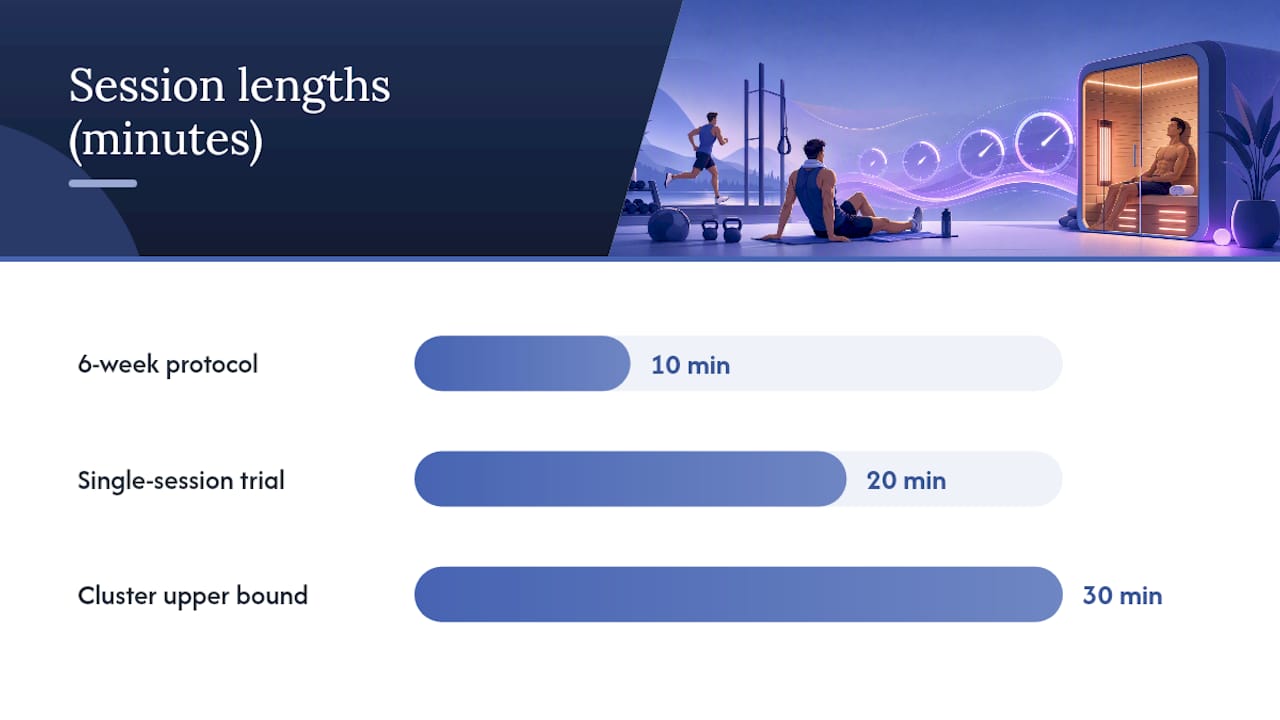
The strongest single piece of evidence comes from a randomized crossover trial published in Biology of Sport and archived on PMC. Researchers had athletes complete a resistance session, then either rest passively or spend 20 minutes in an infrared sauna with measured air temperature around 43°C, plus or minus 5 degrees. The infrared sauna group reported less perceived soreness and showed a smaller drop in countermovement jump performance the following day compared to the passive recovery group. That is a meaningful finding for anyone training explosively, because jump height is a decent proxy for how "fresh" your fast-twitch muscle fibers feel.
A separate six-week study pushed further into repeated use. Participants took brief 10-minute sessions at 50°C, three times a week, after training. The result was a mixed bag: some jump-power measures improved slightly, but muscle hypertrophy did not increase compared to training without sauna use. In other words, the sauna did not help people build more muscle, but it may have helped them express strength more consistently session to session.
By the numbers: across the trials researchers have run so far, session length clusters between 10 and 30 minutes, at air temperatures of roughly 43 to 50°C (110 to 122°F), almost always tested in small groups of trained athletes rather than the general population.
A critical summary covering this body of research paints a more cautious picture than headlines usually allow. The evidence remains mixed: infrared sauna sometimes lowers perceived soreness, but it doesn't consistently speed up objective muscle repair. The reviewers pointed to a familiar problem in exercise science: small sample sizes, inconsistent protocols, and studies that measure different outcomes, which makes it hard to stack findings into one confident conclusion.
Here's how the evidence breaks down by what researchers actually measured:
- Perceived soreness (VAS scale): Reduced in multiple trials, including the PMC crossover study.
- Countermovement jump performance: Better preserved after a single sauna session than after passive rest.
- Muscle hypertrophy: No measurable benefit from repeated 10 minute sessions over six weeks.
- Blood markers of muscle damage: Largely unchanged, regardless of sauna protocol.
- Study populations: Almost entirely trained athletes in small cohorts, not sedentary adults or older populations.
What this tells you is that infrared sauna sessions seem to change how recovery feels more reliably than they change what's happening at the cellular level. That distinction matters when you're deciding how much to lean on heat therapy versus sleep, nutrition, and load management.
Benefits Reported After a Post-Workout Infrared Sauna Session
The benefits people consistently report after using an infrared sauna post workout fall into a fairly narrow, honest band. Here's what tends to hold up and what remains more speculative:
- Less next-day soreness. Several small trials, including the PMC crossover study, found reduced delayed-onset muscle soreness (DOMS) scores after a single 20 minute session.
- Better-preserved explosive power. Countermovement jump height dropped less in the sauna group than the passive-rest group, which matters most if your sport rewards quick, powerful movement.
- A subjective sense of "recovering faster." Athletes in these studies rated their overall recovery higher, even when blood markers told a flatter story.
- Relaxation that may support sleep and stress recovery. Heat exposure widens blood vessels and increases skin and muscle perfusion, which plausibly explains why people feel looser and calmer afterward.
That physiological mechanism, increased blood flow to fatigued tissue combined with the parasympathetic "wind down" effect of heat, offers a reasonable explanation for the soreness relief. What it does not explain is faster tissue repair. Creatine kinase and myoglobin, the two most common blood markers of muscle damage, show little consistent change across these trials. Neither does strength restoration follow a predictable curve from one sauna protocol to the next.
So the honest takeaway: infrared sauna after training is a good tool for feeling recovered and possibly protecting short-term power output. It is not, based on current evidence, a way to speed up how quickly damaged muscle fibers actually rebuild.
Is It Safe? Hydration, Heart Health, and Who Should Skip It
Combining exercise with heat exposure asks a lot of your cardiovascular system, and that combination is exactly where most sauna mistakes happen. Sweating during your workout already depletes fluid and electrolytes. Stepping straight into 110 to 122°F heat afterward compounds that loss, which is why fainting and dizziness are the most common complaints among people who skip the cool-down step.

Harvard Health notes that sauna heat raises your heart rate and widens blood vessels near the skin, producing effects similar to light cardiovascular exercise. That's a benefit for most healthy adults, but it's also why people with unstable heart disease need medical clearance before combining hard training with heat exposure. Pregnant women, anyone who has been drinking alcohol, and people taking medications that affect blood pressure or hydration should also check with a doctor first.
The Mayo Clinic's guidance on heat-related illness lists the warning signs worth taking seriously: dizziness, fainting, chest pain, severe nausea, or a racing heartbeat that doesn't settle. Any of those means you get up, sit down somewhere cool, and rehydrate immediately. Don't push through it to "finish the session."
Watch for these red flags every time you use a sauna after exercise:
- Lightheadedness or a spinning sensation when you stand up
- Chest tightness, pressure, or pain of any kind
- Nausea that feels different from normal post-workout fatigue
- A heart rate that feels unusually fast or irregular even after you've cooled down
Pro Tip: Sit quietly and let your heart rate settle for 10 to 15 minutes after your last set before you enter the sauna, and skip alcohol entirely on training days you plan to use it. Combining dehydration from exercise, heat, and alcohol is the fastest way to end up lightheaded on a sauna bench.
The Post-Workout Sauna Protocol: Timing, Temperature, and Hydration
A sensible protocol respects both the trial data and basic physiology. Here's a sequence that lines up with what researchers have actually tested:
- Cool down first. Spend 10 to 15 minutes walking, stretching, or simply sitting after your last set. This lets your heart rate and core temperature come down from their exercise peak before you add heat back on top.
- Hydrate before you enter. Sip 8 to 16 ounces of water if you haven't already replaced fluids lost during training. Entering a sauna already dehydrated is the single biggest driver of dizziness and early exits.
- Start conservative on time and temperature. Begin around 10 to 20 minutes at roughly 110 to 122°F (43 to 50°C), the range used across the trials referenced above. If the cabin runs hotter, shorten your time accordingly.
- Rehydrate afterward, with electrolytes if you sweated heavily. Plan on 12 to 24 ounces of fluid post-session, and add a sodium source if your workout and sauna combined left you drenched.
- Progress slowly. Add five minutes at a time as your tolerance builds, staying within the ranges tested in research rather than pushing toward long daily exposures without medical input.
One detail worth knowing: measured air temperature inside an infrared cabin often runs a few degrees below what the control dial says. The PMC trial recorded actual air temperature separately from the setpoint for exactly this reason. If you're trying to replicate study conditions, ask staff what the cabin is actually reading rather than trusting the display alone.
There's no need to chase the top end of any range on your first few sessions. The trials that reported benefits used moderate exposure, not marathon sits. Consistency at a tolerable dose beats one brutal session that leaves you avoiding the sauna for a month.
How Often Should You Use an Infrared Sauna After Training?
Frequency depends on what you're trying to get out of it, and the research gives you two reasonably distinct paths.
- Occasional use after your hardest sessions. If you're mainly chasing soreness relief after a brutal leg day or a long endurance session, a single post-workout sauna sit does the job. This matches the one-off protocol tested in the PMC crossover trial.
- Structured, repeated use. If you want the small performance benefits seen in the six-week study, that means short 10-minute sessions roughly three times a week, not daily marathon sits.
- Scale back frequency if you train more than once a day. Stacking heat exposure on top of two-a-days multiplies your hydration and cardiovascular demands fast.
- Skip the sauna before same-day competition. Prioritize cooling and fluid replacement instead; heat exposure right before a second effort works against you.
- Talk to a sports medicine provider if you're managing a demanding, multi-session training schedule and want to build sauna use into your weekly plan without overreaching.
Your Pre- and Post-Sauna Checklist
Keep this simple and you'll avoid almost every common mistake people make with post-workout sauna sessions.
- Before you go in: bring a towel, a water bottle, and lightweight clothing, and build in a 10 to 15 minute cooling buffer after your workout ends.
- During the session: keep an eye on the clock, sit rather than stand when you get up, and leave immediately if you feel lightheaded.
- After you're out: rehydrate right away, change into dry clothes, and jot down how sore you feel and how you sleep that night.
Pro Tip: Track your subjective soreness and sleep quality for a couple of weeks after adding sauna sessions to your routine. That simple log tells you more about whether it's working for your body than any single study ever will.
Infrared Sauna Recovery at Luana Inn
At Luana Inn, infrared sauna access comes built into our wellness and spa packages, set against Kealakekua Bay's ocean views. Guests coming off a hike, a workout, or an active island day get straightforward guidance from our team: cool down first, drink water before you sit down, and keep early sessions short while you learn how your body responds to Hawaii's climate combined with sauna heat. We treat it as one comfortable piece of a bigger recovery picture, alongside rest and good food, not a clinical treatment.
The Editorial Take: What Actually Matters Here
Most fitness content treats infrared sauna like a recovery hack with guaranteed upside. The research doesn't support that confidence, and I think that's actually the more useful story. The real finding across these trials isn't "sauna heals muscle faster." It's "sauna makes recovery feel better and may protect short-term power output," which is a narrower, more honest claim.
That narrower claim still matters. Perceived recovery drives training consistency, and preserved jump power matters enormously if your sport rewards explosiveness. What the conventional advice gets wrong is treating hydration and cool-down timing as an afterthought instead of the actual mechanism that makes sauna use safe. Skip those steps and you're not optimizing recovery, you're gambling with dizziness on a hot bench.
If you take one thing from the evidence, prioritize the boring part: cool down, drink water, start conservative on time and temperature. The science-backed benefits follow from doing the unglamorous basics correctly.
— Nicole
Book a Recovery-Focused Stay With Sauna Access
Some wellness accommodations offer infrared sauna sessions paired with breakfast, a chlorine-free pool, and a quiet, oceanview setting that makes the cool-down and rehydration steps feel like part of the experience rather than a chore.

Browse our vacation packages to find a wellness stay that fits your schedule, or check out the rooms overview for availability. Our staff can walk you through safe sauna timing and hydration during your stay, so you get the benefits without the guesswork. Ready to plan your recovery getaway? Visit Luana Inn to check dates and book directly.
This article is general information, not a substitute for advice from a qualified doctor. Consult a qualified healthcare professional about your own circumstances before acting on anything here.
Sources
- A post-exercise infrared sauna session improves recovery of neuromuscular performance and muscle soreness after resistance exercise training
- Effects of repeated use of post-exercise infrared sauna on neuromuscular performance and muscle hypertrophy
- Do infrared saunas improve workout recovery? The evidence is still lukewarm
- Hot baths and saunas: beneficial for your heart? (Harvard Health)