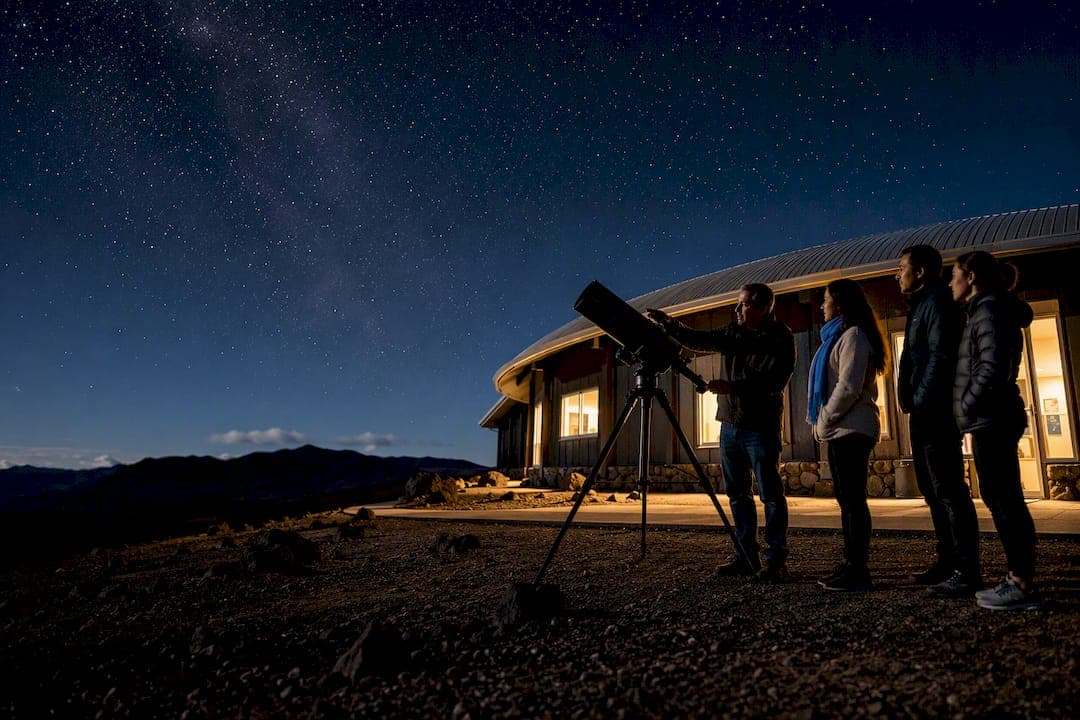
The Maunakea Visitor Information Station is the smartest starting point for big island stargazing, giving you free naked-eye access to one of the clearest night skies on Earth without the vehicle or altitude headaches of the summit. The summit itself is unforgettable at sunset, but its 4WD requirement and strict closing time make it a job for a tour or a well-prepared DIY trip. If the mountain is fogged in or booked up, Hawaiʻi Volcanoes National Park and the dark pockets along the Kohala Coast make solid backup plans.
TL;DR:
- The visitor center at 9,200 feet offers the most convenient and accessible stargazing experience with free programs and volunteer telescopes, ideal for casual visitors.
- Reaching the summit requires a permitted 4WD vehicle, and visitors must be aware of strict sunset closing times and altitude effects on night vision and judgment.
- When Mauna Kea is unavailable, volcanoes national park and nearby coastal spots provide reliable dark skies without permits or high-altitude risks.
- Planning around new moon phases improves chances of seeing the Milky Way, and bringing proper gear like a red flashlight and tripod helps optimize star photography.
- Staying at a quiet base near Kealakekua Bay, like Luana Inn, simplifies late-night trips and enhances recovery, with weather flexibility increasing the chance of clear skies.
Table of Contents
- Where to go for the best big island stargazing
- Maunakea up close: VIS versus the summit, tours versus DIY
- Solid stargazing alternatives when Mauna Kea isn't in the cards
- What to pack and when to go for the clearest sky
- Planning your stargazing night step by step
- Respecting the mountain and the culture behind the stars
- Where to base yourself for an easier stargazing night
- An honest note on chasing dark skies
- Make your stargazing trip easier with a restful home base
- Sources
Where to go for the best big island stargazing
Not every dark patch of road is worth the drive. Here's where the sky actually delivers, ranked by how easy each spot is to reach and how good the view gets once you're there.
- Maunakea Visitor Information Station (VIS): Sitting at 9,200 feet, this is the default choice for most visitors. It runs nightly stargazing programs with laser-guided constellation talks and volunteer telescopes, and parking is free.
- Maunakea summit: The summit, at its high elevation, delivers exceptional sky conditions that host many of the world's most advanced observatories in the first place. It's iconic, but it comes with real limits on timing and vehicles.
- Hawaiʻi Volcanoes National Park: Around 4,000 feet, managed by the National Park Service, with reliably dark skies and easy pullouts near Volcano Village.
- Kohala Coast and Hapuna Beach: Closer to Kona resorts, these spots offer surprisingly dark pockets if you walk away from the hotel light domes.
- South Point and Saddle Road pullouts: Wide-open horizons with almost no light interference, good for travelers who want a spontaneous, no-reservation option.
Each of these solves a different problem. VIS solves convenience. The summit solves spectacle. Volcanoes National Park and the coastal spots solve access when the mountain isn't in the cards.
Maunakea up close: VIS versus the summit, tours versus DIY
The gap between the VIS and the summit is bigger than 4,600 feet of elevation. It's the difference between a relaxed public program and a genuine high-altitude expedition, and knowing which one fits your trip changes everything about how you plan.
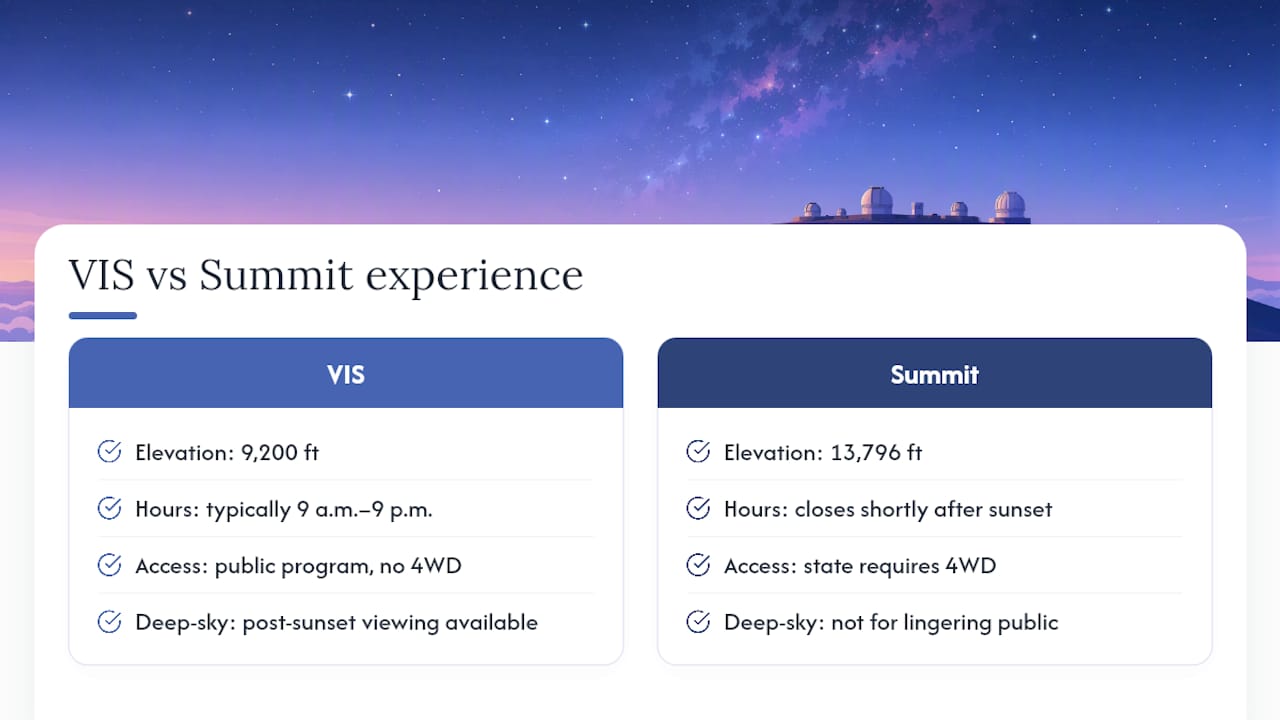
The VIS sits at 9,200 feet and typically runs from 9 a.m. to 9 p.m., though hours shift with staffing and weather, so check before you drive up. Once the sun drops, rangers and volunteers set up telescopes and lead free laser-pointer constellation tours, open to anyone who shows up. Parking is free and the lot rarely fills up completely, though weekend nights get tight.
The summit is a different animal. At 13,796 feet, the thinner air genuinely affects your night vision and your judgment, and state rules require a 4WD vehicle above the VIS, not a suggestion but an enforced restriction tied to steep, unpaved sections of the summit road. The summit closes to visitors shortly after sunset, which means the postcard sunset is available to everyone, but lingering for deep-sky viewing up top is not part of the deal for the general public.
That closing rule is exactly why most serious stargazing happens at the VIS rather than the summit. Local guides and hosts often prefer it for a simple reason: adapting your eyes to darkness and feeling comfortable in thinner air is easier at 9,200 feet than at 13,796, even though the summit's telescopes are more scientifically capable.
1. Commercial tours solve three problems at once: they provide a permitted 4WD vehicle, they pace your altitude adjustment for you, and they bring an interpreter who can point out constellations, planets, and Hawaiian navigation stars you'd otherwise miss. A typical outing lasts several hours when the summit visit is included, covering pickup, a parka rental, dinner, sunset at the summit, and a return stop at the VIS for deep-sky viewing.
2. DIY summit trips work if you have a genuinely qualified 4WD vehicle and know the rules cold. Most rental agreements bar their vehicles from the summit road entirely, so verify permission before you commit to driving yourself. Confirm road status on the official Maunakea conditions page the same day you plan to go, since closures can appear with little warning.
Pro Tip: Stop at the VIS for at least 30 minutes before continuing to the summit. It's not just a scenic pause. Your body needs that time to start adjusting to the altitude, and skipping it is the single biggest reason visitors feel dizzy or sick once they're higher up.
Solid stargazing alternatives when Mauna Kea isn't in the cards
Clouds roll in, roads close, tours book out. When Mauna Kea isn't available, the Big Island still has real dark-sky options that don't require a summit permit or a 4WD.
- Hawaiʻi Volcanoes National Park: Around 4,000 feet of elevation and far enough from city lights to deliver a genuinely dark sky, with easy pullouts near Volcano Village that need no special vehicle.
- Kohala Coast beaches, including Hapuna: Walk a few minutes away from the resort lighting and the sky opens up considerably. Convenient if you're staying near Kona and don't want a long drive.
- South Point Park: The southernmost point in the United States, with a wide-open horizon and virtually no light pollution, always accessible without reservations.
- Saddle Road pullouts: Sitting at moderate elevation between Hilo and Kona, these spots give you darker skies than the coast without the altitude concerns of the summit.
Volcanoes National Park is the strongest all-around backup, since it pairs genuine darkness with paved access and restrooms. The coastal spots win on convenience if you're staying near Kona and just want a quick, no-planning option after dinner.
What to pack and when to go for the clearest sky
Timing your trip around the moon matters more than most visitors realize. The moon phase affects visibility of the Milky Way core, with brighter moonlight diminishing its visibility, so aim for the days around a new moon if a rich, star-dense sky is the goal. April through October tends to offer the best window for seeing the Milky Way's bright core rise, while the VIS's public program runs year-round regardless of the moon phase.
Gear that actually earns its space in your bag:
- A flashlight with a red filter, since white light ruins night vision for everyone nearby, including you.
- A basic pair of binoculars, which reveal far more of the Milky Way's texture than most people expect.
- A small tabletop or tripod-mounted telescope if you're serious, though the VIS volunteer telescopes cover most casual curiosity for free.
- A sturdy tripod if you're bringing a camera, since anything longer than a couple of seconds of exposure needs a stable base.
Photography basics are simple once you know the numbers. Use the widest lens you have, set your ISO high (1600 to 3200 is common), open the aperture as wide as it goes, and keep your shutter speed under about 20 seconds to avoid visible star trails. A little trial and error on-site beats any formula.
Temperatures at the VIS commonly drop significantly after dark compared to sea level conditions like those in Kona, so bring warm layers. Layers matter: a base layer, a warm mid layer, and a windproof shell. If your tour includes a parka, take it. If you're going DIY, bring gloves and a hat, because heat loss from your head and hands is where the cold really gets you.
Planning your stargazing night step by step
- Check the VIS stargazing schedule and the road conditions page the same day you plan to go.
- Book a summit tour early if you want one, especially during peak travel months when slots fill fast.
- Confirm whether your rental car has summit permission, or arrange a properly permitted 4WD if you're going the DIY route.
- Plan to arrive at the VIS at least a short time before you intend to go higher, and rest there to acclimate.
- Watch for headache, nausea, or dizziness, and descend immediately if any of these show up.
Respecting the mountain and the culture behind the stars
Long before satellites and star charts, Hawaiian navigators crossed thousands of miles of open ocean using nothing but the stars, the swells, and memory. That tradition lives on at ʻImiloa Astronomy Center in Hilo, where planetarium shows connect wayfinding traditions to the same modern telescopes sitting on the summit above.
Do: follow ranger and guide instructions, keep white lights off once your eyes adjust, and join cultural programming if it's offered during your visit.
Don't: climb onto restricted cinder cones, leave any trash behind, or treat Maunakea as just another photo stop. It's a sacred site to Native Hawaiians first, and a stargazing destination second.

Where to base yourself for an easier stargazing night
Staying near Kealakekua Bay puts you within a manageable drive of both the VIS and Volcanoes National Park, and a quiet hilltop setting makes it easier to rest before a late night out. A simple plan: leave in the afternoon, stop for an early dinner, and settle in at the VIS well before dark to acclimate properly.
An honest note on chasing dark skies
There's a particular kind of quiet that settles in once your eyes fully adjust at 9,200 feet and the Milky Way stops looking like a smudge and starts looking like a structure, arching directly overhead with more stars than a lifetime in most cities ever shows you — a reminder of why stargazing near Toronto requires seeking out dark skies away from city lights. That sky is not owed to anyone, and it survives only because people who visit it choose to protect it. Keep your lights down, your voice low, and your trash in your pocket, and it will still be there for the next person who drives up that road looking for the same thing.
— Nicole
Make your stargazing trip easier with a restful home base
Luana Inn is the practical alternative to booking a resort room far from Mauna Kea. Set on a hillside above Kealakekua Bay, it puts you within reasonable striking distance of both the VIS and Volcanoes National Park, without the light-polluted parking lots that surround most big hotel properties near Kona.

A quiet hilltop room means you can nap before a late-night drive instead of fighting resort noise, and an early farm-to-table breakfast the next morning helps you recover from a short night's sleep. If altitude travel leaves you stiff or tired, the infrared sauna and wellness amenities at Luana Inn make the next day feel far less like a recovery day. Given how much weather can shift a single-night plan, booking two or three nights gives you a real shot at clear skies instead of betting everything on one forecast. Check current room availability and build a stargazing trip with some breathing room built in.
Sources
- Nightly Stargazing Activities
- Mauna Kea Stargazing (2026)
- Hawaiʻi Volcanoes National Park
- ʻImiloa Astronomy Center: navigating the stars
- Maunakea road conditions