
Kona stays warm all year, with average highs holding between 81 and 87°F and lows rarely dipping much below the mid 60s. April through October tends to run warmest and driest, while December through March brings whale season, slightly heavier rain, and bigger surf in spots. Most days follow the same rhythm no matter the month: clear mornings, then building clouds and a brief shower by afternoon or evening.
TL;DR:
- Kona's warmest and driest months for water activities are July and August, with temperatures averaging near 87°F and minimal rainfall.
- Peak whale watching occurs from December through March, which also brings the highest rainfall, though most showers are brief.
- April through September offer the best chances for consistent sunny beach days with low rain and fewer crowds.
- Rain mostly occurs in short bursts from December to February, making outdoor plans feasible in the mornings when showers are rare.
- Evenings stay mild year-round, and packing should include lightweight clothing, a light jacket for breezes, and water shoes for rocky beaches.
Table of Contents
- Kona Weather Averages: A Month-by-Month Breakdown
- How Much Does Kona's Temperature Really Change?
- When and Why Does It Rain in Kona?
- Best Time to Visit Kona: Matching Months to Priorities
- Packing and Timing Tips for Kona's Weather
- Where This Weather Data Comes From
- What Mornings Actually Look Like on the Ground
- A Quiet Base for Kona's Best Weather Hours
- Sources
- FAQ
Kona Weather Averages: A Month-by-Month Breakdown
Kona's climate barely wobbles compared to mainland seasons, but the small shifts still matter when you're choosing dates. NOAA's 1991 to 2020 climate normals put August as the warmest month on average and January among the wettest, a pattern that shapes almost every recommendation below.
A few numbers are worth pulling out on their own. July is the driest month, averaging around half an inch of rain, while December runs the wettest, closer to 1.4 inches. On the temperature side, August is usually the warmest month with average highs reaching the mid to upper 80s °F, while February ranks among the coolest, with highs in the low 80s °F, based on NCEI's 1991 to 2020 normals.
A few takeaways stand out once you line the months up side by side:
- Warmest window for water temperature and predictable sun: July and August.
- Best odds for a dry stretch of beach days: April through September.
- Highest rainfall months, though showers stay brief: November through January.
- Watch for the Ironman World Championship in early October, when Kona's hotels fill fast and prices spike regardless of the weather.
How Much Does Kona's Temperature Really Change?
Not much, honestly. The swing between Kona's warmest and coolest months is only about 6°F, which is smaller than the difference between a mild spring day and a hot one almost anywhere else in the country. August highs average near 87°F, February highs sit closer to 81°F, and overnight lows stay comfortable in the mid 60s all year.
Evenings can get a breeze off the water, especially near the shoreline, so don't assume you'll never want a layer just because you're in Hawaii. A simple packing approach covers nearly every month:
- Lightweight, breathable clothing for daytime (shorts, t-shirts, sundresses).
- One light long-sleeve layer or a light jacket for breezy evenings.
- A swimsuit you're comfortable wearing daily, since water temps stay warm year-round.
- Closed-toe sandals or water shoes for lava rock shorelines.
When and Why Does It Rain in Kona?
Kona sits in a leeward rain shadow, which is the main reason it stays drier than places like Hilo on the island's windward side. Mauna Loa and Hualālai block most of the moisture coming off the trade winds, so Kona gets a fraction of the rain that soaks the other coast, according to the National Weather Service's Hawaii climate summary.
Rain here rarely means a washed-out day. Most showers arrive in short afternoon or evening bursts rather than steady all-day downpours, often clearing within twenty or thirty minutes and leaving a rainbow behind.
- Mornings are almost always the clearest window, before clouds build over the mountains.
- Afternoon showers are common but usually brief, not full-day events.
- December through February bring the highest totals, still light by most standards.
- Plan outdoor water activities before midday whenever your schedule allows it.
Best Time to Visit Kona: Matching Months to Priorities
The right month depends on what you're chasing more than any single "best" answer. Kona doesn't really have a bad season, just different trade-offs between rain, surf, and crowds.
- For the driest, most predictable beach days: aim for April through June or September through November. These shoulder months combine low rainfall with lighter crowds than peak summer or the winter holidays.
- For humpback whale watching: book December through March, with January through March marking the peak. Expect slightly higher rainfall and larger surf in some spots, a fair trade for the sightings.
- For lower prices without sacrificing much weather: target late April to early June, right after whale season winds down and before summer crowds arrive.
- One week to avoid unless you're competing: early October, when the Ironman World Championship takes over Kona's hotels and roads.
Packing and Timing Tips for Kona's Weather
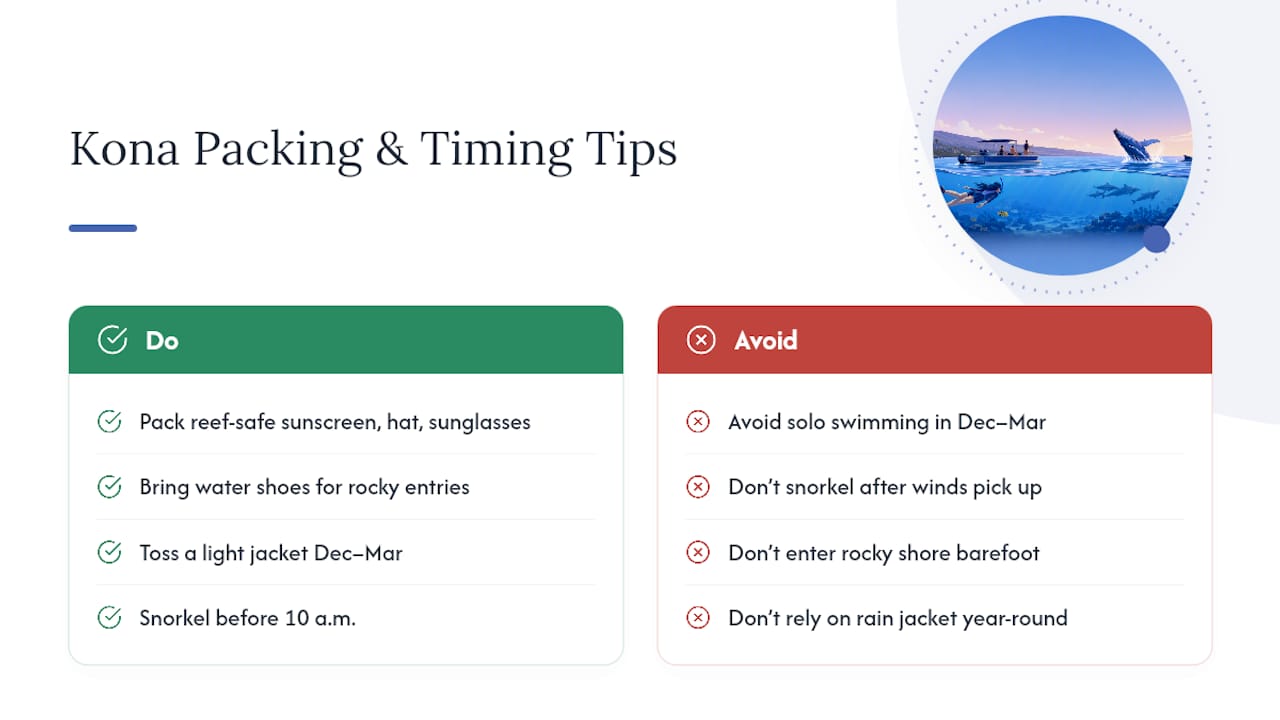
Pack for sun first: reef-safe sunscreen, a hat, and sunglasses matter more here than a rain jacket, though a light one is worth tossing in for December through March. Water shoes help with the rocky entries common along the Kona coast, and a light layer covers breezy evenings.
For snorkeling or any beach activity, get in the water before 10 a.m. Mornings are consistently clearer and calmer before afternoon clouds and wind pick up.
Pro Tip: Check Hawaii Ocean Safety's surf season guidance before swimming in winter. Surf and currents run stronger December through March, and a guided boat trip is a smarter call than a solo swim when conditions look rough.
Where This Weather Data Comes From
The averages above come from NOAA's National Centers for Environmental Information, which calculates climate normals from 30 years of station data (1991 to 2020). Airport-based normals can differ slightly from what you'll feel at the shoreline or up in the hills, since the University of Hawaiʻi's climate data portal shows real microclimate variation across short distances on this coast.
- Climate normals: NOAA/NCEI, 1991 to 2020.
- Short-term forecasts: check the NWS forecast for the Kona area within a week of travel.
- Local nuance: University of Hawaiʻi climate portal for station-level detail.
What Mornings Actually Look Like on the Ground
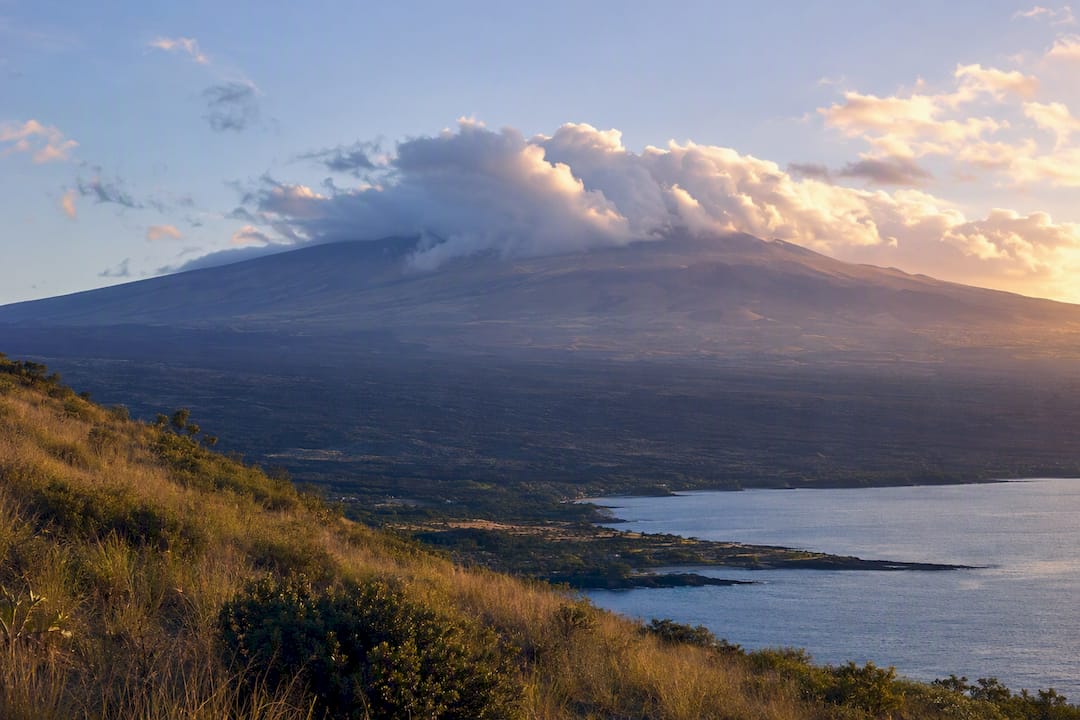
Guests staying with us often ask how the forecast translates to real life, and the pattern holds up almost every day: mornings are calm and clear, clouds gather over Mauna Loa by early afternoon, and a short shower or two rolls through before the sky opens back up for sunset. Plan your snorkeling, hiking, or bay time early, then save the evening for watching the sky turn pastel from a hilltop vantage point. Curious about specific beaches or bay conditions? Our Kona Coast geography guide breaks down why this coast stays so dry. For weather-sensitive booking questions, reach out directly through the inn.
A Quiet Base for Kona's Best Weather Hours
The property sits on a hillside above Kealakekua Bay, close enough to the water for an early start and far enough up to catch scenic sunset views. Rooms feature private entrances, and guests can enjoy amenities such as a chlorine-free pool, hot tub, and infrared sauna for relaxation after a day in the water.
If you're planning around whale season, our private whale watching planning guide pairs well with a stay timed for December through March. Ready to lock in dates around the driest, clearest months? Browse the Moana, Makani, and Mahina rooms and book the window that matches your priorities, whether that's dry mornings for snorkeling or slower whale season afternoons on the lānai.
Sources
FAQ
What Is the Best Month to Visit Kona, Hawaii?
There's no single best month, but April through October offers the most consistent dry, warm days for beach time and snorkeling. If whale watching is the priority, January through March delivers peak sightings despite slightly higher rain and surf.
What Is the Rainiest Month in Kona, Hawaii?
December is typically Kona's wettest month, averaging around 1.4 inches of rain based on NOAA's climate normals. Even in the wetter months, most rain falls in short afternoon or evening showers rather than all day.
Which Is Hotter, Florida or Hawaii?
Florida often sees higher peak summer temperatures and more extreme humidity than Kona, which stays in a narrower band year-round with highs between 81 and 87°F. Hawaii's ocean breezes and elevation changes keep temperature swings smaller than Florida experiences in July and August.
Is Kona on the Rainy Side of Hawaii?
No, Kona sits on the leeward, drier side of the Big Island, shielded from trade wind moisture by Mauna Loa and Hualālai, according to the National Weather Service. Windward areas like Hilo receive far more annual rainfall than Kona does.
When Does Whale Season Overlap With Kona's Dry Season?
There's a short overlap in late March and again in November, when whale sightings are still possible and rainfall hasn't peaked yet. Outside that window, travelers generally choose between the driest months (April through October) or peak whale season (January through March).