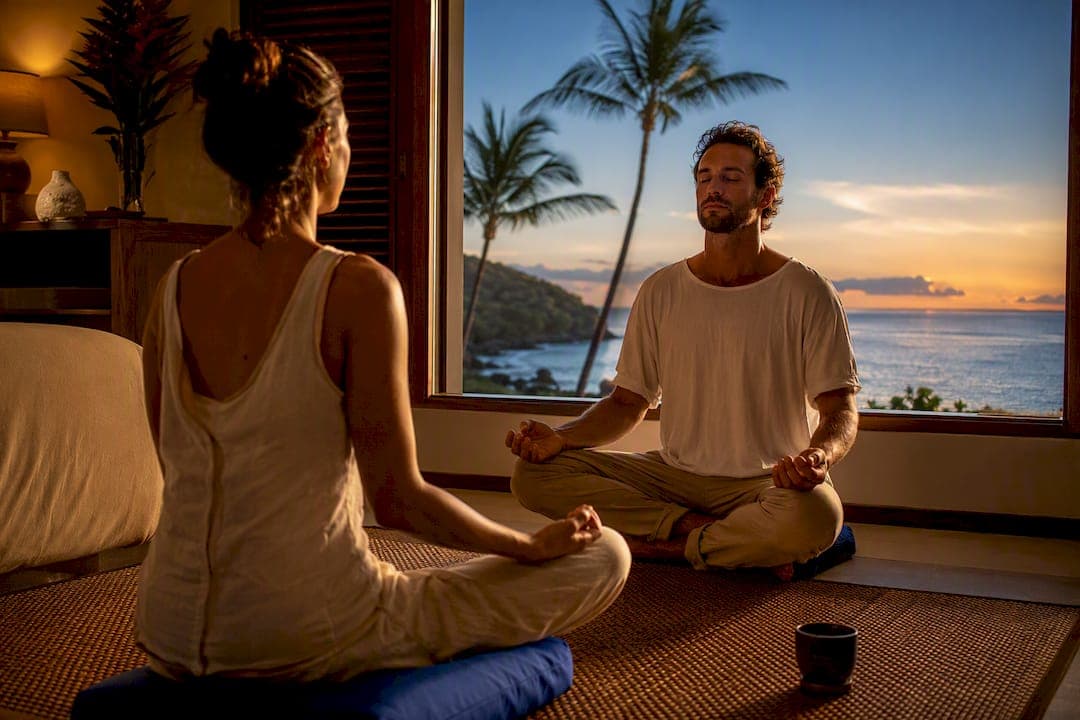
Yes, meditating together reliably deepens emotional connection. Shared practice calms both nervous systems at once and makes it easier to open up, listen, and stay present with each other. Try this tonight: sit knee to knee, hold eye contact for a short time, and breathe slowly together. Even a minute or two, done regularly, builds real intimacy over time.
TL;DR:
- Practicing synchronized breathing for just a few minutes can significantly increase emotional closeness and reduce stress between partners.
- Short exercises like eye-gazing or expressing appreciation can deepen connection, even if done for less than five minutes daily.
- Consistent shared meditation builds stronger willingness to open up, with reported increases in closeness and relationship satisfaction over time.
- Difficulties such as restlessness or awkwardness are normal, and simple adjustments or scripts can help maintain the practice without feeling forced.
- Incorporating small routines into existing habits, such as after brushing teeth or before bedtime, improves long-term adherence more than creating new rituals.
Table of Contents
- Why Meditate Together? The Science Behind Shared Practice
- Six Meditations for Couples Exercises to Try Tonight
- Two Guided Scripts You Can Read Aloud Tonight
- Setting Up a Routine That Actually Sticks
- What to Do When It Feels Awkward or Doesn't Click
- The Research Behind Couples Mindfulness Exercises
- A Practical Note From Nicole on Starting Small
- Try It in Person: Guided Couples Wellness at Luana Inn
- Sources
Why Meditate Together? The Science Behind Shared Practice
Two nervous systems calm each other faster than one calms itself alone. When you and your partner breathe in sync or sit quietly side by side, your bodies start mirroring each other's rhythm, a process researchers call co-regulation. Reviews of mindfulness research link this kind of synchronized attention to measurably lower stress markers and steadier emotional regulation between partners.
The effects go beyond calm. A study tied to the Max Planck Institute's ReSource Project found that couples who practiced partner exercises repeatedly reported greater closeness and a stronger willingness to open up over time. A Greater Good Science Center summary of that same research found something else worth noting: people rated meditating with a partner as just as motivating as solo practice, sometimes more so. That's the quiet power of doing this together instead of separately.
Six Meditations for Couples Exercises to Try Tonight
You don't need a cushion collection or an hour of free time. Most of these take less than five minutes, and each one has a shorter version if you're pressed for time.
- Synchronized breathing: Sit facing each other, hands on knees or held loosely. Match your inhale and exhale briefly as a starter, or extend it as you feel comfortable. For a deeper version, try box breathing together: inhale 4 counts, hold 4, exhale 4, hold 4.
- Eye-gazing: Hold soft eye contact for 30 to 60 seconds without talking. Laughter is normal here, not a failure. For a fuller version, alternate 30 seconds of gazing with 30 seconds sharing one observation about your partner, repeated for 5 minutes.
- Loving-kindness for partners: Sit quietly and silently wish your partner ease, health, and happiness for 60 seconds. Then say one wish out loud.
- Body scan together: Lie side by side and silently notice sensation from your feet upward, checking in verbally once you reach the top.
- Mindful touch: Hold hands for 60 seconds, focusing only on the warmth and pressure between your palms.
- Appreciation check-in: Take turns naming one specific thing you noticed about the other today.
Pick a quiet corner of the bedroom or living room, dim the lights if you can, and put phones in another room. Check in with a quick "ready?" before starting so neither of you feels caught off guard.
Pro Tip: Specific appreciation beats generic praise. "I noticed how patient you were on that call today" lands deeper than "you're great."
Two Guided Scripts You Can Read Aloud Tonight
Reading a script out loud, or recording yourself reading it once and replaying it, removes the guesswork of what to say next. Here are two ready to use.
5 to 7 minute presence and breath script:
- Sit facing your partner, knees close. Close your eyes for the first minute and just notice your breath.
- Open your eyes and find your partner's gaze. Breathe slowly together for 2 minutes, letting your exhale lengthen slightly each time.
- For 2 minutes, silently notice one thing you're grateful for about this relationship.
- Close with a shared breath and a squeeze of the hands. Say quietly, "I'm glad we did this."
10 minute loving-kindness partner script:
- Sit comfortably, eyes closed, for 1 minute of settling breath.
- Silently offer your partner these phrases for 3 minutes: "May you be at ease. May you feel loved. May you feel safe."
- Open your eyes. Take turns speaking one silent wish aloud, 2 minutes each.
- Sit in silence together for 1 minute, letting the words settle.
- Close with one sentence each about how the practice felt.
End either script with a small ritual, a hand squeeze, a forehead touch, or a whispered thank-you, so your body learns to associate the practice with warmth.
Setting Up a Routine That Actually Sticks
A dim lamp instead of an overhead light, a couple of floor cushions, and phones left in another room go a long way toward making this feel like a retreat instead of a chore. You don't need incense or a meditation app subscription. You need a spot where you won't be interrupted for a few minutes.
Timing matters more than most couples expect. Trying to find a "perfect" hour usually means it never happens.
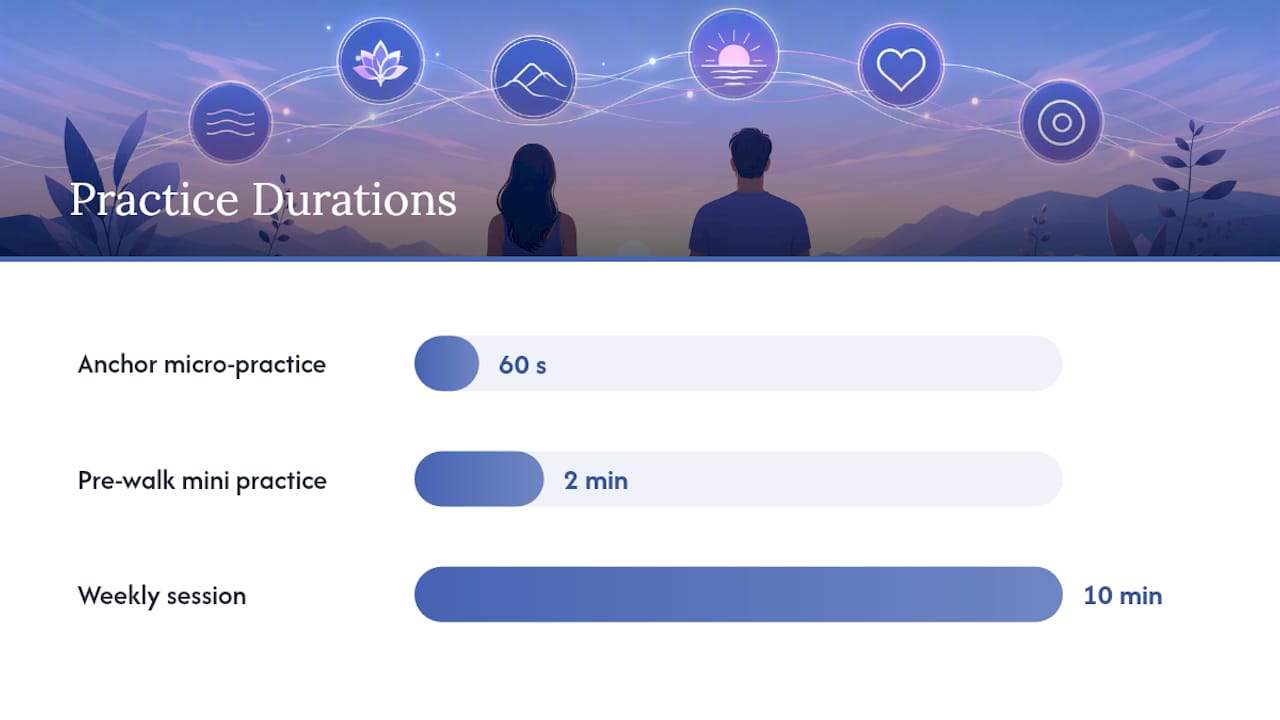
- Anchor a 60-second practice to something you already do, like right after brushing your teeth or before turning off the bedroom light.
- Set one weekly 10-minute session, maybe Sunday morning coffee or Friday night before dinner plans.
- Tie it to an existing ritual instead of creating a new one from scratch, like meditating for 2 minutes before your regular evening walk.
Close every session with a brief check-in: "What did you notice?" or "How do you feel right now?" This single question does more for connection than the meditation itself sometimes does, because it turns a shared silence into a shared conversation.
What to Do When It Feels Awkward or Doesn't Click
Laughter during eye-gazing is common, not a sign you're doing it wrong. Neither is restlessness, a wandering mind, or one partner feeling more into it than the other. Meditation for relationship harmony isn't about achieving stillness. It's about showing up together.
If one of you is fidgety, shorten the timer. Thirty seconds of eye-gazing is still eye-gazing. If the silence feels stiff, alternate who leads the exercise or use a written script so neither person has to improvise. Agree on a simple consent signal, like a hand tap, so either partner can pause without it feeling like rejection.
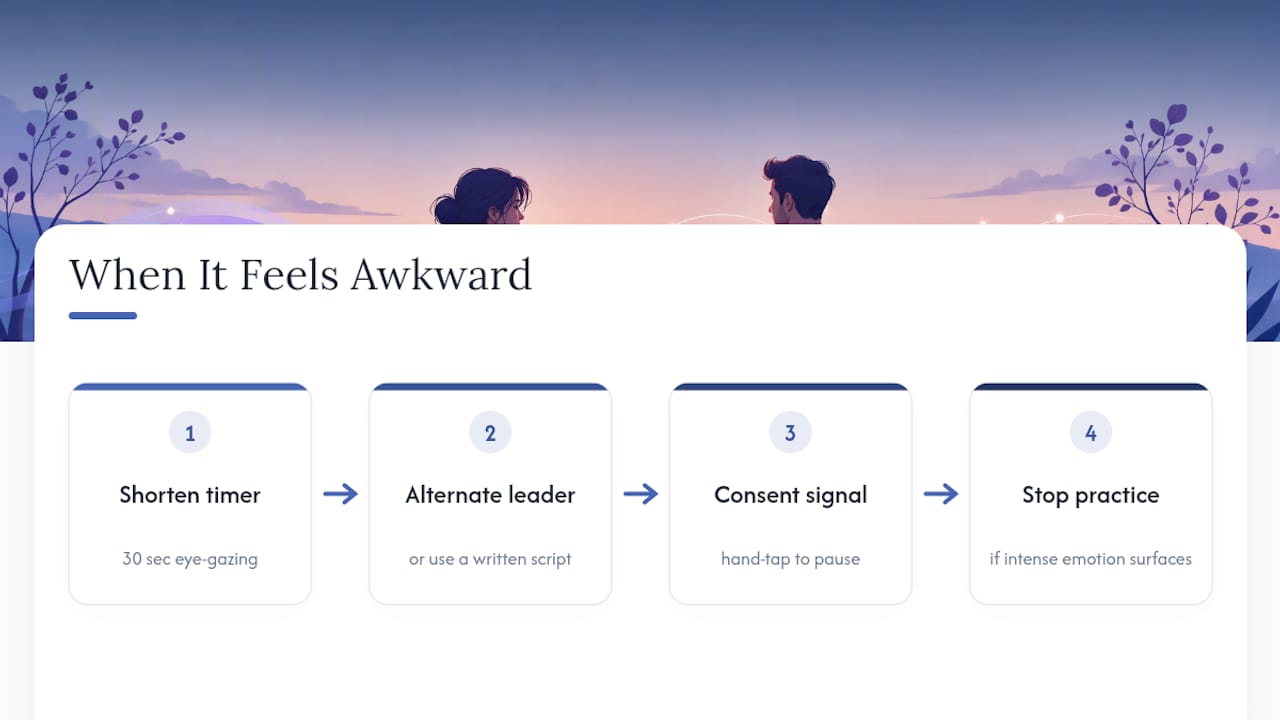
If a session unexpectedly surfaces grief, old resentment, or intense emotion, stop the practice. That's a moment for a conversation, or for a licensed therapist, not for pushing through a breathing exercise.
Pro Tip: If your partner seems distracted, don't take it personally. Attention spans differ, and a 30-second version done consistently beats a 10-minute version done once and abandoned.
The Research Behind Couples Mindfulness Exercises
The strongest evidence for meditation's effect on relationships comes from dyadic practice research tied to the Max Planck Institute's ReSource Project, which tracked partner exercises across repeated sessions and found consistent gains in closeness and self-disclosure. A lay summary from Greater Good Science Center breaks down those findings for readers outside academic circles, while broader mindfulness reviews point to physiological co-regulation as the likely mechanism behind why synchronized practice calms both partners at once.
Luana Inn approaches this from the guest side, not just the research side.
- Nicole, who writes on wellness and relationship practices for Luana Inn, draws on years of observing couples try guided practices during their stays.
- Luana Inn's wellness pages document in-person guided meditation offerings couples can experience firsthand on the property.
A Practical Note From Nicole on Starting Small
Couples rarely fail at meditation because the technique is wrong. They fail because they wait for the "right" moment that never comes. Start absurdly small, schedule it like you would a dinner reservation, and let it be a little playful; a shared laugh during eye-gazing is not a setback. Try a brief breath sync tonight before you even finish reading this.
— Nicole
Try It in Person: Guided Couples Wellness at Luana Inn
Reading a script from your living room floor works, and it's a great place to start. But if you want someone else to hold the space while you and your partner simply show up, Luana Inn offers something the phone screen can't: a private, oceanview setting on the Big Island built specifically for wellness retreats. Guests can pair a stay with guided meditation sessions, spa treatments, and a chlorine-free pool and infrared sauna, all set against the sunsets over Kealakekua Bay.
Start with the micro-practices from this guide at home, then explore the vacation packages for a retreat built around guided couples wellness, or check the rooms overview to plan a stay where a private guided session is part of the experience. Visit Luana Inn to check dates and book your escape.
Sources
- ReSource Project / related partner-meditation findings (Max Planck)
- Can meditating together improve your relationships? — Greater Good (Berkeley)
- Mindfulness-related review on social benefits — NCBI PMC