
The most reliable sustainable Big Island tour operators are KapohoKine Adventures, Sea Paradise Hawaii, Hawaii Forest & Trail, Anelakai Adventures, Big Island Backroad Adventures, and Body Glove Hawaii. Each one earns its place through a specific, verifiable sustainability signal, not just a tagline.
- KapohoKine Adventures — Small-group coastal and cultural tours; holds STAH and Hawai'i Ecotourism Association memberships, the two most recognized third-party credentials in Hawaii.
- Sea Paradise Hawaii — Marine snorkeling and wildlife viewing; referenced in regional sustainability reporting and supports local marine research partnerships.
- Hawaii Forest & Trail — Rainforest and waterfall hikes led by trained naturalist guides with a clear conservation-education focus.
- Anelakai Adventures — 100% paddle-powered manta and coastal canoe tours; no motors, no fuel emissions, and rich cultural storytelling on traditional double-hull canoes.
- Big Island Backroad Adventures — Small-group land tours with documented volunteer work, single-vehicle transport, and engine-off policies at wildlife pullouts.
- Body Glove Hawaii — Marine and coastal activities backed by a published composting program that diverts a significant amount of food scraps annually.
Pro Tip: Book shoulder-season tours in April–May or September–October. Fragile sites see less strain, small-group slots open up, and you'll share the reef or rainforest with far fewer people.
Table of Contents
- Which sustainable Big Island tour operators are right for you?
- How do you vet a tour operator's sustainability claims?
- What should you ask before booking?
- When should you book, and what will it cost?
- How can you shrink your trip's footprint beyond the tour?
- Why do mālama, kuleana, and pilina matter on your tour?
- What else should you evaluate beyond sustainability?
- How do you actually book a sustainable tour, step by step?
- Your peaceful base for Big Island eco tours
- Key Takeaways
Which sustainable Big Island tour operators are right for you?
Choosing among eco-friendly tour operators comes down to three things: what you want to see, how active you want to be, and what kind of sustainability proof you need before handing over your credit card.
| Operator | Specialty / Best For | Departure Area | Group Size | Sustainability Credentials | Conservation / Research Partners | On-Tour Practices | Accessibility |
|---|---|---|---|---|---|---|---|
| KapohoKine Adventures | Cultural coastal tours, small-group marine | Kona | Small groups | STAH, Hawai'i Ecotourism Association | Local community support | Reef-safe sunscreen, reusable service ware | Moderate |
| Sea Paradise Hawaii | Snorkel, marine wildlife viewing | Kona | Small–medium | Association memberships (regional sources) | Marine research partnerships | Reef-safe sunscreen | Moderate |
| Hawaii Forest & Trail | Rainforest, waterfall, guided nature walks | Kona/Hilo | Small groups | Conservation-focused programming | Naturalist guide training | Single-vehicle transport | Moderate–strenuous |
| Anelakai Adventures | Paddle-powered manta snorkel, coastal canoe | Kona | Very small (paddle-powered) | Non-motorized, low-emission model | Cultural protocol storytelling | No motors, no fuel, quiet ocean approach | Requires paddling fitness |
| Big Island Backroad Adventures | Backroad nature and cultural tours | Kona/Hilo | Very small | Documented volunteer commitments | Local restoration project partnerships | Engine-off at pullouts, buy-local policy | Mild–moderate |
| Body Glove Hawaii | Small-group marine and coastal | Kona | Small groups | Published composting metrics | Waste-diversion programs | Composting, reusable service ware | Mild |
KapohoKine Adventures stands out for travelers who want both cultural depth and marine access in one operator. Their public sustainability page names specific memberships, which makes verification straightforward.
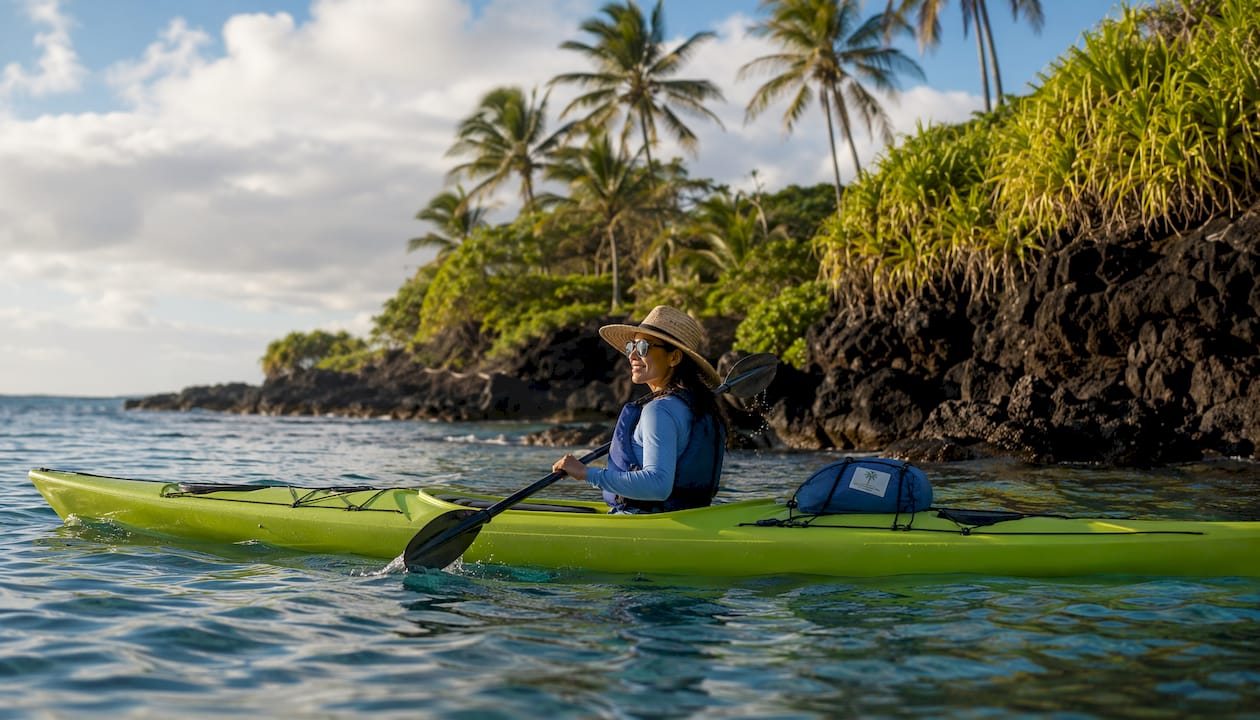
Anelakai Adventures is the right call if you want the quietest possible ocean experience. Paddle-powered vessels eliminate motor noise that can alter marine animal behavior, and the traditional double-hull canoe format carries genuine cultural weight. The trade-off is physical: you paddle, so it suits active travelers.
Body Glove Hawaii publishes actual composting numbers, which puts them in a small category of operators whose sustainability claims you can actually check. Ask for the current figures when you book.
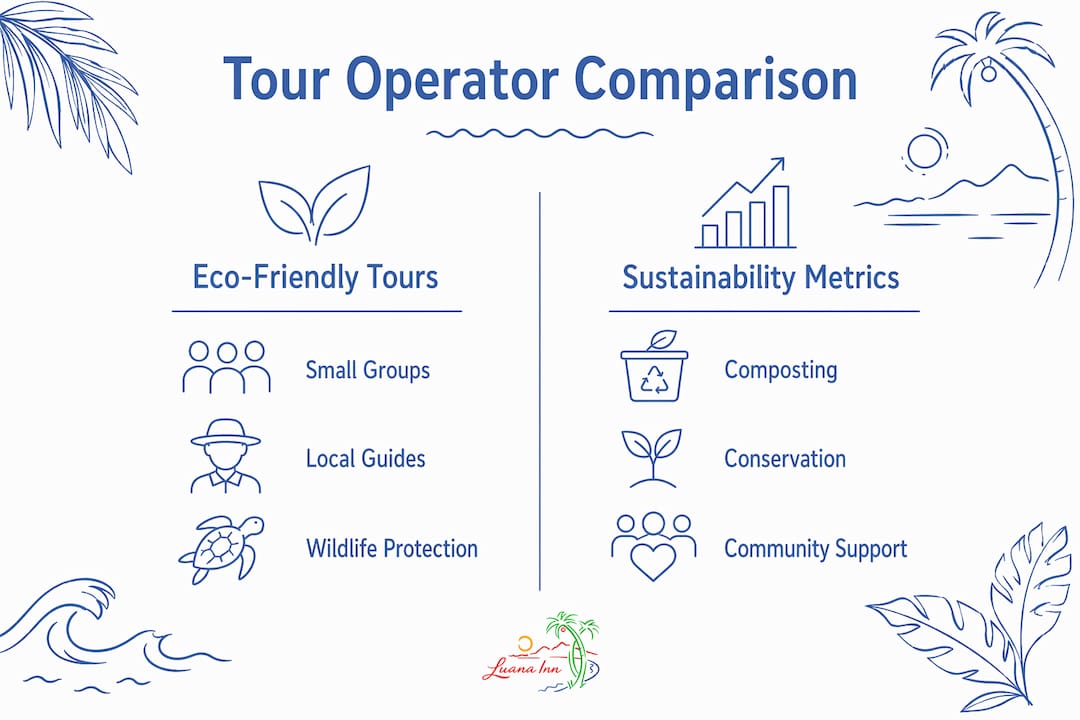
Pro Tip: Operators that publish measurable sustainability metrics — pounds composted, debris collected, percentage donated — are far easier to verify than those using vague language. Request those numbers before you commit.
How do you vet a tour operator's sustainability claims?
Greenwashing is common in Hawaii tourism. Vague phrases like "we love nature" or photos of turtles on a website mean nothing without specifics. The two credentials worth looking for are membership in the Sustainable Tourism Association of Hawaii (STAH) and the Hawai'i Ecotourism Association. Both require operators to meet defined standards, not just self-declare.
Red flags include group sizes of 30 or more, wildlife-petting or feeding activities, and no named conservation partners on the website. A reliable test: ask the operator for the name of the local foundation they support and request a recent conservation partner report. Vague answers usually mean weak commitments.
What should you ask before booking?
A short list of questions separates genuine operators from the rest:
- What is your maximum group size? Anything above 12 on a marine or rainforest tour warrants a closer look.
- Which conservation partners do you work with? Ask for a name and contact, not a general statement.
- Do you require reef-safe sunscreen? Hawaii's Act 104 restricts sunscreens containing oxybenzone and octinoxate. Operators who enforce this policy on tour take the rule seriously.
- What is your cancellation policy? Responsible operators publish clear terms. No-refund policies with no weather exceptions are a concern.
- How do you handle waste on tour? Single-use plastics, no composting, and no reusable service ware are signs of an operator still catching up.
When should you book, and what will it cost?
Small-group and regenerative tours sell out earlier than mass-market options, sometimes weeks or months ahead during peak season. Book your tours before or immediately after you finalize flights to avoid losing your preferred dates.
Expect to pay more than you would for a large-boat snorkel or bus tour. Smaller groups, trained guides, and genuine sustainability programs carry real operating costs. That premium is part of what funds the conservation work you're paying to support.
How can you shrink your trip's footprint beyond the tour?
Air travel is the single largest carbon impact of any Hawaii visit. Choosing a direct flight rather than a connecting route meaningfully cuts emissions. If a direct flight isn't available, verified carbon offsets through a platform like Cool Effect let you address what you can't avoid.
On the ground, pack light, walk or bike where possible, and choose activities that run on non-polluting power — kayaking, hiking, and paddle tours all qualify. Eating at restaurants that source local fish, produce, and meats cuts the food-supply carbon chain and keeps money in the community.
Why do mālama, kuleana, and pilina matter on your tour?
Regenerative tourism in Hawaii is grounded in three Hawaiian values: mālama (care for the land and people), kuleana (responsibility), and pilina (connection). Operators who build these into their programs tend to prioritize community partnerships, cultural protocols, and limits on visitor numbers at sensitive sites.
In practice, this means listening when a guide explains why a site is sacred, not touching coral or wildlife, and following instructions without needing to be asked twice. The Hawaii County Regenerative Tourism Program frames responsible visitor behavior as reciprocity, not restriction. You receive an authentic experience; the land and community receive genuine care in return.
What else should you evaluate beyond sustainability?
Safety record and customer reviews matter as much as green credentials. Check that the operator carries proper Coast Guard licensing for marine tours and state permits for land tours. Read recent reviews on Google and TripAdvisor with an eye for how guides handle unexpected conditions, not just whether guests had fun.
Look at eco-friendly tour operators' response patterns in reviews. An operator who addresses complaints directly and specifically, rather than with a copy-paste apology, usually runs a tighter, more accountable operation.
How do you actually book a sustainable tour, step by step?
- Confirm the operator's credentials on their website before anything else. Look for STAH or Hawai'i Ecotourism Association membership listed explicitly.
- Check group size limits in the tour description. If it's not listed, email and ask.
- Book directly through the operator's website when possible. Third-party booking platforms sometimes list outdated policies.
- Read the cancellation policy in full. Weather cancellations should come with a full refund or reschedule option.
- Confirm what's included — reef-safe sunscreen, reusable water bottles, and any gear you need to bring yourself.
- Add the tour to your calendar with a reminder two weeks out to reconfirm, especially for small-group paddle or manta tours that may have weather-dependent windows.
Your peaceful base for Big Island eco tours

After a day on the water or in the rainforest, you want somewhere genuinely restful to come back to. Luana inn sits in the foothills of Mauna Loa, overlooking Kealakekua Bay, and puts you close to the Kona-area departure points used by most of the operators above. The location means shorter drives, earlier mornings on the water, and long, quiet evenings watching the sunset shift colors over the bay.
Luana inn is a bed and breakfast, not a resort, so the pace is calm and the atmosphere is personal. It's the kind of place that fits naturally alongside a nature-focused itinerary. Pack your reef-safe sunscreen, book your tours early, and check room availability at Luana inn to lock in your dates before the shoulder-season slots fill up.
Key Takeaways
The most effective approach to responsible Big Island tourism is pairing a vetted, credentialed tour operator with lodging that keeps you close to departure points and supports a restorative pace.
| Point | Details |
|---|---|
| Verify credentials first | Look for STAH or Hawai'i Ecotourism Association membership before booking any operator. |
| Book tours early | Small-group eco tours sell out ahead of mass-market options — secure spots before or right after finalizing flights. |
| Ask for specific numbers | Request measurable metrics like pounds composted or conservation partner names; vague answers signal weak commitments. |
| Cut flight emissions | Choose direct flights and use verified offsets like Cool Effect to address the trip's largest carbon impact. |
| Luana inn as your base | Luana inn's Kealakekua Bay location puts you minutes from Kona departure points for a calm, nature-focused stay. |