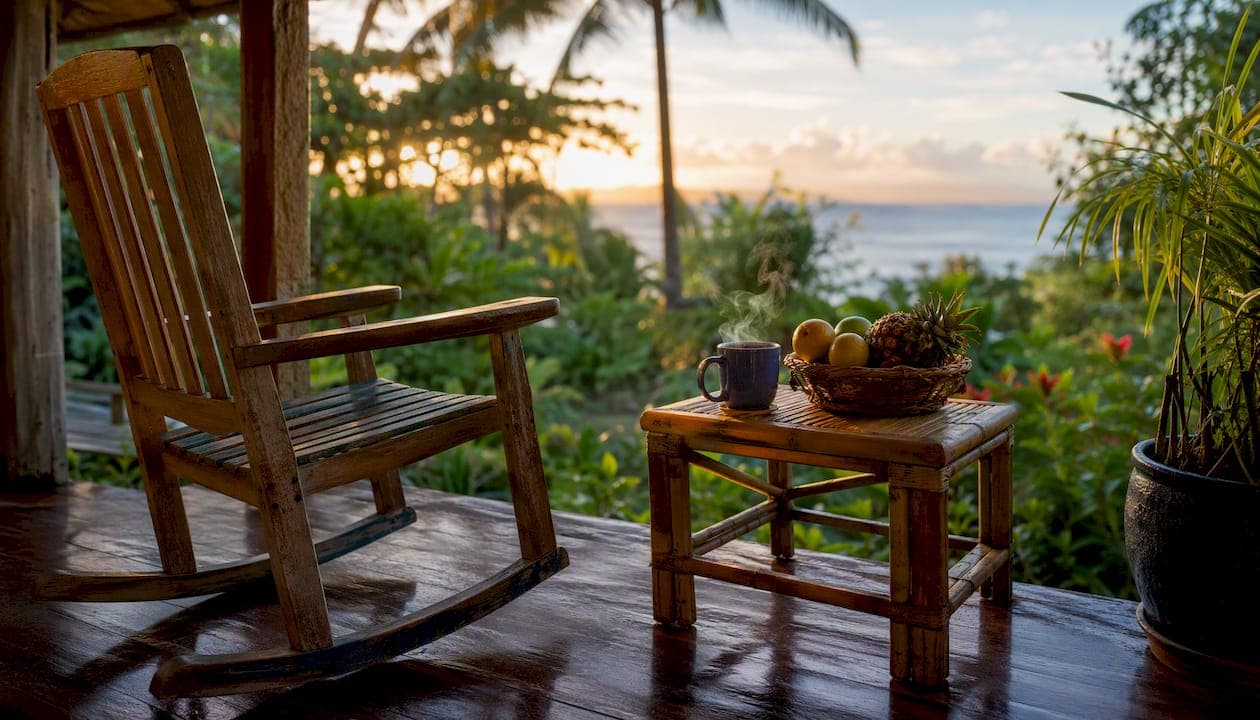
A secluded retreat is a deliberately private, quiet place set apart to rest, reflect, or reset. It's built around distance, both physical and mental, from your regular routine, your notifications, and the people who usually take up your attention. You'll see it called a hermitage, a hideaway, a lair, a nook, or simply "a secluded spot," but they all point to the same idea: somewhere removed enough that the noise of daily life can't reach you.
Picture a one-room cabin at the end of a dirt road with no cell signal, or a silent meditation cottage tucked behind a tree line where the only scheduled sound is a bell. That's the shape of it.
A secluded retreat is a quiet, isolated, and private place, intentionally removed from society, busy activities, roads, and other people to facilitate rest, relaxation, or introspection, according to the Cambridge English Dictionary.
Key Takeaways
A secluded retreat combines physical separation, low sensory input, and clear intent to create the conditions for genuine rest and reflection.
| Point | Details |
|---|---|
| Definition first | A secluded retreat is a deliberately private, quiet place set apart to rest, reflect, or reset. |
| Match the type to the goal | Silent, wellness, spiritual, solo, and hosted group retreats each suit a different need and pace. |
| Duration shapes outcome | Weekends reset stress; five to ten days tends to produce deeper, longer-lasting shifts. |
| Safety comes first | Confirm mobility needs, communication plans, and terrain before committing to a remote stay. |
| Hosted option | Luana Inn offers private rooms, wellness amenities, and curated retreat packages for readers who want the seclusion without the DIY logistics. |
Table of Contents
- What Makes a Place Count as a Secluded Retreat?
- What Are the Main Types of Secluded Retreats?
- Why Do People Choose a Secluded Retreat, and What Happens There?
- How Do You Choose or Plan a Secluded Retreat?
- What Do Hosted Retreat Centers and Inns Typically Provide?
- When Should You Skip a Secluded Retreat?
- A Short Stay, a Noticeably Quieter Mind
- Ready for a Hosted Secluded Retreat of Your Own?
- Sources
What Makes a Place Count as a Secluded Retreat?
Not every quiet cabin qualifies, and not every noisy weekend away disqualifies itself either. A handful of specific traits separate a true secluded retreat from an ordinary vacation rental.
Physical separation comes first. Distance from main roads, few or no visible neighbors, and controlled access (a locked gate, a single winding driveway, a reservation system that limits who's on-site) all reduce the odds of interruption. Low sensory input matters just as much: minimal foot traffic, no blaring television in the next room, and often a deliberate limit on WiFi or phone signal. Intentionality is the piece people miss most. A cabin becomes a retreat the moment it's used with purpose, whether that purpose is rest, reflection, or a specific practice like meditation or journaling. Glass's framework for what makes a retreat](https://retreats.substack.com/p/what-is-a-retreat) identifies the defining elements as separation from daily life, clear intent, whole-person engagement, and a shaped structure to the time, not the location or the length of stay.
Support features round it out. That could mean simple on-site amenities (a kitchen, a fireplace, a trail), posted etiquette (quiet hours, no-visitor policies), or a host who checks in without hovering.
- Distance from roads and dense neighbor traffic
- Limited or intentionally reduced connectivity
- A clear purpose for the time spent there
- Basic comfort features that support rest, not distraction
- Accessible paths and safe terrain for the people using it
Mobility and group size shape what "secluded" looks like in practice. A solo retreat for one person with limited mobility needs flat, short paths and single-level living. A group retreat for eight needs enough separate sleeping space that "private" still means something once everyone arrives.
Pro Tip: Before booking anything, ask how far the nearest neighbor or public road actually is. "Secluded" gets used loosely in listings, and the honest answer is often a five-minute drive, not a five-minute walk.
What Are the Main Types of Secluded Retreats?
Secluded retreats split into a few recognizable categories, and picking the wrong one for your goal is the most common planning mistake. Someone craving total silence and someone craving a slower pace with good meals are not looking for the same experience.
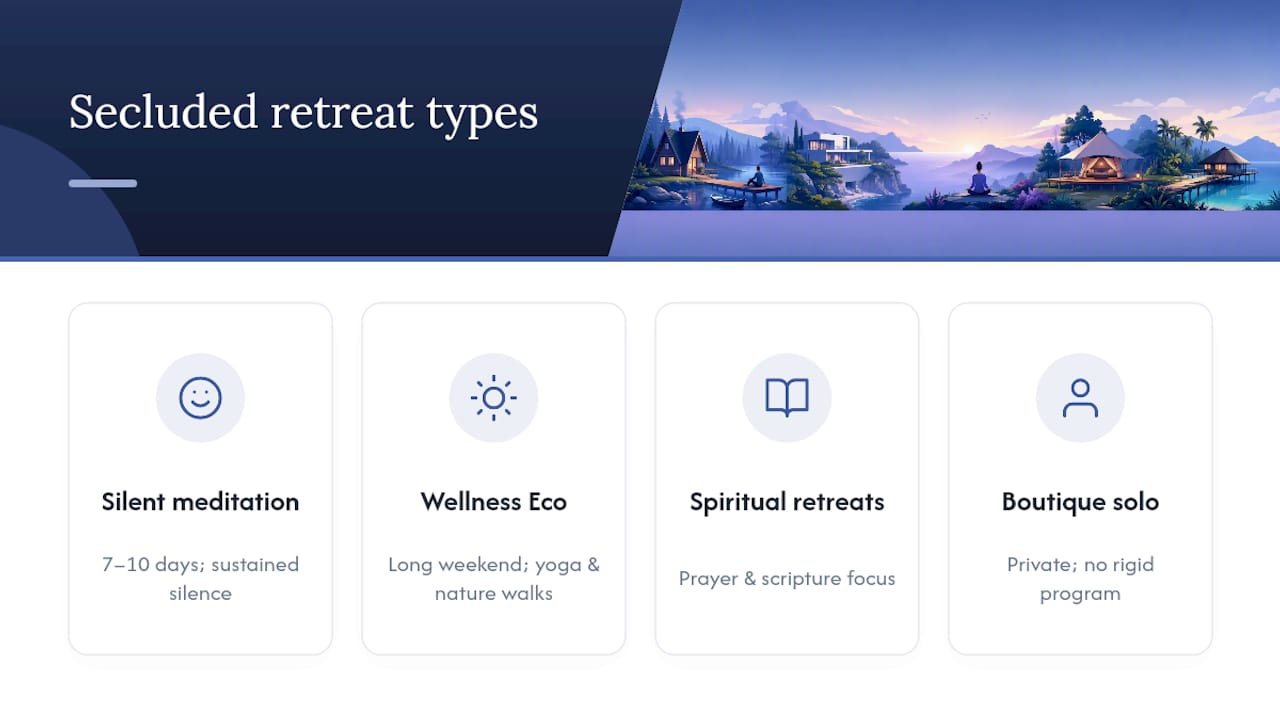
Silent meditation retreats, often modeled on Vipassana-style programs, run 7 to 10 days and emphasize sustained silence with structured sitting practice. They suit people already comfortable with meditation or willing to be uncomfortable in service of deeper focus. Wellness and eco retreats trade strict silence for a gentler pace: yoga, nature walks, farm-to-table meals, spa treatments, usually over a long weekend. Spiritual or faith-based retreats center on prayer, scripture study, or communal reflection, often hosted at a monastery or retreat center tied to a specific tradition. Solo self-guided escapes put you in charge of your own schedule entirely, with no programming beyond what you build yourself. Hosted small-group retreats bring a handful of people together under light facilitation, balancing privacy with shared meals or occasional group sessions.
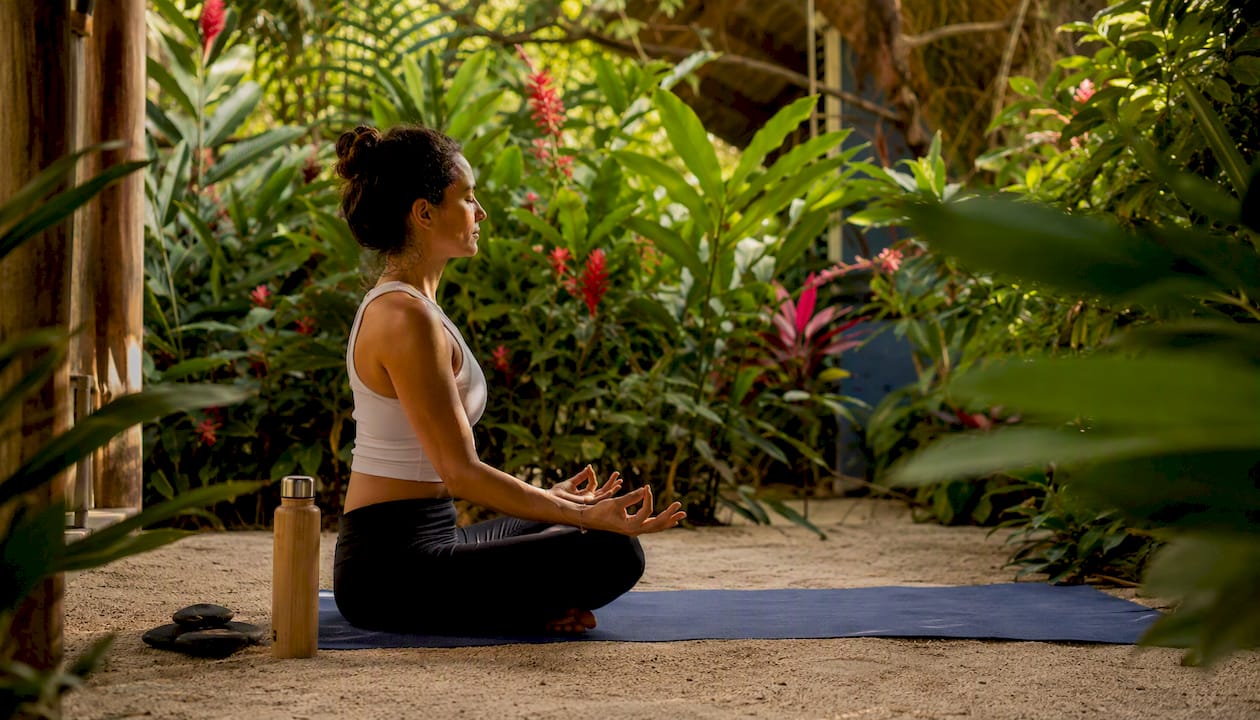
Solo, boutique wellness retreats have become an increasingly prominent model, particularly for people who want privacy and restoration without a rigid program dictating every hour.
Why Do People Choose a Secluded Retreat, and What Happens There?
The pull toward seclusion usually comes down to one thing: the mind doesn't quiet down on its own in a house full of notifications. Stepping away creates the conditions for rest, reduced rumination, and better emotional regulation, benefits that show up consistently once the usual noise gets removed.
A typical stay includes some mix of the following:
- Extended stretches of unscheduled, quiet time
- Meditation, prayer, or contemplative practice
- Journaling or reflective writing
- Nature walks or slow outdoor time
- A digital detox window, whether a few hours or the entire stay
- Full nights of rest without alarms or obligations
Duration changes the outcome. A weekend can reset your nervous system and clear immediate stress. A multi-day intensive, five to ten days, tends to produce deeper shifts because it outlasts the initial discomfort of slowing down. That discomfort isn't a flaw in the process. Meditation retreat research suggests the difficulty of sitting with silence may be exactly what drives gains in regulation and executive control for some participants.
A small 2025 neuroimaging study found that default mode network connectivity, the brain activity tied to self-referential thinking and rumination, dropped sharply after a seven-day residential retreat. The sample was small and lacked a full control group, so treat it as a promising early signal rather than proof, but it lines up with what many retreat-goers describe: the inner narrator gets quieter after several days away.
How Do You Choose or Plan a Secluded Retreat?
Planning one, whether you're booking a hosted stay or building your own, comes down to a short set of decisions made in the right order.
- Clarify your goal. Rest, creative reset, grief processing, and spiritual practice all call for different environments and different lengths of stay.
- Choose your duration. A weekend suits a quick reset; five to ten days suits deeper work.
- Decide solo versus group. Solo maximizes silence and self-direction; a small hosted group adds light structure and shared meals without sacrificing much privacy.
- Pick your environment. Mountain settings tend to slow the pace further, coastal settings add sensory richness through sound and air, and forest settings sit somewhere between the two.
- Check accessibility and safety. Confirm mobility needs, road conditions, and how far you'd be from help if something went wrong.
- Handle logistics. Line up food arrangements, pack for limited connectivity, and set a communication plan so someone knows your general whereabouts.
A 3-day retreat might look like this: day one for arrival and slowing down, day two for the deepest stretch of silence or practice, day three for gentle reentry and reflection. A 7-day retreat stretches that arc: two days to decompress, three days of sustained practice or rest, two days easing back toward normal rhythms.
Set etiquette before you arrive, even if you're solo. Decide your phone policy in advance (off, airplane mode, or checked once daily), whether visitors are welcome, and what noise level respects the space. If you're planning something more elaborate, resources on planning an oceanview retreat walk through budgeting and logistics for a nature-based getaway in more depth.
What Do Hosted Retreat Centers and Inns Typically Provide?
Booking a hosted secluded retreat trades some of the DIY effort for professional support, and knowing what's standard helps you evaluate any listing you're considering.
- Private rooms or suites with their own entrances and bathrooms, so seclusion doesn't depend on luck with neighbors
- Organized meal plans, often farm-to-table, removing the logistics of cooking during a reflective stretch
- Scheduled or optional programming, from guided meditation to spa treatments, that guests can opt into or skip
- On-site wellness amenities like a pool, sauna, or dedicated yoga and meditation space
- A host or small staff available for check-ins without constant intrusion on your privacy
- Clear, accessible routes and on-call support in case of a medical or safety concern
Good hosted centers balance those last two points carefully. Privacy shouldn't mean isolation from help if something goes wrong, and safety shouldn't mean someone knocking on your door every hour. A property like Luana Inn, set into the hillside above Kealakekua Bay in Captain Cook, Hawaii, blends that balance with intimate accommodations, a chlorine-free pool, an infrared sauna, and space designed for both yoga practice and quiet reflection. For readers weighing hosted options generally, examples of intimate travel accommodations show how small-scale properties tend to handle this balance better than large resorts.
When Should You Skip a Secluded Retreat?
Seclusion isn't the right fit for every situation, and pretending otherwise does readers a disservice. A few scenarios call for caution or an alternative plan entirely.
Avoid an unsupervised, isolated stay if you're managing a severe, unstabilized mental health condition, recovering from very recent trauma without clinical support in place, or dealing with a medical issue that requires quick access to care. Solitude can amplify distress just as easily as it eases it when the underlying need is closer supervision, not less.
Before any retreat, run through a short safety check:
- Share your location and expected return with someone who'll notice if you go quiet
- Save local emergency contacts, including the nearest urgent care or hospital
- Audit mobility and access needs against the property's actual terrain, not just its photos
- Check weather and road conditions, especially for mountain or remote coastal locations
Group suitability matters too. A hosted small-group retreat with staff on-site is a gentler entry point than a fully solo, off-grid stay for someone new to extended solitude. And it's worth preparing emotionally, not just logistically: the first day of real quiet often feels uncomfortable before it feels restorative. That discomfort is common, and expecting it in advance makes it easier to sit through.
A Short Stay, a Noticeably Quieter Mind
A few days away from the usual noise is enough to notice a shift, even without any dramatic ritual attached to it. The first day tends to feel restless, almost itchy, the way a room feels too quiet after the television's been on for hours. By the second or third day, that restlessness usually gives way to something closer to clarity: fewer looping thoughts, longer stretches of actual attention on one thing at a time.
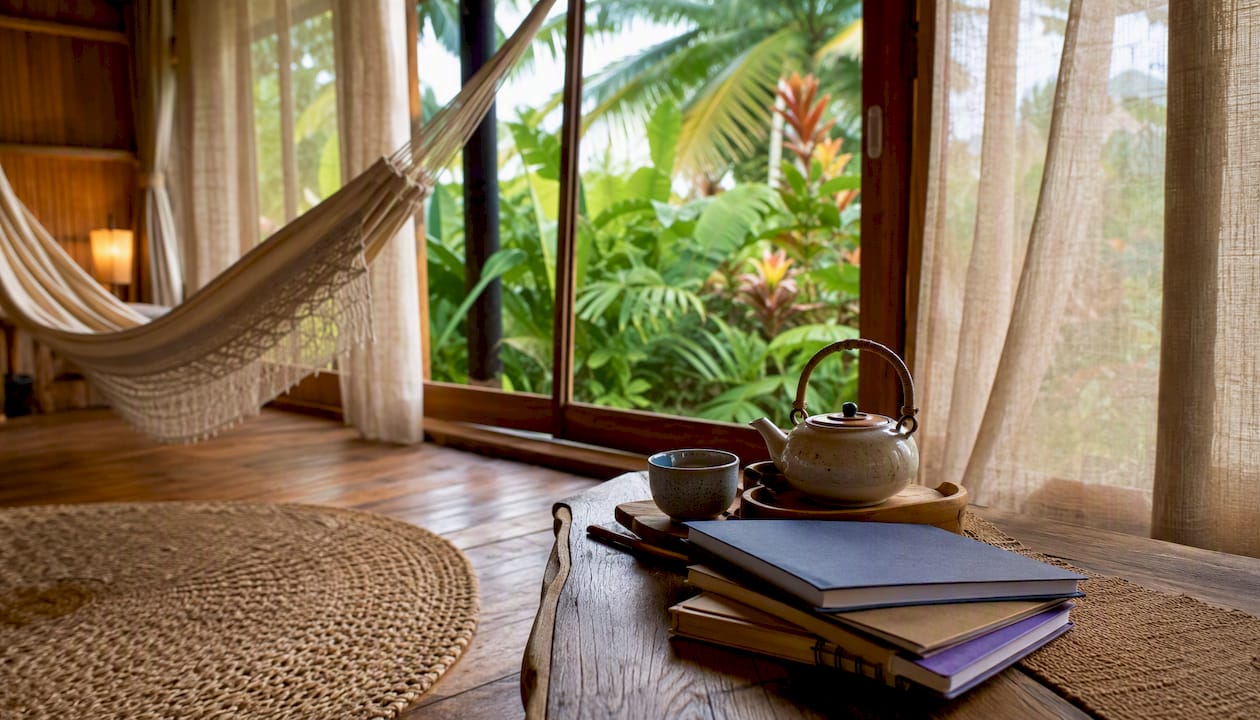
That lines up with what the 2025 neuroimaging research suggests about a quieter default mode network after a week away: the constant self-referential chatter seems to ease once the usual cues that feed it, phones, calendars, other people's demands, get removed. You don't need to buy into every claim from a single small study to notice the same pattern in your own head after a few days of silence. The value isn't mystical. It's mechanical: remove the inputs, and the mind has less to chew on.
Ready for a Hosted Secluded Retreat of Your Own?
If planning every detail of a DIY retreat sounds like more effort than rest, a hosted stay solves that problem by handling the logistics for you. Luana Inn sits on the hillside above Kealakekua Bay in Captain Cook, Hawaii, with private entrances, farm-to-table breakfasts, and wellness amenities built specifically for slowing down: a chlorine-free pool, an infrared sauna, and space for yoga or quiet meditation.

When you're evaluating any hosted secluded retreat, look for the same things this guide covers: genuine physical privacy, food you don't have to think about, light support without intrusion, and a setting quiet enough to actually notice the shift. Luana Inn's retreat packages bundle those pieces together, and the special events and retreats page outlines what a hosted stay can include if you're planning something for yourself or a small group. Check available dates and book your stay directly through Luana Inn.
Sources
- SECLUDED | definition in the Cambridge English Dictionary
- What Meditation Retreats Really Do to Your Mind and Body | Psychology Today United Kingdom
- Types of retreats | Insight Timer blog
- Wellness retreats are sold as a break from your life. What a 2025 neuroimaging study found is that after seven days, the brain network responsible for that constant inner narrator went about as quiet as it typically does on psilocybin, and nobody in the study had taken anything
- The Healing Power of A Solo Wellness Retreat | Condé Nast Traveler