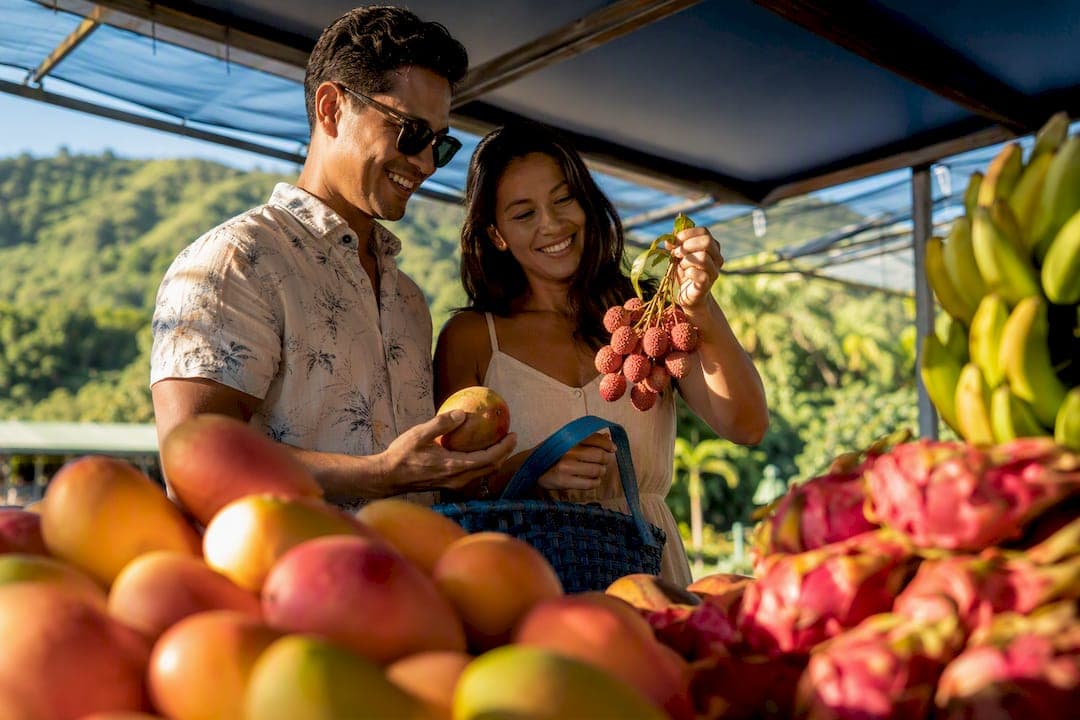
Mango, lychee, and dragonfruit overlap in season on the Big Island during the summer months, with a mid-summer window delivering all three at once alongside rambutan starting up later in the season. Papaya, banana, and pineapple are available almost year-round, so there is fruit in season during most months. Just know that exact timing shifts by neighborhood and elevation, so market day, not the calendar, is your real guide.
TL;DR:
- The peak fruit season on the Big Island occurs mostly from June to August, with mango, lychee, and dragonfruit all overlapping in mid-July for maximum variety.
- Microclimates cause harvest times to shift by several weeks between windward Hilo and leeward Kona, making local market vendors more accurate sources than fixed calendar dates.
- Fresh, tree-ripened fruit like mango and lychee provides optimal flavor and nutrition, but buyers should prioritize vendor knowledge and ripeness indicators over fruit color alone.
- Most of the island’s fruit is grown on small farms using sustainable practices such as hand harvesting, composting, and eco-friendly pest control, which deeply influences seasonal availability.
- Traveling in mid-July offers the best chance to experience Hawaii’s most abundant and diverse fruit harvest, with festivals and markets centered around peak harvests.
Table of Contents
- Big Island Fruit Season Calendar: What's Ripe Each Month
- Meet the Fruits: Varieties, Peaks, and How to Pick a Good One
- Where to Buy: Big Island Markets and Roadside Stands
- Why Microclimates Change the Timing (And How to Work Around It)
- Best Weeks to Visit for Peak Fruit Abundance
- Why Seasonal Fruit Is Worth Building Your Meals Around
- Other Local Fruits Worth Seeking Out: Guava, Starfruit, and Passion Fruit
- How Big Island Farmers Grow and Harvest Fruit Sustainably
- A Local Take on Building Your Fruit-Season Day
- Plan Your Fruit-Season Stay at Luana Inn
- Sources
- FAQ
Big Island Fruit Season Calendar: What's Ripe Each Month
Before you pack your bags, it helps to know which months actually deliver. The Big Island doesn't run on a single growing season the way mainland orchards do. Warm coastal belts and cooler upland farms ripen fruit weeks apart from each other, and CTAHR's seasonality charts track that spread month by month across dozens of crops.
Here's how the year tends to unfold:
- May: Early mango varieties start ripening, lychee begins its short run, and pineapple hits its early peak.
- June: Mango and lychee both climb toward their strongest weeks; pineapple stays strong.
- July: The overlap window. Mango, lychee, and dragonfruit all peak together on the Kona side, making this the single richest month for variety.
- August: Dragonfruit hits its prime month, lychee tapers off, and rambutan starts showing up at market stalls.
- September: Late mango cultivars like Keitt and Rapoza keep producing, rambutan builds toward its peak, and pineapple begins to slow.
- October: Rambutan peaks, dragonfruit winds down, and the year's first Sharwil avocados and citrus start appearing at upland farms.
- November: Fall harvest fully kicks in, with avocado, citrus, Kona coffee, cacao, and macadamia nut all in active picking season.
Papaya and banana don't follow this rhythm at all. Hawaiʻi's climate lets both fruit continuously, so you'll find ripe papaya and banana at every market visit regardless of season, per GoFarmHawaii's produce seasonality chart. Pineapple leans the same direction, staying available all year but peaking May through September.
Meet the Fruits: Varieties, Peaks, and How to Pick a Good One
Knowing the season is half the job. Picking a good piece of fruit at the stand is the other half, and it's where most visitors get it wrong.
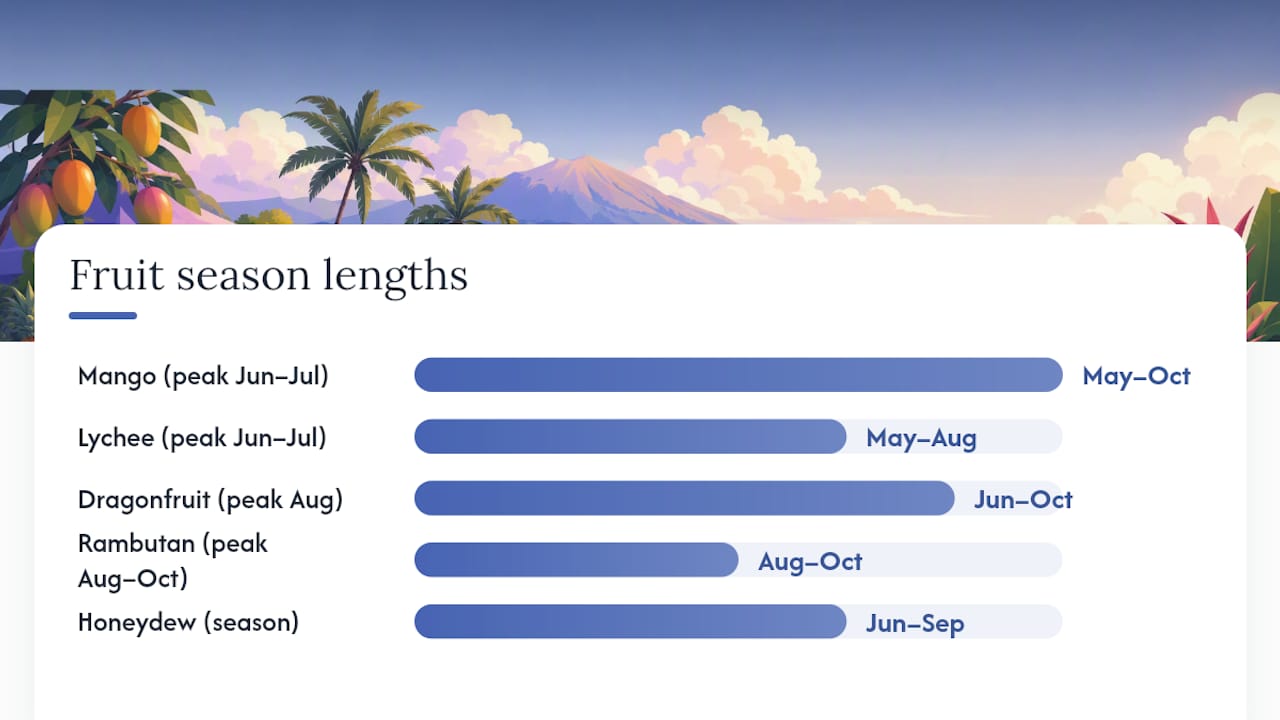
Mango dominates Big Island summer for good reason. You'll run into several varieties at market, including Hayden (sometimes spelled Haden), Pirie, Rapoza, and Keitt, each with a slightly different flavor and skin color. Season runs May through October with peak weeks in June and July, and the late cultivars like Keitt and Rapoza stretch things into September and October for anyone visiting outside the main rush. A tree-ripened mango usually gives off a sweet, heady aroma right at the stem end. Shipped or early-picked fruit often smells like nothing at all.
Lychee and longan share a short, intense window. Lychee runs May through August with June and July as the sweet spot. Look for shells that are intact and brightly colored, a cue CTAHR's selection guidance calls out specifically. Longan, its smaller cousin, should have smooth yellow-brown skin with no cracking.
Dragonfruit and rambutan bookend the mango and lychee rush. Dragonfruit shows up from summer through early October, with August as the prime month, delivering mild, faintly sweet flesh that's more about texture than punch. Rambutan follows behind, peaking August through October, with a hairy red shell hiding sweet, grape-like flesh underneath.
Papaya and banana are the reliable year-round pair, sweetest when fully soft to the touch rather than firm.
Pineapple peaks in the warm summer months, while avocado and citrus take over in fall. The Sharwil avocado, a Big Island specialty, throws off the usual color rule entirely: it stays green even when perfectly ripe, so color alone won't tell you it's ready. Ask the grower, not the skin.
Pro Tip: A ripe honeydew melon, in season June through September, should feel heavy for its size and smell faintly sweet at the stem end before you even cut into it.
Where to Buy: Big Island Markets and Roadside Stands
Not every market is worth the same detour, and timing your visit matters as much as picking the right one.
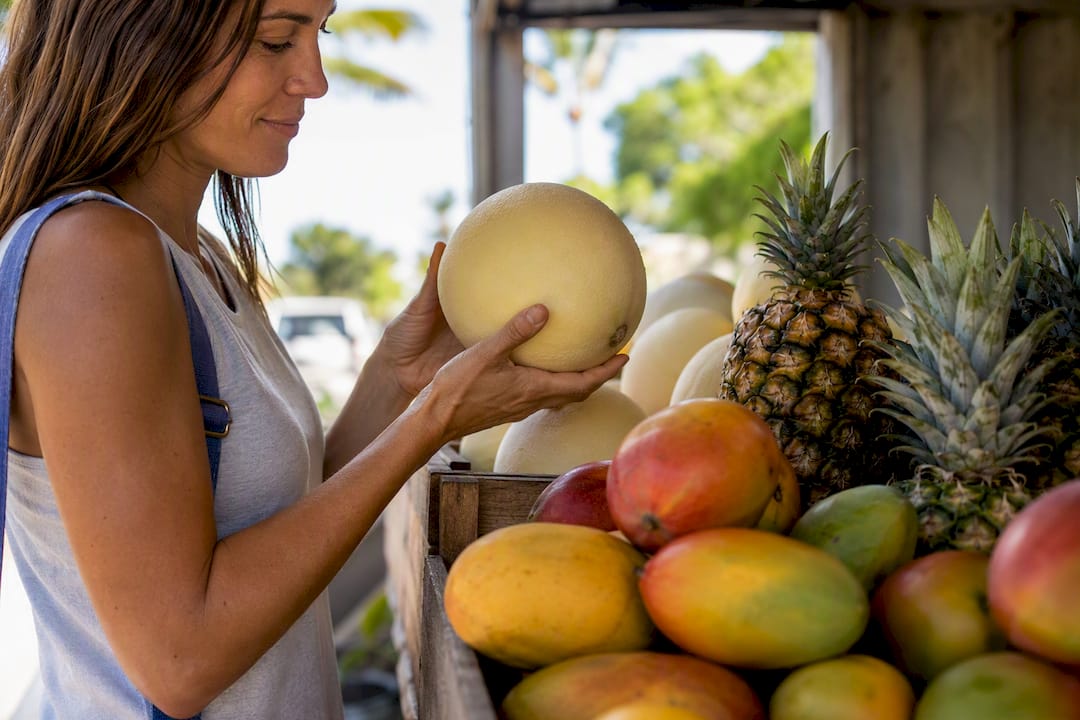
- Hilo Farmers Market gives you the widest selection on the island, with the biggest vendor turnout on Wednesdays and Saturdays. If breadth is your goal, this is the one-stop that covers nearly everything in season.
- Keauhou Farmers Market on the Kona side is smaller but grower-dense, which makes it the best bet during the July fruit window. Arrive around 8:30 AM, since the best tables sell out fast on peak mornings.
- Kailua Village Farmers Market and Aliʻi Gardens Marketplace lean more toward crafts and packaged goods, so treat them as a bonus stop rather than your main produce run.
- Roadside stands run largely on an honor system, cash box included, and often carry fruit picked that same morning.
Pro Tip: Ask a grower what's coming next week, not just what's on the table today. Farmers usually know their own harvest schedule better than any calendar does.
Why Microclimates Change the Timing (And How to Work Around It)
The Big Island packs several distinct growing climates into one island, and that's exactly why no fruit calendar is ever perfectly precise. Leeward Kona farms run warm and dry, ripening fruit earlier than the wetter, cooler windward side around Hilo. Upland farms at higher elevation lag behind both, sometimes by several weeks.
That variation means the mango you find at a Kona roadside stand in late May might not show up in Hilo until mid-June.
- Ask vendors directly which variety is peaking that week rather than relying on a printed season window.
- Favor roadside growers over grocery produce sections when you want fruit that ripened on the tree, not in transit.
- Skip the cooler bag logistics and just eat your fruit the same day. It tastes better and you avoid the hassle.
The Big Island's varied microclimates mean harvest windows can shift by several weeks from one district to the next, so checking a local farmers market schedule beats trusting any fixed date on a calendar.
One more thing before you get excited about hauling home a suitcase of mango: the Hawaii Department of Agriculture enforces biosecurity rules that restrict moving fresh fruit off-island. Check current DOA guidance before you try to pack any of it for a mainland flight.
Best Weeks to Visit for Peak Fruit Abundance
If you can only plan around one stretch of the calendar, make it mid-July. That's when mango, lychee, and dragonfruit all overlap on the Kona side, and it's also when local Mango Festival events tend to land, concentrating vendors and varieties in one place.
- Mid-July: the fullest week for variety, with multiple mango cultivars, lychee, and dragonfruit all in market stalls together.
- September through November: a second, quieter harvest stretch built around Kona coffee, Sharwil avocado, cacao, and macadamia nut.
- Booking advice: plan your market mornings first, then book any farm tours two to three weeks ahead if you're visiting in October or November, since small producers often cap tour group sizes.
Why Seasonal Fruit Is Worth Building Your Meals Around
Fruit picked at peak season doesn't just taste better. It delivers more nutrition, too, since sugars and vitamin content both develop fully on the tree rather than after early picking for shipping. A ripe Big Island mango carries a strong dose of vitamin C and vitamin A, while papaya brings digestive enzymes like papain that make it a popular after-meal fruit across the islands. This lines up with the broader case for eating produce at its natural peak, when flavor and nutrient density both run highest.
Culinary uses on the Big Island lean simple, and that's by design. Mango gets sliced fresh, blended into smoothies, or turned into a quick salsa for grilled fish. Lychee and rambutan are almost always eaten raw, straight from the shell, since their delicate flesh doesn't hold up well to cooking. Papaya shows up at breakfast tables across the island, often just halved with a squeeze of lime, while green papaya gets shredded into slaw for a tangier, savory dish.
Dragonfruit works well diced into fruit bowls or blended for color in smoothies, since its mild flavor takes a back seat to its striking pink or white flesh. Banana, endlessly versatile, ranges from a quick snack to baked bread to a topping for shave ice. Avocado, once fall arrives, gets mashed simply with salt and lime rather than dressed up. On an island where fruit ripens this well, most cooks know the best move is to interfere as little as possible.
Other Local Fruits Worth Seeking Out: Guava, Starfruit, and Passion Fruit
Beyond the headline lineup, a handful of quieter fruits round out the Big Island's harvest and deserve a spot on your market list.
Guava grows abundantly across the island, with strawberry guava often ripening in wild patches along hiking trails from late summer into fall. Its sharp, slightly tart flavor makes it a favorite for jams and juice blends at local stands.
Starfruit, or carambola, tends to fruit in cooler months, often overlapping with the fall harvest stretch alongside citrus and avocado. Sliced crosswise, it makes a naturally decorative addition to fruit plates, with a flavor that lands somewhere between apple and grape.
Passion fruit, known locally as lilikoʻi, fruits heavily during the warmer months and again in a smaller fall flush. Its tart, aromatic pulp shows up everywhere on the island, from breakfast syrups to cocktail mixers to a simple drizzle over shave ice. Unlike mango or lychee, lilikoʻi vines often keep producing sporadically outside their main window, so don't be surprised to find a stand selling it even when it's technically "off season."
None of these three carry the crowd-drawing reputation of mango or dragonfruit, but they're often the fruits that longtime Big Island residents reach for first. Ask any roadside vendor which one is running heavy that week. Guava, starfruit, and lilikoʻi rotate in and out fast enough that a grower's answer beats any printed chart.
How Big Island Farmers Grow and Harvest Fruit Sustainably
Most of the fruit you'll find at Big Island markets comes from small family farms rather than large commercial operations, and that scale shapes how it's grown. Many growers rely on integrated pest management instead of heavy spraying, using companion planting and natural predators to keep pests in check around mango and citrus trees. Composting is common practice across small farms, turning fruit waste and yard trimmings back into soil rather than sending it to a landfill.
Hand-harvesting remains the norm for most tropical fruit here, partly because delicate crops like lychee and rambutan bruise easily under mechanical picking. That labor-intensive approach also means fruit gets picked closer to full ripeness, since farmers aren't racing a shipping schedule the way mainland growers often are.
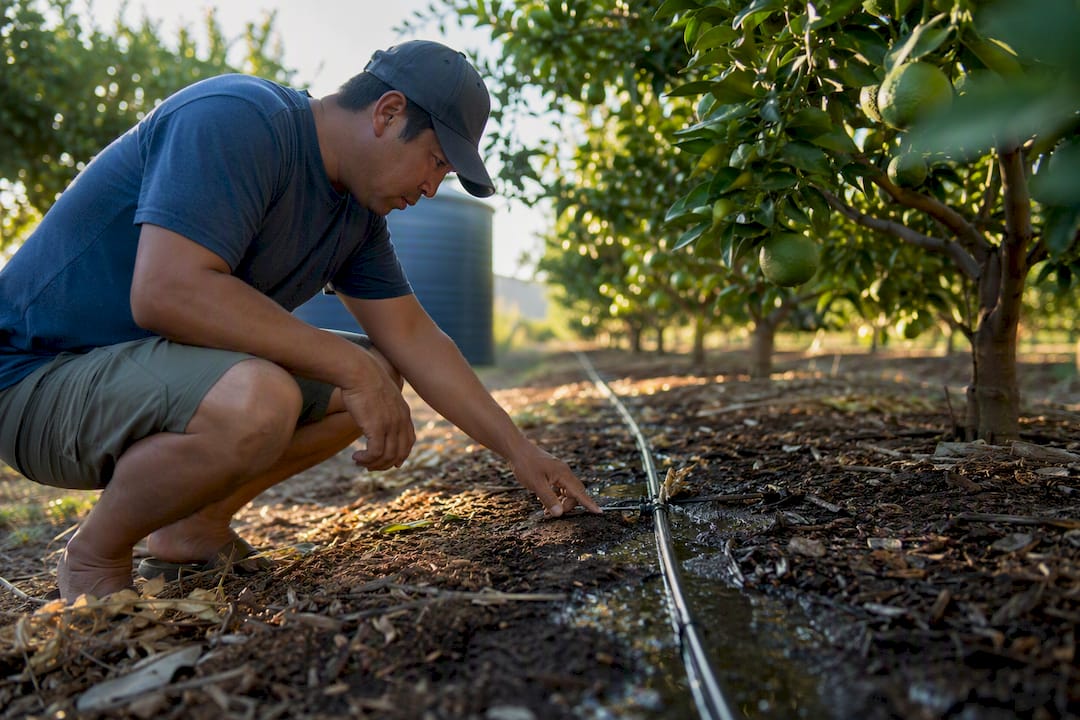
Water use matters more on this island than most people realize, since rainfall varies wildly between the wet Hilo side and dry Kona coast. Farmers on the leeward side frequently rely on drip irrigation and rainwater catchment systems to stretch limited water across their orchards. If you want to see these practices firsthand, several sustainable tour operators offer farm visits that go well beyond a quick market stop, and understanding how the island's climate zones affect growing conditions gives context to why one farm's harvest looks so different from another's just a few miles away.
A Local Take on Building Your Fruit-Season Day
Luana Inn sits close enough to the Kona side markets and farm stands that a market morning fits easily into a slower island day. Pair an early Keauhou visit with an afternoon spa treatment or short hike, then let our farm-to-table breakfast carry the flavors of that morning's haul right into your next meal.
— Nicole
Plan Your Fruit-Season Stay at Luana Inn
A market morning tastes even better when the rest of your day doesn't require any planning at all. Luana Inn sits close enough to the Kona side farm stands and the Keauhou market that you can fill a basket with tree-ripened mango or lychee before breakfast, then hand the rest of the day over to us. Book a treatment from our spa menu to enhance your relaxation along with enjoying the fruit haul. If you'd rather build a fuller day around it, our vacation packages can add a pool side massage or an E Komo Mai Lei welcome. Check room availability now and plan your stay around whichever fruit window fits your trip.
Sources
Readers who want to track exact timing before a trip can lean on a few authoritative sources. The CTAHR seasonality chart and GoFarmHawaii's produce seasonality chart both offer month-by-month breakdowns straight from agricultural extension data. For mango and lychee specifics, Hawaii Guide's mango season page and its lychee and summer fruit guide track peak weeks closely. The July fruit window guide covers Kona-side market and festival timing in detail.
FAQ
What Fruit Is in Season Right Now on the Big Island?
It depends on the month, but mango, lychee, and dragonfruit dominate from June through August, while papaya, banana, and pineapple stay available nearly all year.
Why Can't You Fly Out of Hawaii With an Avocado?
The Hawaii Department of Agriculture restricts moving fresh fruit off-island to prevent pest spread, so travelers should check current DOA guidance before packing any fruit, including avocado, for a flight home.
What Fruits Are Grown on the Big Island of Hawaii?
Growers here produce mango, lychee, dragonfruit, rambutan, papaya, banana, pineapple, avocado, citrus, guava, starfruit, and passion fruit, alongside Kona coffee, cacao, and macadamia nut.
What Is the Most Famous Fruit in Hawaii?
Mango holds the strongest reputation among visitors and locals alike, especially during the mid-July window when multiple varieties like Hayden, Pirie, Rapoza, and Keitt all peak together.
When Is the Best Time to Visit for the Biggest Fruit Selection?
Mid-July offers the richest overlap, with mango, lychee, and dragonfruit all in season together, often alongside local Mango Festival events on the Kona side.