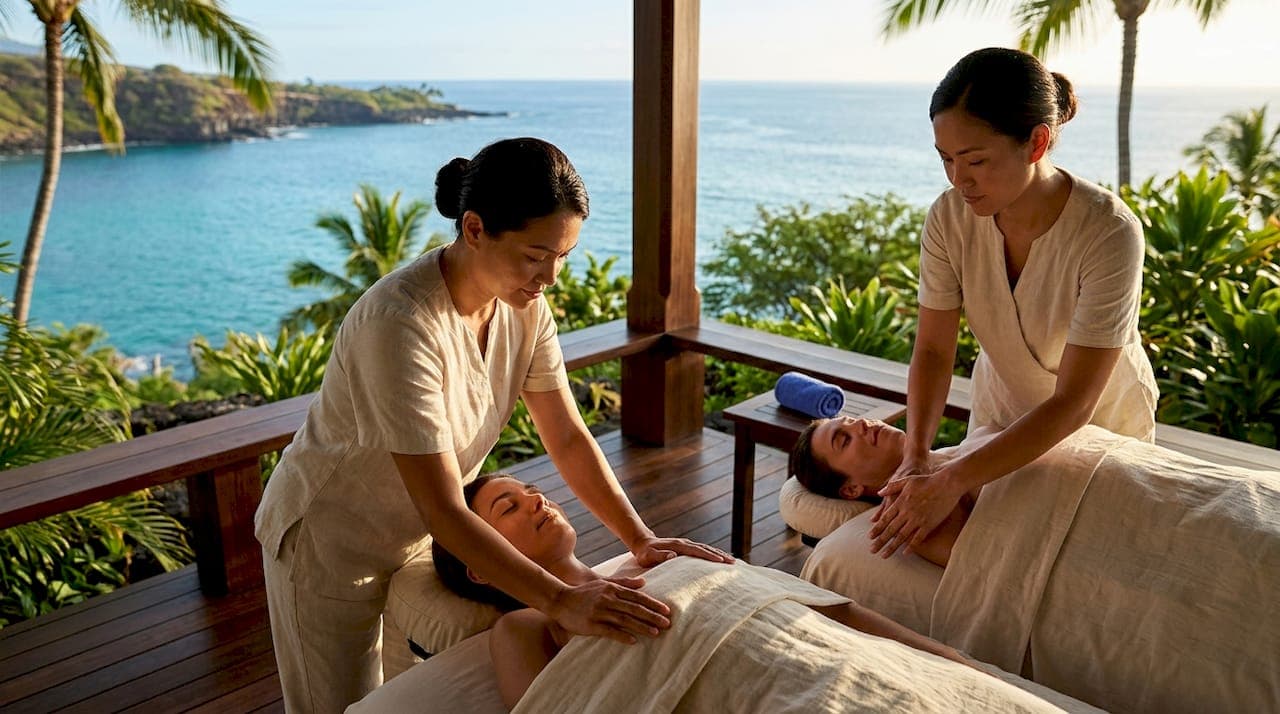
Yes, couples massage delivers real, measurable benefits, not just a nice afternoon out. It triggers a parasympathetic shift that lowers heart rate and muscle tension, floods the body with oxytocin, and reduces cortisol in both partners at once. Research backs both professional sessions and short at-home mutual-massage routines, meaning you don't need a five-star spa every time to get the physiological payoff.
TL;DR:
- Couples massage can effectively reduce stress by triggering physiological changes like lowered cortisol and increased oxytocin in both partners.
- Regular at-home mutual massages, even for 15 to 20 minutes weekly, reinforce stress relief and relationship closeness without the need for frequent spa visits.
- Timing massages early in a trip enhances their impact by promoting lasting relaxation and better sleep throughout the stay.
- Consistent practice, such as monthly professional sessions combined with short at-home routines, yields sustained physical and emotional benefits.
Table of Contents
- Couples Massage Benefits for Your Body
- Why Couples Massage Reduces Stress and Lifts Your Mood
- How Couples Massage Improves Relationships
- What the Research Actually Shows
- What to Expect During a Couples Massage
- How Often Should Couples Get Massages?
- How We Build Couples Massage Into a Restorative Stay
- Book a Couples Wellness Package at Luana Inn
- Sources
- FAQ
Couples Massage Benefits for Your Body
The most immediate benefit happens before you even notice it. When a therapist's hands (or your partner's) apply steady pressure, your nervous system shifts out of fight-or-flight and into what's called the parasympathetic state. That's the "rest and digest" mode, and it's the reason your heart rate slows, your breathing deepens, and that knot between your shoulder blades finally lets go.
Harvard Health Publishing notes that massage can reduce muscle tension, improve circulation, and support recovery, though the strength of the evidence varies depending on the specific outcome being measured. That's an honest caveat worth sitting with. Massage isn't a cure-all, but for the physical complaints most couples walk in with, tight shoulders, aching lower backs, tension headaches from screen time, the research is on solid ground.
Circulation improvement matters more than people realize. Better blood flow means oxygen and nutrients reach fatigued muscle tissue faster, which is part of why athletes build massage into their recovery routines and why you feel looser the day after a session, not just the hour after. Pain relief follows a similar path: reduced muscle tension means less nerve compression, which for many people translates into fewer tension headaches and less chronic low-back discomfort.
The technique matters as much as the intention. Not every massage style targets the same goal:
- Swedish massage uses long, gliding strokes and works best for general relaxation and easing everyday stress.
- Deep tissue massage targets chronic tension in the shoulders, neck, and lower back through slower, firmer pressure.
- Hot stone massage pairs heated stones with traditional strokes to relax muscles faster, which is especially useful if either partner tends to hold tension physically.
- Aromatherapy massage blends essential oils into the session to add a sensory, mood-lifting layer on top of the physical work.
Pro Tip: If one of you carries stress in your shoulders and the other in your lower back, tell the therapist before the session starts. Most spas will happily customize pressure and focus areas for each partner independently, even during a side-by-side session.
Sleep is the benefit people mention most often after the fact, almost as an afterthought. A parasympathetic nervous system doesn't just calm you down in the moment. It primes your body for the kind of deep, restorative sleep that's harder to get when cortisol is running high. Couples who book massage before a stressful week, rather than after one, often report that this is where they notice the difference most.
Why Couples Massage Reduces Stress and Lifts Your Mood
Here's where the emotional science gets interesting. Touch triggers oxytocin release, the same hormone involved in bonding, trust, and attachment, and it does this regardless of whether the touch comes from a therapist or a partner. Research summarized by ScienceDaily points to affectionate touch and massage being linked with decreased cortisol and increased oxytocin, mechanisms that sit at the root of both stress relief and bonding.
That combination, oxytocin up, cortisol down, is what makes massage feel different from other forms of relaxation, like a nap or a quiet dinner. It's not just that your body calms down. Your brain chemistry shifts toward connection.
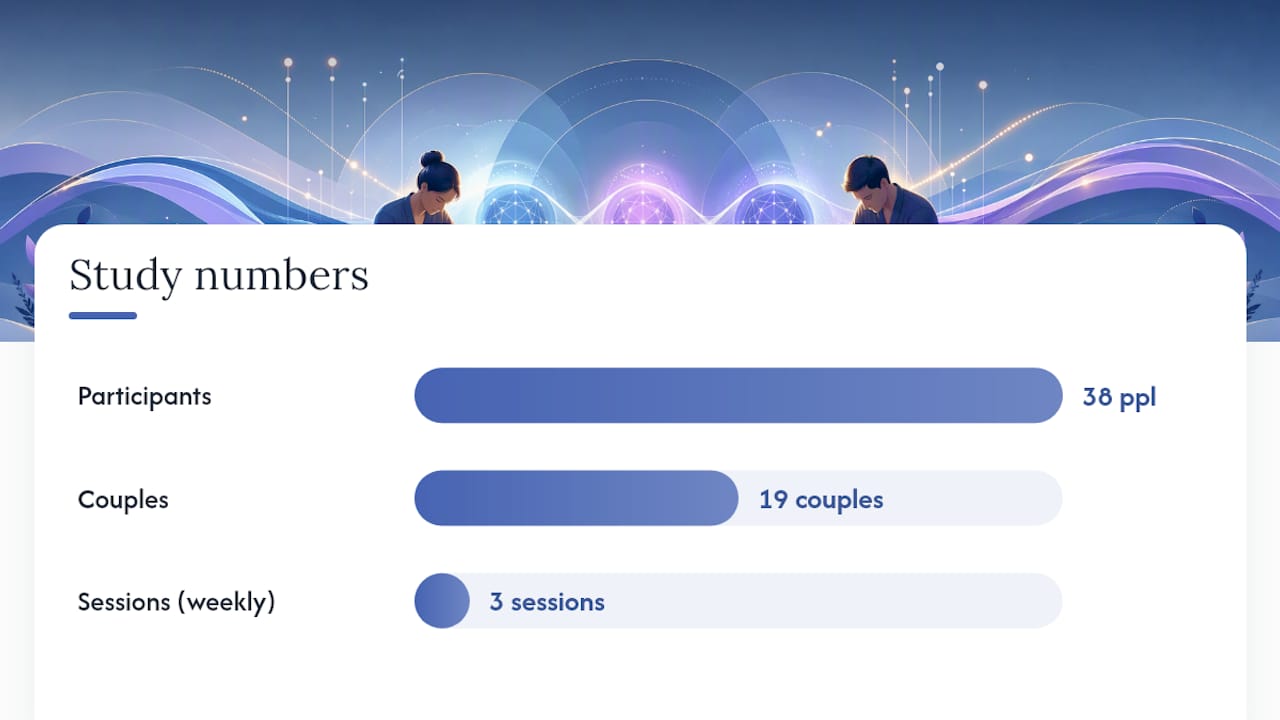
A pseudo-randomized study of couples completing a short mutual-massage education program found measurable drops in perceived stress and improvements in coping skills after just three weekly one-hour sessions. The Positive Massage programme involved 38 participants and showed that these gains held up at follow-up, not just immediately after class.
By the numbers: the study behind the Positive Massage programme used a pseudo-randomized two-group design with 38 total participants (19 couples), and the improvements in wellbeing, perceived stress, and coping persisted after the program ended, with many couples continuing to massage each other at home.
- Shared massage sessions tend to amplify stress relief compared to solo massage, because both partners experience the physiological shift simultaneously rather than one person relaxing while the other waits.
- Watching your partner visibly unwind can itself lower your own stress response, a kind of secondhand calm that solo massage simply can't replicate.
- Couples who massage each other, rather than always relying on a therapist, report an added sense of usefulness and closeness that comes from being the one providing relief.
This is part of why mutual massage seems to punch above its weight for a low-cost, low-effort intervention. You're not just receiving a stress-reduction treatment. You're participating in one together, and that shared experience appears to reinforce the emotional benefit beyond what either partner would get alone.
How Couples Massage Improves Relationships
Physiology is only half the story. The more interesting question for most couples is whether feeling calmer together actually changes how you relate to each other, and the honest answer is: it helps, but it works differently than people expect.
Researchers describe what happens during mutual massage as a form of "selves-care," a dyadic activity where each partner's wellbeing depends partly on the other's participation. Unlike solo self-care, where you're the only variable, mutual massage requires coordination, attentiveness, and a small act of generosity. One partner has to give focused attention; the other has to receive it. That exchange itself builds a kind of relational muscle that a dyadic positive-psychology framework suggests strengthens over repeated practice.
Here's how that translates into practical relationship benefits:
- Synchronized recovery. When both partners relax at the same time, you're more likely to end the session on the same emotional wavelength, rather than one person calm and the other still keyed up.
- Attunement practice. Learning to read your partner's cues, where they're tense, how much pressure they want, whether they'd rather stay silent, sharpens the same attentiveness that helps outside the massage room.
- A shared ritual. Couples who build massage into a recurring habit report it becomes a dependable touchpoint, something to look forward to rather than another item competing for calendar space.
- Increased affectionate touch overall. Research on mutual massage suggests that couples who practice it at home tend to increase their general frequency of affectionate touch, not just during massage sessions.
One honest limitation deserves mention here. Wellbeing and stress improvements tend to show up faster and more clearly than measurable changes in overall relationship satisfaction. That's not a knock against couples massage. It just means you shouldn't expect one spa visit to resolve deeper relationship friction. Think of it as a consistent, evidence-backed way to lower the background noise of stress so the two of you have more capacity for everything else, rather than a fix for relationship problems on its own.
What the Research Actually Shows
The strongest evidence for couples massage benefits comes from a small but well-designed study on mutual massage education, not from large-scale clinical trials. That distinction matters for how much weight to put on the findings.
The Positive Massage programme study enrolled 38 healthy but stressed participants (19 couples) in a pseudo-randomized two-group design. Over three weekly one-hour sessions, couples learned mutual massage techniques, and researchers tracked mental wellbeing, perceived stress, coping skills, and relationship satisfaction. The results showed clear improvements in wellbeing, stress, and coping, improvements that held up at follow-up. Relationship satisfaction, however, showed more modest and inconsistent movement, reinforcing that emotional and physical gains tend to arrive before relational ones.
| Evidence source | What it measured | Key finding |
|---|---|---|
| Positive Massage programme (38 participants) | Wellbeing, perceived stress, coping, relationship satisfaction | Significant improvements in wellbeing, stress, and coping; relationship satisfaction changes were smaller and less consistent |
| Touch and cortisol/oxytocin research | Hormonal response to affectionate touch | Decreased cortisol, increased oxytocin linked to touch and massage |
| Harvard Health guidance | General massage outcomes | Reduced muscle tension, improved circulation; evidence quality varies by condition |
| NCCIH guidance | Safety and evidence review | Massage generally safe for relaxation and pain relief; effectiveness varies by condition |
The National Center for Complementary and Integrative Health echoes this pattern: massage is generally safe and effective for relaxation and pain relief, but the strength of evidence shifts depending on what you're trying to treat. That's a useful frame for setting expectations. If you're chasing stress relief, better sleep, and a shared sense of calm, the evidence is genuinely encouraging. If you're expecting a single massage to transform how you communicate as a couple, the research doesn't support that leap, at least not from one session alone.
What it does support is consistency. Small sample sizes mean researchers are still cautious about how far these findings generalize, but the direction of the effect, physical relaxation, stress reduction, and increased likelihood of continued practice, shows up reliably across the studies available.
What to Expect During a Couples Massage
Walking into your first couples massage without knowing what happens next is half the anxiety. Here's the typical arc.
You'll usually arrive 10 to 15 minutes early to fill out an intake form noting any injuries, pressure preferences, or areas to avoid. A therapist (or two, working side by side) will explain draping procedures, meaning you're covered by a sheet at all times except for the specific area being worked on. According to AMTA guidance, professional draping practices exist precisely so clients feel comfortable and secure throughout the session, regardless of massage style.
- You'll typically wear as much or as little as you're comfortable with underneath the sheet, most people keep on underwear.
- Rooms are usually private and side by side, so partners can talk quietly or stay silent without disturbing other guests.
- Therapists will ask about pressure preferences at the start and check in periodically, so speak up if something's too intense or too light.
- Sessions generally run 50 to 90 minutes, followed by a few minutes to rest before getting dressed.
Whether you talk or stay quiet is entirely up to you and worth agreeing on beforehand. Some couples use the shared time to chat softly; others treat it as sacred silence. Practitioners generally recommend at least some quiet time, since it gives your nervous system room to fully downshift rather than staying partially alert through conversation.
Pro Tip: Decide before the session whether you want to talk or stay silent, and tell each other. Nothing undercuts the relaxation benefit faster than one partner trying to chat while the other is desperately trying to drift off.
How Often Should Couples Get Massages?
One session feels great. A habit is what actually moves the needle on stress and relationship benefits over time. Here's how to think about frequency and turn a single spa visit into something sustainable.
- Start with one session to test styles and preferences. Use it to figure out pressure preferences, technique, and whether you'd rather talk or stay silent.
- Move to monthly professional sessions if budget allows. This rhythm is frequent enough to keep stress from building back up without becoming a financial strain.
- Layer in short weekly mutual-massage sessions at home. Even 15 to 20 minutes of hand and shoulder massage between partners, following a simple routine, can replicate much of the stress-reduction effect documented in the Positive Massage research.
- Pair massage with other calming rituals. A short couples meditation practice before or after a massage session extends the parasympathetic effect and gives you both a moment to reset together.
A basic at-home routine doesn't require training. Warm your hands, use a light oil or lotion, and start with slow, gentle strokes on the shoulders and neck, the areas most people carry tension. Ask your partner to tell you where it feels tight, then hold gentle pressure there for 20 to 30 seconds before moving on. Fifteen minutes, twice a week, is enough to build the habit without it feeling like a chore.
Budgeting for regular sessions doesn't have to mean overspending. Booking further ahead often unlocks better package rates, and combining massage with other planned travel, intimate accommodations built around wellness, for example, stretches the value further than booking a one-off session. If you're shopping for a gift rather than booking for yourselves, spa gift ideas across different budgets offer a useful starting point for matching price to occasion.
- Book recurring sessions on the same day each month so it becomes a fixed calendar habit rather than something you have to remember to schedule.
- Pair massage with a nature immersion practice, like a quiet walk afterward, to extend the calming effect into the rest of your day.
How We Build Couples Massage Into a Restorative Stay
Massage works best woven into a broader rhythm of rest, so sessions can be paired with quiet pool time, a soak in the hot tub, or a stretch in the infrared sauna, giving your body room to fully absorb that parasympathetic shift instead of rushing back into travel mode.
Sessions that land best tend to be the ones booked early in a stay, not the last night before checkout. That timing lets the calm actually carry through the rest of a visit rather than getting wasted on packing and travel stress. If one of you tends to hold tension differently than the other, mention it when you book. We'll match techniques accordingly rather than defaulting to the same approach for both partners.
— Nicole
Book a Couples Wellness Package at Luana Inn
If everything above has you sold on trying this as more than a one-time treat, the easiest next step is building it into an actual stay rather than hunting for a standalone appointment. Wellness retreat packages often bundle massage with amenities like chlorine-free pool access, infrared sauna time, and space for shared meditation, so the parasympathetic shift you get on the table doesn't evaporate the moment you check out.

Our farm-to-table breakfasts and quiet hilltop setting overlooking Kealakekua Bay do a lot of the supporting work too. Stress reduction sticks better when it's not competing with traffic noise or a packed itinerary. Couples who tend to benefit most are the ones treating the visit as a genuine reset, not squeezed between other plans. Take a look at the Rooms Overview to see which layout fits your stay, browse current wellness packages to see what's bundled with massage access, or visit the spa page for details on treatment options. Reserve a few weeks ahead if you're eyeing a specific package, availability during peak season fills fast, and book your stay directly to lock in your dates.
Sources
- Effects of couples positive massage programme on wellbeing, perceived stress and coping, and relation satisfaction
- Rub each other up the right way | ScienceDaily
- Harvard Health Publishing
- American Massage Therapy Association (AMTA)
FAQ
What Usually Happens During a Couples Massage?
Two therapists work on both partners simultaneously in the same room, following an intake conversation about pressure preferences and any areas to avoid, with sessions typically running 50 to 90 minutes.
What Should You Wear During a Couples Massage?
You wear whatever you're comfortable with underneath the provided sheet or towel, most people keep on underwear, and proper draping means only the area being worked on is ever uncovered.
Do Couples Talk During a Couples Massage?
It's entirely up to personal preference, but many practitioners recommend at least some quiet time so your nervous system can fully shift into a relaxed state rather than staying alert through conversation.
What Is the Real Purpose of a Couples Massage?
Beyond relaxation, couples massage triggers oxytocin release and lowers cortisol in both partners simultaneously, producing stress relief and a sense of shared calm that solo massage doesn't replicate as strongly.
How Often Should Couples Get a Massage for Real Benefits?
Research on short mutual-massage programs suggests that even three weekly sessions can produce lasting improvements in wellbeing and coping, so a monthly professional session paired with brief at-home practice is a reasonable, sustainable target.