
Sound baths reliably deliver immediate relaxation, and many people notice lower stress, better sleep, and mild relief from muscle tension or aches after a session. The research behind these effects comes mostly from small studies and clinical observation, not large clinical trials, so think of a sound bath as a genuinely calming practice, not a medical treatment. The sections ahead walk through how it works, what a session feels like, safety considerations, and what the evidence actually shows.
TL;DR:
- Small studies show sound baths can produce immediate reductions in tension, anxiety, and pain, but long-term effects remain unproven.
- The relaxation benefits are likely driven by activation of the relaxation response, brainwave shifts, and focused attention rather than mystical frequencies.
- People with neurological sensitivities, recent concussion, severe trauma, or pregnancy should consult a doctor before trying sound baths.
- Repeating sessions weekly or biweekly can potentially condition the nervous system to relax more quickly, especially when combined with other calming routines.
- Improving overall outcomes depends on the environment, with quiet, natural settings enhancing the relaxation response and supporting sustained benefits.
Table of Contents
- What Is a Sound Bath, and How Does It Work?
- Sound Bath Benefits Explained by Category
- What Happens During a Sound Bath Session?
- Who Should Be Cautious About Sound Baths?
- How Often Should You Do a Sound Bath?
- What Does the Research on Sound Baths Actually Show?
- A Grounded Take on Sound Bath Benefits
- Experience Sound-Friendly Rest at Luana Inn
- Sources
What Is a Sound Bath, and How Does It Work?
A sound bath is a passive listening experience. You lie down or sit comfortably while a practitioner plays instruments like singing bowls, gongs, chimes, or tuning forks, live or recorded, and you simply receive the sound instead of doing anything with it. Unlike breathing exercises or guided visualization, there's no technique to master, which is exactly why beginners sometimes worry they're "doing it wrong." You aren't. Relaxing is the whole assignment.
The plausible mechanisms behind sound bath benefits include a few overlapping processes:
- Relaxation response activation — slow, sustained tones can shift the nervous system toward parasympathetic dominance, easing the fight-or-flight state.
- Brainwave shifts — some researchers propose that rhythmic tones nudge brain activity toward slower alpha and theta patterns associated with rest.
- Focused, communal attention — music psychology suggests that group listening and sustained focus, not mystical frequencies, drive much of the mood change.
- Vibration versus airborne sound — most sound baths transmit sound through the air, while vibroacoustic therapy applies vibration directly to the body, a related but distinct approach with its own evidence base.
Sessions come in a few formats: live group gatherings, private one-on-one sessions, and recorded audio you can use at home. Each version taps the same basic mechanisms, just with different levels of intimacy and control.
Sound Bath Benefits Explained by Category
Sound bath benefits tend to cluster into three groups, and the strength of evidence varies across each one.
Mental benefits show up most consistently across small studies. Reduced anxiety, lower tension, and a quieter, clearer mind are the most commonly reported outcomes. WebMD notes that sound baths may lower stress and improve mood, largely through the relaxation response and shifted attention away from ruminating thoughts.
Sleep benefits often come indirectly. A calming pre-bed ritual, whether it's a recorded session or a live class, can ease the mental chatter that keeps people awake, even though direct sleep-lab data on sound baths specifically remains thin.
Physical and pain-related benefits have some of the more interesting data behind them:
A study of 62 participants attending a Tibetan singing bowl meditation found statistically significant reductions in tension, anger, fatigue, and depressed mood, along with less self-reported pain, with all changes reaching high statistical significance.
That's a meaningful signal for a single session, and it lines up with UCLA Health's summary of vibroacoustic and sound therapy trials, which found immediate pain and function improvements in some studies. The catch: those benefits often faded without repeated sessions.
Emotional and spiritual well-being rounds out the picture. People frequently describe a sense of release, connectedness, or lightness afterward. Interestingly, the same singing bowl study found that people new to the practice sometimes experienced bigger tension drops than seasoned practitioners, suggesting a novelty effect worth knowing about if you're wondering whether the benefits will diminish with repetition.
The honest summary: immediate effects are well-documented in small samples. Long-term durability is still an open question.
What Happens During a Sound Bath Session?
Most sessions run for a duration typical of relaxation practices, varying with the format and setting. A few practicalities make a real difference in how much you get out of it.
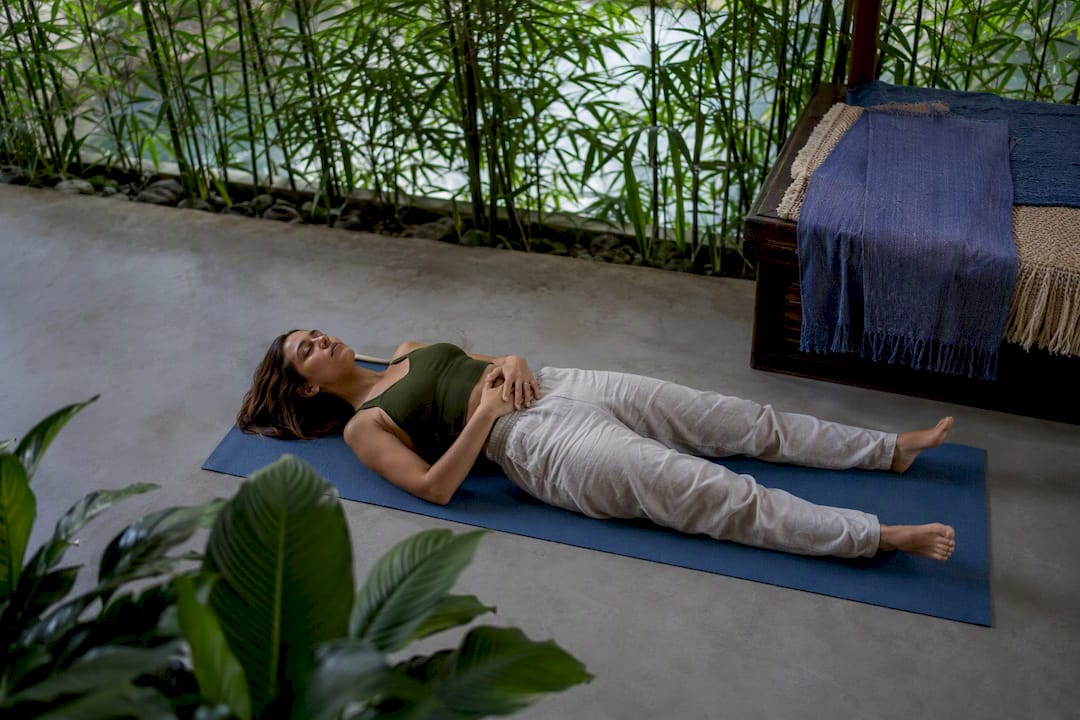
- Get comfortable first. Bring a yoga mat, a blanket, and an eye mask if you have one. Lying flat on your back, or "savasana" position, is standard.
- Protect your ears if needed. If you're sensitive to loud or sustained tones, ask about seating distance from gongs or bring soft earplugs; a good facilitator won't mind the question.
- Notice live versus recorded differences. Live sessions let a facilitator adjust volume and pacing to the room, while recordings offer consistency and convenience but no real-time responsiveness.
- Vet your practitioner. Look for someone who explains what instruments they'll use, checks in about sound sensitivities beforehand, and gives clear cues for leaving quietly if you need to.
A thoughtful facilitator treats safety and pacing as seriously as the music itself.
Who Should Be Cautious About Sound Baths?
Sound baths are generally low risk, but they aren't universally appropriate. A few groups should approach with real caution or talk to a doctor first:
- History of seizures or epilepsy — intense or rhythmic auditory stimulation carries a documented seizure risk for people with certain neurologic sensitivities.
- Recent concussion — sensory overstimulation during recovery can worsen symptoms.
- Severe trauma history or PTSD — deep relaxation states can sometimes surface unexpected emotional responses; check with a therapist if this concerns you.
- Extreme sound sensitivity or tinnitus — loud gongs or sustained tones may aggravate rather than soothe.
- Pregnancy — no specific danger is well established, but many practitioners recommend mentioning it beforehand so seating and volume can be adjusted.
- Unstable psychiatric conditions — use sound baths as a complement to treatment, never a replacement.
Mild dizziness, unexpected tearfulness, or a lingering fuzzy feeling can happen. If any of that occurs, sit up, move gently, and let the facilitator know. And for any diagnosed medical or psychological condition, sound baths belong alongside professional care, not instead of it.
How Often Should You Do a Sound Bath?
A single session can leave you noticeably calmer for hours, but the deeper payoff tends to come from repetition. Weekly or biweekly sessions build what researchers describe as a kind of nervous-system conditioning: your body gets faster at recognizing the cues and dropping into a relaxed state, even though long-term clinical outcomes still need firmer study. A multi-day retreat offers a concentrated version of that same effect.

Aftercare matters more than people expect. Drink water, move your body gently rather than jumping straight into a busy afternoon, and consider jotting down what came up emotionally. If sleep is your main goal, scheduling a sound bath in the evening as part of a consistent wind-down routine tends to amplify that benefit.
Pro Tip: Pair your sound bath with one other calming habit, like ten minutes of slow breathing beforehand. Combining practices seems to compound the relaxation response rather than just adding to it.
Complementary practices worth stacking in: breathwork and light movement, mindfulness, and steady sleep hygiene.
What Does the Research on Sound Baths Actually Show?
The evidence is promising but early. Here's the honest state of play:
- Small observational studies, including the 62-person singing bowl meditation study, show statistically significant immediate reductions in tension, anxiety, and pain.
- Systematic reviews point out that most studies rely on small sample sizes, inconsistent protocols, and a near-total absence of randomized controlled trials, which limits how confidently anyone can claim long-term benefits.
- Cleveland Clinic frames sound baths as a legitimate relaxation tool while explicitly recommending more research before treating it as anything more than complementary care.
"The nervous system responds to sound and attention, not necessarily to any special healing frequency," is roughly how The Guardian's analysis of the science frames the mechanism, cautioning against marketing that leans on mystical claims rather than psychology and physiology.
Stronger studies would need larger groups, randomized designs, and follow-up measured over weeks or months, not just immediately after a gong fades out.
A Grounded Take on Sound Bath Benefits
Most wellness trends oversell certainty. Sound baths are unusual because the honest version of the story is still compelling: immediate relaxation is well-documented, the mechanism is plausible and grounded in real physiology and psychology, and nobody credible is claiming it cures disease. That restraint is what makes it trustworthy.
What gets overlooked is how much the setting shapes the outcome. A sound bath squeezed into a loud, cluttered afternoon delivers a different result than one experienced somewhere genuinely quiet, where your nervous system isn't fighting traffic noise or a mental to-do list the moment the bowls stop ringing. Nature exposure and environmental calm appear to reinforce the same relaxation response that sound baths trigger, which suggests the two pair naturally rather than competing for attention.
If you're weighing whether to build sound-based relaxation into a broader wellness routine, treat it as one tool among several, not a standalone fix. A retreat-style immersion that combines quiet surroundings, rest, and intentional practices like this tends to outperform a single studio session squeezed between errands.
— Nicole
Experience Sound-Friendly Rest at Luana Inn
A sound bath works best when the calm doesn't end the moment the session does, and that's where Luana inn fits into the picture. Set on the foothills of Mauna Loa overlooking Kealakekua Bay, Luana Inn pairs an oceanview, low-noise setting with an infrared sauna, chlorine-free pool, hot tub, and space for yoga or meditation, so the relaxation response you build during a sound practice has somewhere quiet to settle rather than getting undone by the next distraction.

Guests booking a wellness package can combine private accommodations with holistic spa treatments, farm to table breakfasts, and genuinely quiet surroundings shaped by wider trends in mind-body wellness. If you're curious whether a few nights of deliberate rest can extend what a single sound bath session starts, check availability and explore room options at Luana Inn for your next stay.
Sources
- Effects of a singing bowl meditation on mood, anxiety, pain, and spiritual well-being
- Sound Bath: What to know
- What sound therapy is and could it benefit your health?