
A personalized travel experience is any trip deliberately shaped around your preferences, pace, and purpose — from a private culinary walk through a neighborhood market to a multi-day slow-stay at a heritage bed and breakfast, or an AI-curated itinerary that swaps activities in real time. The difference between a generic package and a truly tailored trip comes down to one thing: your stated intent driving every decision, not a template.
Here's a quick look at what that can mean in practice:
- Private culinary walk with a local chef who adjusts the menu to your dietary needs and curiosity level
- Heritage homestay where you sleep, eat, and move at the rhythm of a local community
- AI-assisted itinerary that combines your stored preferences with live pricing to build a day-by-day plan in minutes
- Restorative slow-stay at a small property like Luana inn, where pre-arrival calls shape your schedule around rest, local hikes, and authentic meals
- Adventure micro-expedition led by a certified local guide into a remote natural environment
These categories are exactly what the sections below cover — with concrete examples you can book or build yourself.
Table of Contents
- 1. What are the best examples of personalized travel experiences?
- How to design your own personalized trip from scratch
- What to check before you book a personalized travel service
- How Luana inn delivers a restorative, personalized stay on the Big Island
- Key Takeaways
- Why the most memorable personalization is often the quietest
- A personalized stay on the Big Island is closer than you think
- Further reading and references
1. What are the best examples of personalized travel experiences?
The seven categories below cover the full range of tailored vacation ideas, from deeply immersive to tech-powered. Each one shows who it suits best and how to book it.
| Category | Pace | Personalization Level | Best For | Booking Route |
|---|---|---|---|---|
| Private guides & local companions | Flexible | High | Solo travelers, couples | Specialist provider or concierge |
| Culinary and food-immersion | Moderate | High | Foodies, families | Local tour operator or DIY |
| Wellness and restorative retreats | Slow | Very high | Couples, seniors | Specialist retreat provider |
| Heritage and homestay immersion | Slow | Very high | Cultural travelers | Community host or concierge |
| Adventure micro-expeditions | Active | Medium–High | Solo, active couples | Specialist provider |
| Slow, long-stay packages | Very slow | High | Remote workers, seniors | Small property direct |
| Tech-enabled AI itineraries | Flexible | Medium | All traveler types | DIY via app |
Pro Tip: Name one local preference — a specific ingredient you love, a neighborhood you've read about, or a time of day you like to move — when you first contact a provider. That single detail shifts the whole conversation from generic to genuinely tailored.
Private guides and local companions
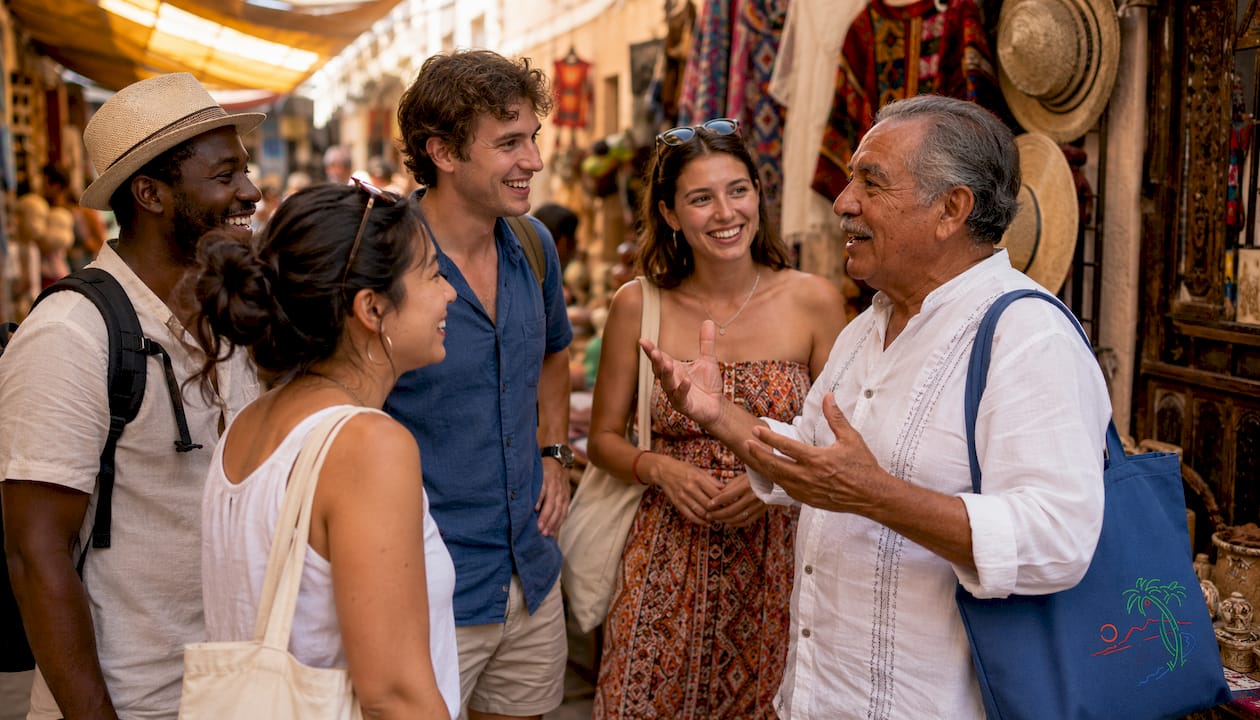
Hiring a private guide for a single day in Oaxaca, Mexico, or Kyoto, Japan, turns a sightseeing loop into a conversation. A good local guide adjusts pace, skips the crowded spots, and takes you to the corner bakery they actually eat at. Professional guides emphasize that the most memorable moments come from humility and small human connections, not luxury alone. This suits solo travelers and couples who want depth over distance.
Culinary and food-immersion experiences
A private market walk in New Orleans with a Creole chef, or a pasta-making session in a Sicilian home kitchen, are both examples of custom vacations built entirely around food. You choose the cuisine, the dietary restrictions, and the pace. Families with picky eaters and adventurous foodies both do well here — the experience scales to the group.
Wellness and restorative retreats
Bespoke wellness retreats in places like Ubud, Bali, or Sedona, Arizona, build a daily schedule around your specific goals: sleep recovery, stress reduction, or gentle movement. A good retreat provider sends a health intake form before you arrive and adjusts programming mid-stay if needed. These are among the most deeply personalized travel investments available, and they work especially well for couples and seniors.
Heritage and homestay immersion
Living inside a community — sharing meals, joining daily routines, and learning a craft — is the clearest example of slow, immersive travel that prioritizes cultural exchange over attraction-collecting. The Mentawai tribal immersion in Sumatra, led by Jungle Guides International, is one of the most extreme versions: travelers live in Uma longhouses, learn jungle survival skills from Indigenous hosts, and travel by traditional longboat. It runs very infrequently and suits culturally curious travelers who genuinely want depth over comfort.
Adventure micro-expeditions
A three-day cave expedition into Ecuador's Cueva de los Tayos — complete with rope descents, Shuar cultural rituals, and overnight camping underground — is a bespoke travel adventure that no two groups experience identically. Apullacta Expeditions offers both fixed group departures and fully private versions shaped to your schedule and physical condition. Active solo travelers and couples who want a story, not just a stamp, are the natural fit.
Slow, long-stay packages
Booking two or three weeks at a small property, rather than five nights at a resort, changes what personalization even means. You get to know the staff, the neighborhood rhythms, and the local suppliers. Remote workers and retirees often find this format the most restorative — the property becomes a base for genuine community connection rather than a check-in point. Explore what restorative travel experiences look like in practice before you book.
Tech-enabled AI itineraries
Tools like Mindtrip let you describe how you like to travel — quiet mornings, local hikes, authentic dining off the tourist track — and generate a day-by-day plan with restaurants, neighborhoods, and logistics included. Amazon Bedrock's AI agent architecture shows how this works at scale: a layered system connects your stored preferences with live pricing and availability to produce tailored recommendations in real time. Some hybrid services let you start with AI planning, then hand off to a human expert for final booking and in-trip support.
How to design your own personalized trip from scratch
The planning process works best when you move through four stages in order.
| Stage | What you do | Who handles it | How far ahead |
|---|---|---|---|
| Discovery | Write an intent statement: pace, sensory goals, social style | You | — |
| Shortlist | Filter experiences to 3–5 that match your intent | AI tool, concierge, or DIY research | — |
| Logistics & booking | Confirm dietary needs, accessibility, cancellation terms | Human concierge or specialist provider | — |
| In-trip flexibility | Build buffer days and pre-approved local backups | You + provider | Before departure |
The shift from "I want to go to Hawaii" to "I want quiet mornings, coastal hikes, and locally sourced meals" is what makes intent-based planning work. That statement lets any tool or human concierge filter options effectively instead of defaulting to the most popular package.
Cost shape varies widely: a DIY AI-planned trip sits at the low end, a private guide day tour lands in the medium range, and a fully managed bespoke expedition or wellness retreat is premium. None of those levels is better — they just suit different travelers and different goals.
Flexible itineraries with built-in buffer days reduce on-trip stress significantly. Experienced planners build rest days and local backup options into every schedule so a rainy afternoon or a tired morning doesn't derail the whole trip.
Pro Tip: Write your intent statement in two sentences before you contact any provider: one sentence on pace ("I want slow mornings and one activity per afternoon") and one on connection ("I want to meet locals, not other tourists"). Share it verbatim — it saves hours of back-and-forth.
What to check before you book a personalized travel service
Use this list before you commit to any provider:
- Confirm what is actually customized versus what is a fixed template with your name on it
- Review cancellation and flexibility policies in writing, not just verbally
- Verify guide credentials and language support — ask for certifications and recent guest references
- Confirm dietary and accessibility accommodations are handled before arrival, not on the day
- Ask about backup plans for weather delays, illness, or changed preferences mid-trip
- Check that pricing for added personalization is transparent — vague "upgrade fees" are a red flag
Red flags worth knowing: a provider who can't share recent guest photos, an itinerary that looks identical to every other group's, and any vendor who says customization happens "on arrival" without a pre-trip call. Those are signs the personalization is cosmetic.
Pro Tip: A good travel insurance policy and a provider who handles transfers and logistics coordination keeps you present and relaxed rather than problem-solving at the airport. Ask your provider upfront whether they manage transfers or whether that's on you.
How Luana inn delivers a restorative, personalized stay on the Big Island
Luana inn sits in the foothills of Mauna Loa, overlooking Kealakekua Bay on Hawaii's Big Island. The property is a working example of what a heritage travel experience looks like when it's handled by people who genuinely know the land.
A typical personalized stay at Luana inn starts before you arrive. Staff reach out to understand your pace preferences, dietary needs, and what kind of mornings you want. From there, they shape a loose daily rhythm — not a rigid schedule — that might include a guided heritage walk along the bay, locally sourced breakfasts timed to your natural wake-up, and transport coordination so you're never hunting for a ride to a trailhead.
What makes it genuinely personalized rather than just comfortable:
- Pre-arrival preference calls that shape meals, pacing, and activity suggestions
- Locally sourced experiences tied to the specific landscape and culture of the Kona coast
- Built-in buffer time so you can slow down, sit with a sunset, or add a spontaneous snorkel without guilt
- In-house coordination of transport and small logistics so you stay present
Nicole, who documents heritage and restorative travel on the Luana inn blog, covers the deeper value of this kind of slow, place-rooted stay in her guides on holistic travel experiences.
Pro Tip: When you contact a small property like Luana inn, send a two-sentence "intent" note with your inquiry: what kind of pace you're after and one thing you hope to feel by the end of the stay. It gives the host exactly what they need to make your visit feel different from every other guest's.
Key Takeaways
Personalized travel works best when you lead with intent, build in flexibility, and choose providers who customize before you arrive, not after.
| Point | Details |
|---|---|
| Start with intent | Write a two-sentence statement about pace and connection before contacting any provider. |
| Prioritize human moments | The most memorable tailored trips focus on small connections, not packed attraction lists. |
| Use tech to filter, not replace | AI trip planners surface great options fast; a human concierge refines and books the best ones. |
| Build buffer days | Rest days and pre-approved local backups reduce stress and increase enjoyment on any trip. |
| Luana inn as a restorative example | Luana inn on the Big Island offers pre-arrival preference calls, locally sourced experiences, and logistics coordination for a genuinely personalized stay. |
Why the most memorable personalization is often the quietest
The travel industry has a tendency to equate personalization with upgrades: a better room, a private transfer, a curated gift basket. Those things are nice. But the trips people actually talk about years later are rarely the ones with the most amenities.
What they remember is a conversation with a local guide who took them somewhere not on any map. A meal that tasted like the place, not like a restaurant trying to impress tourists. A morning with no agenda and enough trust in the host to let that be enough.
Immersive, humble travel — the kind that professional guides describe as requiring observation and genuine connection — produces a different quality of memory than a luxury itinerary. It asks something of you: curiosity, patience, a willingness to be a guest rather than a consumer. That's not a criticism of comfort. It's a reminder that the most personalized experience is the one where you showed up fully present.
If you want to read more about this kind of travel, Nicole's guides on the Luana inn blog cover restorative and slow-travel approaches in depth.
A personalized stay on the Big Island is closer than you think
Luana inn offers something most resorts can't: a stay shaped around you, not a standard package. Perched above Kealakekua Bay with views of Mauna Loa, it's the kind of place where the sunsets change every evening and the staff actually know your name.
Here's what a personalized stay at Luana inn looks like in practice:
- Pre-arrival coordination to align your pace, meals, and activity suggestions before you check in
- Heritage and coastal experiences tied to the Kona coast's landscape, culture, and natural rhythms
- Logistics handled for you — transport, local recommendations, and flexible scheduling so you can actually relax
Ready to kick back and soak up some sun on the Big Island? Browse vacation packages or check out the rooms overview to find the right fit. You can also visit luanainn.com to get a feel for the property before you book.
Further reading and references
- Build real-time travel recommendations using AI agents on Amazon Bedrock — How layered AI architectures combine user preferences with live data to generate tailored itineraries
- A Returning Traveler's Experience with a Personal Concierge — Genie Yip — First-hand account of intent-based planning and the value of logistics coordination
- Mindtrip: AI-powered travel, personalized to you — Consumer AI trip planner that builds customizable day-by-day itineraries from preference inputs
- MENTAWI Tribal Immersion — Jungle Guides International — Deep-immersion expedition example with Indigenous guides in Sumatra
- Create a daily travel itinerary — Claude resources — Practical guidance on building flexible itineraries with buffer days and backup options
- 29 of the world's most unforgettable travel experiences — Sunshine Seeker — Curated examples including personalized wellness retreats and bespoke adventures