
Infrared saunas do produce real, measurable effects: short-term drops in blood pressure, easier muscle recovery, and a genuine relaxation response tied to better sleep. The evidence for detoxification and reliable weight loss is much thinner. Most studies backing these claims are small, and researchers agree that larger trials are needed before anyone should call this a proven treatment. Hydration and a few safety checks matter more than most people assume.
TL;DR:
- Cardiovascular improvements from infrared saunas are supported by moderate evidence from multiple small clinical trials.
- Pain relief and muscle recovery benefits are consistently supported by both research and anecdotal reports.
- Short-term relaxation and sleep quality improvements are reliably reported, especially when combined with stress reduction techniques.
- Evidence for detoxification and weight loss claims remains weak, with most pounds lost during sessions simply representing water weight.
- Those with unstable heart conditions, pregnant women, or on certain medications should consult a doctor before use to avoid dehydration or blood-pressure issues.
Table of Contents
- How Do Infrared Saunas Work, and How Are They Different?
- Which Infrared Sauna Benefits Actually Hold Up in Research?
- How Should You Use an Infrared Sauna for the Best Results?
- Who Should Be Cautious or Avoid Infrared Saunas?
- What Do We Still Not Know About Infrared Sauna Research?
- How Does Luana Inn Offer Guests an Infrared Sauna Experience?
- A Practical Take on Fitting Infrared Sauna Sessions Into Real Life
- Ready to Try an Infrared Sauna Session at Luana Inn?
- Sources
How Do Infrared Saunas Work, and How Are They Different?
A traditional sauna heats the air around you, which then warms your skin through convection, typically running between 158°F and 194°F. An infrared sauna skips that step. It uses radiant heat panels that warm your body directly, letting the room stay far cooler, usually between 104°F and 140°F.
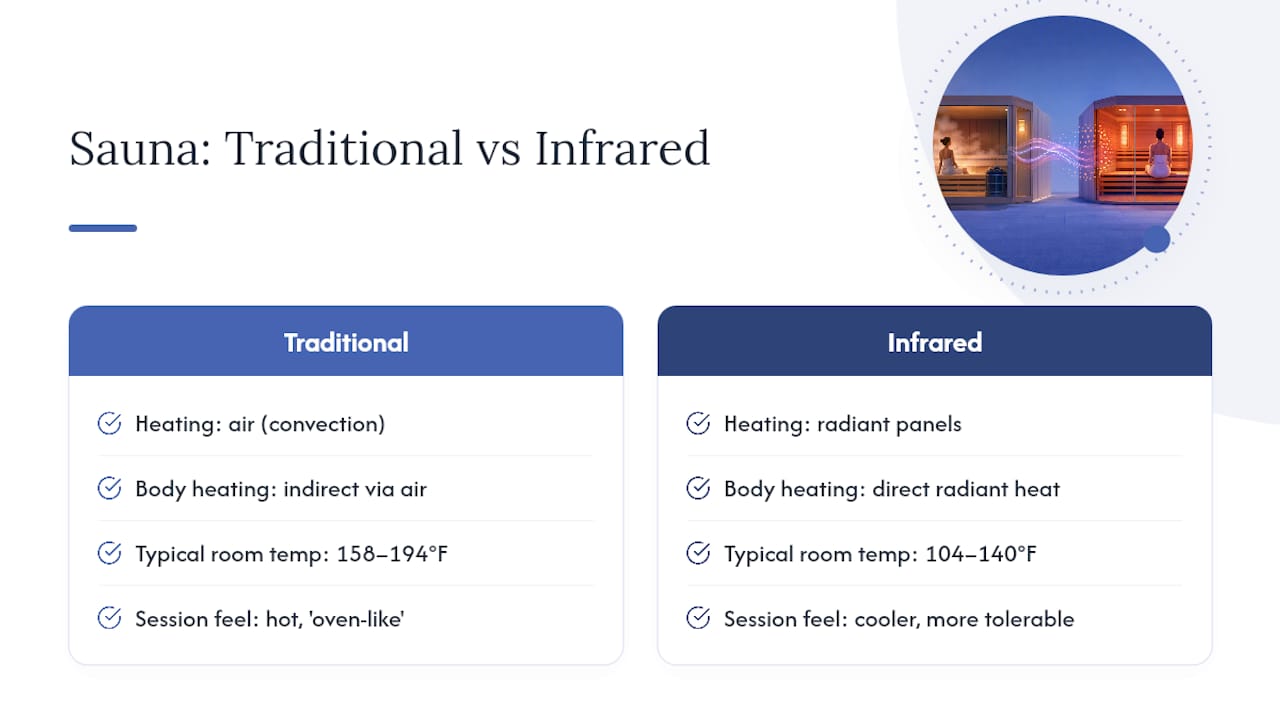
That lower ambient temperature is the whole appeal for a lot of people. You get a similar sweat and heart-rate response without feeling like you're trapped in an oven, which means longer sessions are more tolerable and some people can even do light stretching while inside. Marketing materials often claim infrared waves penetrate 1 to 2 inches into tissue, a figure that shows up repeatedly in reporting on infrared heat therapy. Treat that number as a plausible mechanism, not a settled fact. It's a reasonable explanation for why muscles feel looser afterward, but the depth claim itself hasn't been rigorously tested the way a drug's absorption rate would be.
Which Infrared Sauna Benefits Actually Hold Up in Research?
Here's where the evidence gets interesting, because it doesn't back every claim equally.
Cardiovascular effects have the strongest support of any benefit on this list. A 2009 literature review found moderate evidence that far-infrared sauna sessions help normalize blood pressure and may benefit people with congestive heart failure or coronary risk factors. Later trials have echoed short-term improvements in vascular function, though many of those studies remain small.
Pain relief and muscle recovery show up consistently in both clinical reports and athlete anecdotes. Heat increases blood flow to sore tissue, and infrared-specific reporting links regular sessions to reduced chronic pain and faster recovery after exercise.
Mental health and sleep benefit from something almost meditative about sitting quietly in warmth. Reduced stress markers and improved sleep quality appear in multiple reviews, and one notable finding stands out: combining infrared sauna sessions with cognitive behavioral therapy reduced depression symptoms more than either treatment alone in small controlled studies.
Immune response has weaker but suggestive data. Cleveland Clinic notes some evidence tying regular sauna use to fewer colds, but the research isn't definitive enough to call it a preventive strategy.
Detoxification and weight loss are where the marketing outruns the science. Your liver and kidneys handle toxin clearance, not your sweat glands, and sweating out heavy metals is a claim medical experts consistently reject. Any pounds lost during a session are water weight, back the moment you rehydrate.
A useful way to hold these claims side by side:
- Cardiovascular support: moderate evidence, backed by controlled trials
- Pain and recovery: solid observational and mechanistic support
- Relaxation and sleep: consistent self-reported improvement
- Immune benefits: limited, suggestive only
- Detox and fat loss: not supported by credible research
How Should You Use an Infrared Sauna for the Best Results?
Start small and let your body set the pace.
- Begin with short sessions and build tolerance gradually rather than pushing for long sessions on day one. Some practitioners recommend multiple weekly sessions for relaxation or recovery, adjusting frequency based on individual goals.
- Drink water before and after, and skip alcohol beforehand since it amplifies dehydration and dizziness risk.
- Cool down slowly afterward instead of jumping straight into a cold shower.
- Add five minutes of gentle stretching or slow breathing once you're warmed up. It costs nothing extra and functional medicine practitioners note it meaningfully boosts how restorative the session feels.
Pro Tip: If you travel often, try a session 1 to 2 hours before bed on your first night in a new time zone. Guests using this timing for jet lag recovery report falling asleep faster and waking up less disoriented.
Who Should Be Cautious or Avoid Infrared Saunas?
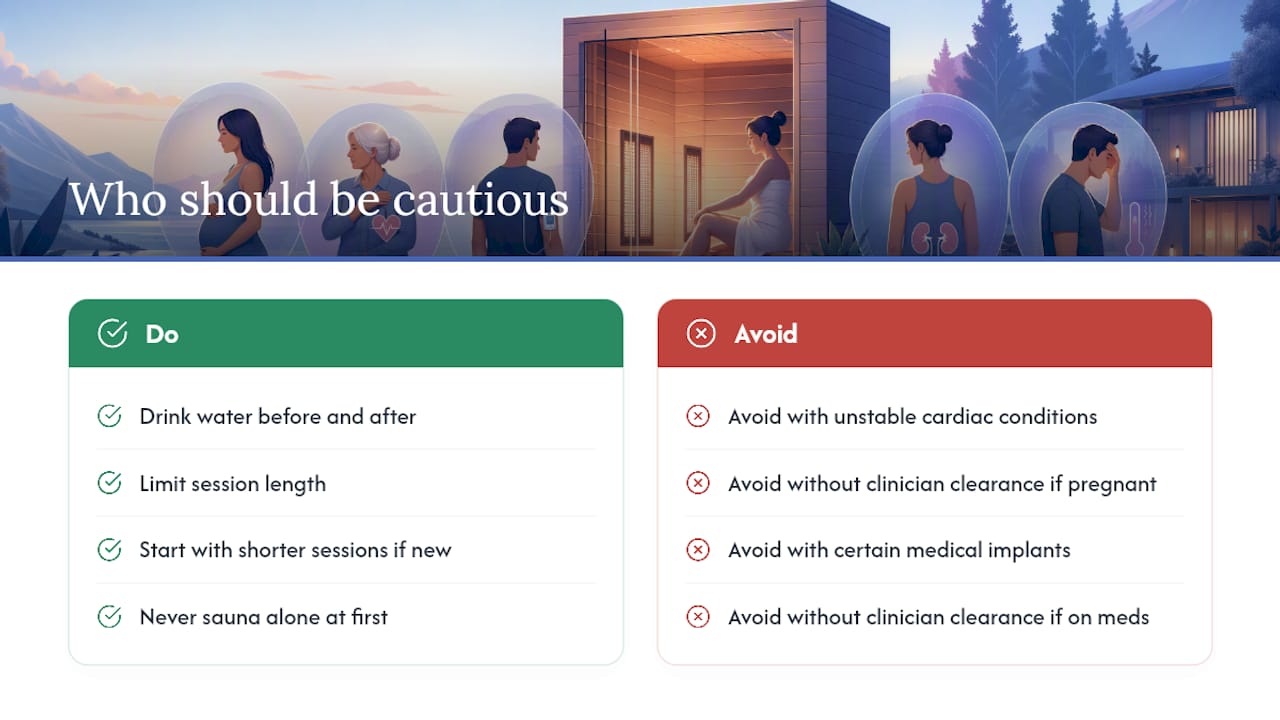
Dehydration, lightheadedness, and blood-pressure swings are the most common side effects, and they're usually preventable with water and reasonable session limits. People with unstable cardiac conditions, pregnant women, and anyone with certain medical implants should get clearance from a doctor before stepping in. Medications like diuretics and antihypertensives change how your body handles heat and fluid loss, so check with a clinician if you're on either.
Older adults and anyone new to heat therapy should start with shorter sessions and never sauna alone the first few times. Mayo Clinic points out that while serious harm is rarely reported, that doesn't mean caution is optional, especially for people managing chronic conditions.
What Do We Still Not Know About Infrared Sauna Research?
The foundational research here is encouraging but far from airtight. The 2009 PMC review that anchors most cardiovascular claims relied on small clinical studies, and later work on sauna therapy and cardiac markers confirms short-term gains while flagging imprecision and possible bias.
Recurring weaknesses across this body of research:
- Small sample sizes that limit how confidently results generalize
- Short follow-up windows, often days or weeks rather than years
- Several studies traced back to the same handful of research groups
Larger randomized controlled trials with standardized outcome measures would go a long way toward settling which benefits are consistent and which were statistical noise.
How Does Luana Inn Offer Guests an Infrared Sauna Experience?
An infrared sauna is included as part of the wellness amenities, alongside a chlorine-free pool and hot tub set in the foothills above Kealakekua Bay. Spa slots are typically reserved ahead through the front desk to guarantee a quiet window, and many guests pair a session with the sunset. Curious how travelers use it for practical recovery? Our post on easing jet lag with infrared sauna timing walks through it, and the full spa offerings are listed on our site.
A Practical Take on Fitting Infrared Sauna Sessions Into Real Life
Infrared saunas aren't a cure for anything, but they're a genuinely pleasant way to support recovery and downshift your nervous system, and that's worth something. On the road, I'd rather see a traveler use a sauna session to unwind after a long flight than chase it as a weight-loss shortcut it was never built to deliver. Match your expectations to the evidence: better circulation and calmer sleep, yes. Detoxed liver, no.
— Nicole
Ready to Try an Infrared Sauna Session at Luana Inn?
Reading about infrared sauna benefits is one thing. Feeling the warm hush of a session after a day of hiking Big Island trails is another. This experience is built right into a stay, pairing the sauna with a chlorine-free pool, hot tub, and farm-to-table breakfasts on a hillside overlooking Kealakekua Bay.

Our vacation packages bundle wellness amenities with your room, so you're not scheduling extras on top of an already full trip. If you're weighing the cost of ongoing wellness memberships elsewhere, it's worth comparing against session and membership pricing at other wellness providers before you commit long-term. For a one-time reset during a Hawaii trip, check room availability and reserve your spa time when you book your stay at Luana Inn.
This article is general information, not a substitute for advice from a qualified doctor. Consult a qualified healthcare professional about your own circumstances before acting on anything here.
Sources
- Far-infrared saunas for treatment of cardiovascular risk factors (PMC 2009)
- Infrared heat health benefits — National Geographic
- Infrared Saunas: What They Do and 6 Health Benefits — Cleveland Clinic
- Do infrared saunas have any health benefits? — Mayo Clinic