Mineral pools can improve skin moisture, ease muscle and joint pain, and help you unwind, backed by clinical spa studies and systematic reviews. The catch is that results depend on the minerals present, how long you soak, and how well the water is maintained. Get those details right and a mineral pool becomes one of the more pleasant, low-effort additions to a wellness routine.
TL;DR:
- The strongest evidence supports mineral pools for reducing joint pain and improving physical function in osteoarthritis, with significant improvements shown in multiple trials.
- Mineral pools can enhance skin moisture and elasticity, but these benefits are mainly supported by smaller studies and should be viewed as encouraging rather than guaranteed.
- Soaking sessions typically last 15 to 30 minutes daily or several times weekly over one to two weeks, aligning with research protocols and expected benefits.
- Proper water maintenance, including regular testing of pH and disinfectant levels, is essential to prevent bacterial risks, especially in mineral-rich warm water.
- Individuals with active skin conditions, pregnant women, or immunocompromised persons should consult healthcare providers before using mineral pools due to safety precautions.
Table of Contents
- What sets a mineral pool apart from other pools?
- Why minerals and warm water change how your body feels
- What the clinical research actually says
- What mineral soaking can do for your skin
- How mineral pools help sore muscles and joints
- Can a mineral pool actually help you relax and sleep better?
- Safety rules every mineral pool user should know
- Getting started safely and choosing the right facility
- A quiet pool, a mountain view, and the same questions we ask ourselves
- Ready to feel the difference for yourself?
- Sources
- FAQ
What sets a mineral pool apart from other pools?
A true mineral pool is engineered with specific dissolved minerals, magnesium, sulfate or sulfur, silica, calcium, and bicarbonate, at concentrations meant to mirror natural thermal springs. That's different from a natural hot spring, which draws mineral content straight from the earth, and different again from a standard chlorine or saltwater pool, which is built around sanitation rather than mineral therapy.
The soak works on three levels at once. Heat opens blood vessels and relaxes muscle tissue. Buoyancy takes weight off joints, which is why floating feels so different from standing. Mineral content adds a chemical layer on top of both, letting compounds like magnesium and sulfur interact with skin and, potentially, deeper tissue. Balneotherapy researchers describe this as a combined thermal, mechanical, and chemical effect, which is part of why spa programs often pair a mineral soak with massage or mud treatments rather than leaving it to work alone.

Why minerals and warm water change how your body feels
The skin absorbs some of what it sits in. Sulfur compounds and silica are thought to interact with the outer skin layer in ways that support moisture retention, while bicarbonate can soften the water's feel against the skin. Heat and buoyancy do separate work: warmth increases circulation and eases muscle tension, while floating unloads pressure from hips, knees, and the spine.
Research into balneotherapy's effect on the immune system has found shifts in antioxidant enzyme activity and inflammatory markers after mineral-water exposure, including changes tied to superoxide dismutase and pro-inflammatory cytokines. It's worth separating what heat alone can do from what appears mineral-specific. Warm water relaxes muscles regardless of what's dissolved in it, but the skin and inflammatory changes researchers report seem to need the minerals present, not just the temperature.

What the clinical research actually says
The strongest evidence sits with osteoarthritis. A systematic review of balneotherapy covering 17 studies found consistent improvements in pain and quality of life after thermal mineral water treatment, with mechanisms tied to both the hydrotherapy itself and mineral-specific chemistry. A separate meta-analysis reported statistically significant reductions in pain and gains in joint function and quality of life among osteoarthritis patients, with key measures reaching P < .001.
A 2024 multicenter spa study conducted in Lithuania found that one to two week mineral-water programs improved mental health, including lower anxiety, depression, and fatigue, and also improved skin moisture and elasticity, with benefits lasting up to six months for many participants.
- Evidence for joint pain and function is the strongest, drawn from pooled trials with statistically significant results.
- Evidence for skin and mood improvements comes from fewer, smaller multicenter trials, promising but less extensively replicated.
- Most trials run short, concentrated programs of daily sessions over one to two weeks rather than occasional dips.
The honest takeaway: trust the joint pain data most, treat skin and mood findings as encouraging, and expect study heterogeneity to mean your own results may vary.
What mineral soaking can do for your skin
Skin outcomes are where mineral pools earn a lot of their reputation. Trial participants following one to two week mineral-water programs showed measurable gains in skin moisture and elasticity, and separate reviews and cohort research report improvement in psoriasis and eczema symptoms among some bathers. Sulfur compounds are generally linked to these dermatologic effects, silica to a smoother skin feel, and magnesium to broader moisture support.
None of that makes a mineral pool a treatment for chronic skin disease. If you have active dermatitis, open sores, or a diagnosed condition like psoriasis, patch test on a small area first, keep any open wounds out of the water, and talk to a dermatologist before building a soaking routine around it.
How mineral pools help sore muscles and joints
This is the best-supported benefit category. Pooled trial data show balneotherapy reduces pain and improves function in osteoarthritis and related joint conditions, with the systematic review and meta-analysis both pointing the same direction. The mechanism is straightforward: heat and buoyancy take load off joints and loosen tight muscle, while mineral chemistry may help calm inflammatory activity on top of that.
In practice, that makes a mineral soak a sensible add-on after a hard workout or a useful complement to physical therapy for arthritis. It isn't a substitute for prescribed medical treatment, and anyone managing a diagnosed joint condition should keep soaking as a supplement to their care plan, not a replacement for it.
Can a mineral pool actually help you relax and sleep better?
The relaxation case is backed by real data, not just anecdote. The same 2024 multicenter spa trial found reduced anxiety, depression, and fatigue among participants completing structured mineral-water programs, with some improvements holding for months afterward.
The likely mechanism combines a straightforward relaxation response, warm water slows the nervous system down, with heat-triggered shifts in stress hormones like cortisol. You don't need daily sessions to notice something. Most trial protocols use sessions spread across one to two weeks, and a realistic goal for casual use is a soak a few times a week rather than expecting a single dip to change your mood for months.
Safety rules every mineral pool user should know
Warm mineral water is more hospitable to bacteria than a cool chlorinated pool, so the maintenance side matters as much as the mineral content. The CDC's hot tub guidance sets a maximum water temperature of 104°F (40°C) and calls for pH between 7.0 and 7.8 with proper disinfectant residuals. Mineral content can accelerate how fast disinfectant breaks down, and the CDC's Legionella toolkit flags warm, mineral-rich water as a setting where Legionella and Pseudomonas can take hold without frequent testing.
- Never exceed 104°F, and limit soak time in water above 100°F to reduce overheating risk.
- Confirm the facility tests pH and disinfectant levels on a regular, posted schedule.
- Avoid mineral pools if you're pregnant, immunocompromised, or caring for a child under 5, unless a doctor has cleared it.
- Skip soaking with open wounds, active infections, or unhealed skin breaks.
Pro Tip: Ask any facility how often they test water chemistry. A confident, specific answer is a better sign than a marketing brochure.
Getting started safely and choosing the right facility
Most clinical programs use sessions of 15 to 30 minutes, taken daily or several times a week over a short one to two week stretch, which lines up with the trial data on both skin and mood outcomes. Before booking anywhere, a few questions separate a well-run pool from a risky one.
- Ask what minerals are in the water and at what concentration.
- Ask how often pH and disinfectant levels are tested and whether logs are available.
- Ask the maximum posted water temperature and how it's monitored.
Walk away from a strong chemical smell, cloudy water, or staff who can't answer basic maintenance questions. If you manage a chronic condition, heart disease, or you're pregnant, check with your clinician before adding regular mineral soaking to your routine. For more on how engineered mineral systems differ from natural spring setups, see this look at natural swimming pool trade-offs.
A quiet pool, a mountain view, and the same questions we ask ourselves
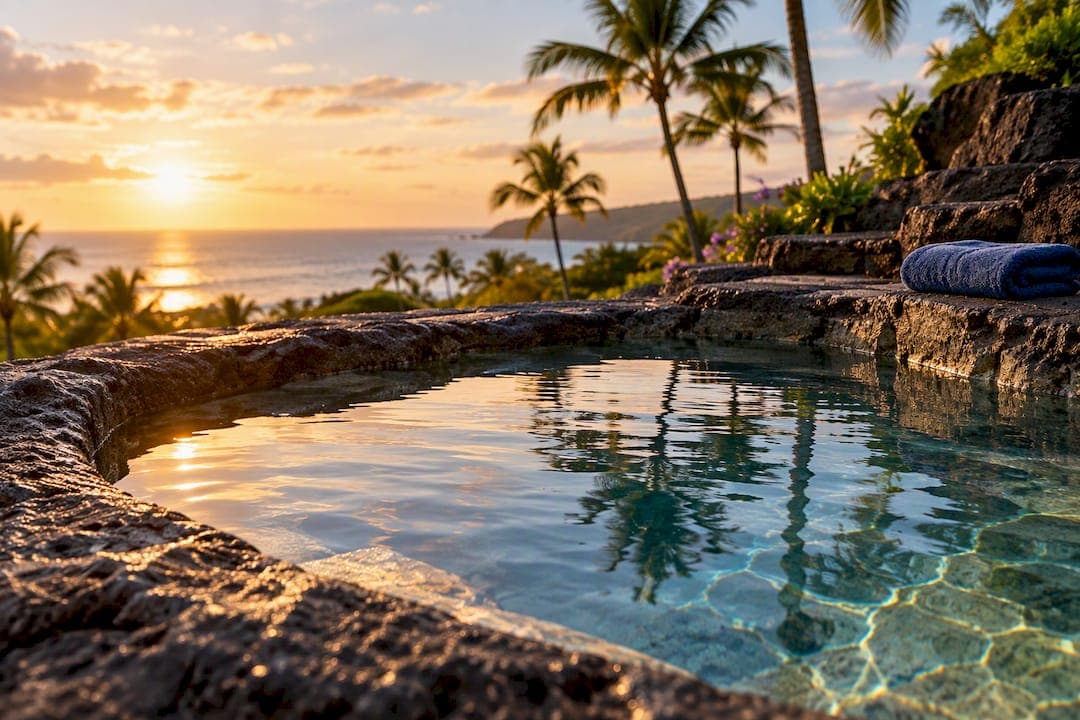
This location features a chlorine-free pool with views of Mauna Loa and Kealakekua Bay, designed to provide real relaxation, not just a swim. Session guidance and water care protocols are maintained in line with research recommendations, and guests with medical conditions are advised to consult their doctors first.
— Nicole
Ready to feel the difference for yourself?
If reading about mineral bathing has you curious what it actually feels like, our spa and amenities pair a chlorine-free soak with treatments like massage, reflexology, and craniosacral therapy. Pregnant guests, anyone immunocompromised, and guests managing a chronic condition should check with a clinician before booking.

| Offering | What it includes | Price |
|---|---|---|
| Massage | One hour session | $160 per hour |
| Full Body Scrub & Wrap | One-off treatment | $195 |
| Organic Facial | One-off treatment | $125 |
| In Room or Pool Side Massage | One hour session | $120 per hour |
Browse full spa services or see bundled wellness stays on our packages page to plan a visit around your own soak and recovery routine.
Sources
- Balneotherapy for osteoarthritis: a systematic review
- The effect of thermal mineral waters on pain relief, physical function and quality of life in patients with osteoarthritis (meta-analysis)
- Efficacy and Safety of Balneotherapy using Diverse Natural Resources in Lithuania: A Multicenter Study
- What You Can Do to Stay Healthy in Hot Tubs | Healthy Swimming | CDC
This article is general information, not a substitute for advice from a qualified doctor. Consult a qualified healthcare professional about your own circumstances before acting on anything here.
FAQ
What are the downsides of a mineral pool?
The main downsides are higher maintenance needs and infection risk if water isn't tested often. Warm, mineral-rich water can speed up disinfectant breakdown, which is why the CDC recommends frequent monitoring to prevent bacteria like Legionella and Pseudomonas from building up.
How long should you sit in a mineral bath?
Most clinical programs use sessions of 15 to 30 minutes, often daily or several times a week over a short program. Staying within CDC temperature guidance of 104°F or below helps you avoid overheating during longer soaks.
Are natural mineral pools good for you?
Natural mineral springs offer similar heat, buoyancy, and mineral exposure as engineered mineral pools, though composition and cleanliness vary by location. The clinical benefits for joint pain, skin, and relaxation documented in balneotherapy research apply to both, provided the water is properly managed.
Is mineral pool water good for you?
For many people, yes. Trials link mineral water bathing to reduced joint pain, improved skin moisture, and lower anxiety and fatigue, with some benefits lasting for months after a short program, based on trial data six months. People who are pregnant, immunocompromised, or managing chronic conditions should check with a doctor first.