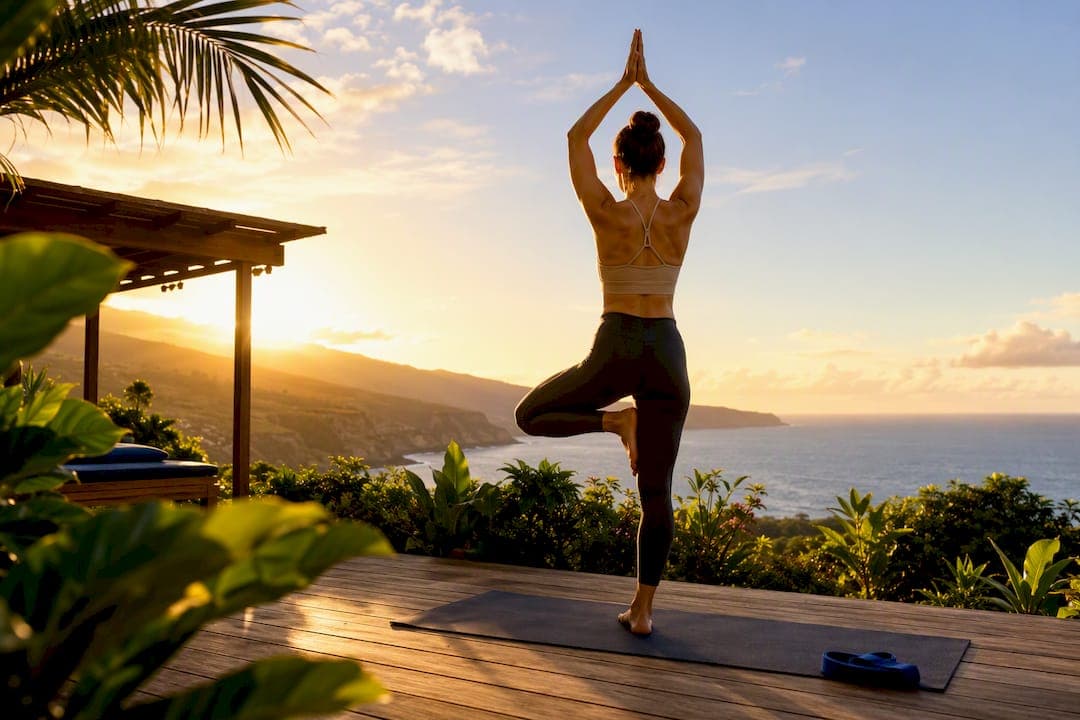
Yes, practicing yoga at sunrise commonly improves morning energy, supports sleep and circadian alignment, and lifts mood and balance when you stick with it. A recent randomized trial found that morning practice beats evening sessions on several fronts, and World Health Organization commentary backs yoga's role in healthy aging at any hour. Below, you'll find the evidence, a simple session template, and honest safety notes to help you get it right.
TL;DR:
- Practicing yoga at sunrise enhances sleep quality, increases morning energy, and promotes circadian alignment more effectively than evening routines.
- Small, consistent morning sessions lasting 15 to 20 minutes can provide functional fitness gains, stress reduction, and improved mood within weeks.
- Outdoor practice adds natural light exposure and a calming environment, but the benefits depend on season, location, and personal preference.
- People with health issues such as recent cardiac events, uncontrolled blood pressure, or pregnancy should seek medical advice before starting early-morning yoga.
- Group sunrise sessions offer social motivation and expert feedback, helping practitioners maintain consistency and proper alignment over solo practice.
Table of Contents
- 1. What makes sunrise yoga different from any other workout
- 2. What the research actually shows about timing and outcomes
- 3. A simple sunrise session you can follow tomorrow
- 4. Knowing when to adapt your practice or check with a doctor
- 5. Small habits that keep a sunrise routine alive
- Immune system support and why timing may matter
- Why group sunrise sessions add something solo practice can't
- A quiet observation from Luana Inn
- Bringing sunrise yoga into your stay at Luana Inn
- Sources
- FAQ
1. What makes sunrise yoga different from any other workout
Timing changes what your body gets out of the same poses, and morning light plays a real part in that.
- Energy and mental sharpness. Slow breathing paired with gentle movement helps wake up a nervous system that's still running slow from sleep, easing you into alertness rather than jolting you there with coffee alone.
- Sleep and circadian alignment. A 2026 randomized trial comparing morning versus evening tele-yoga found the 6 to 7am group had fewer sleep disturbances and a stronger shift toward morningness than the evening group.
- Stress reduction and mood. Slow breathwork and a few quiet minutes of meditation calm the mind before the day's noise sets in, an effect many practitioners notice within the first few sessions.
- Functional fitness. An 8-week trial found Hatha yoga produced balance, strength, and flexibility gains that matched a conventional stretching and strengthening program in older adults.
- Diet and metabolic signals. The same morning-practice group in the tele-yoga trial reported healthier food choices over the study period, alongside gains in energy and restfulness.
- Outdoor advantages. Practicing as the sun comes up adds natural light exposure and a quiet, expansive view, both of which support a calmer mind, though how much sunlight actually helps depends on your season and latitude.
- Better habit-building. A consistent time slot each morning tends to stick better than yoga squeezed in wherever it fits, and consistency is what turns single sessions into lasting benefits.
- Who benefits most. Beginners, shift workers trying to reset their sleep, and older adults working on balance all tend to notice results fastest, provided the routine is scaled to their starting points.
Morning yoga reduced sleep disturbances (p = 0.03) and improved energy (p = 0.007) compared with evening practice, according to the randomized trial on practice timing.
Pro Tip: Keep your first 10 minutes purely about breath and joint mobility. Save any deeper stretching for once your body has actually warmed up.
2. What the research actually shows about timing and outcomes
The strongest evidence for sunrise yoga's specific benefits comes from a handful of well-designed trials, not just tradition or intuition.
- A randomized controlled trial assigned young adults to morning tele-yoga, evening tele-yoga, or a control group, then tracked sleep, mood, and dietary habits.
- The morning group showed measurable gains in morningness, energy, and restfulness that the evening group did not match.
- Separately, an 8-week trial in older adults found Hatha yoga delivered functional fitness improvements on par with a dedicated stretching-strengthening program, with medium to large effect sizes on some measures.
- WHO commentary on yoga and healthy aging frames the practice as adaptable across ages and abilities, useful in public health settings where access to gyms or specialized equipment is limited.
Aligning yoga practice with circadian rhythms may produce modest but consistent improvements in sleep quality and morning alertness compared with evening practice in young adults.
Both trials worked with relatively small groups, so treat these findings as promising rather than settled. Still, the direction is consistent: morning timing appears to add something evening practice does not fully replicate.
3. A simple sunrise session you can follow tomorrow
You don't need an hour to get real benefits. A focused 15 to 20 minutes covers the basics, while 30 to 45 minutes suits a fuller practice.
- Breathwork (2 to 3 minutes). Sit or stand still, breathe slowly through the nose, and let your eyes adjust to the light.
- Gentle warm-up (3 to 5 minutes). Roll through the neck, shoulders, hips, and ankles before asking joints to do more.
- Short flow (5 to 10 minutes). A few rounds of a Sun Salutation variation gets blood moving without overloading a body that just woke up.
- Standing strength and balance (5 to 8 minutes). Tree pose, warrior variations, or a simple balance sequence build the functional gains the research points to.
- Cool-down and rest (3 to 5 minutes). Finish seated or lying down with a short meditation or a Yoga Nidra style rest to close the practice calmly.
If you're outside, dress in layers you can shed as the sun climbs, wear shoes with grip if the ground is uneven, and apply sunscreen even on cloudy mornings. Beginners and older adults do well using a chair for balance poses or skipping deep backbends until mobility improves.
Pro Tip: If you're stiff or groggy, spend twice as long on breath and mobility and skip the flow altogether. There's no rule that says every sunrise session has to include a full sequence.
4. Knowing when to adapt your practice or check with a doctor
Sunrise yoga is gentle by nature, but a few situations call for caution before you start.
- Anyone with a recent cardiac event, uncontrolled high blood pressure, or a significant vestibular condition should get medical clearance before beginning a new practice.
- Pregnant practitioners need pose modifications specific to trimester and should work from guidance suited to their stage rather than a generic routine.
- If mornings leave you lightheaded, a small snack 20 to 30 minutes before practice can prevent dizziness during standing poses.
- Favor slow mobility work or seated and chair-based poses over inversions until you've built a baseline of strength and confidence.
- Chronic conditions respond best to scaled, supervised programs, echoing how the functional fitness trial structured its sessions for older participants.
5. Small habits that keep a sunrise routine alive
The biggest obstacle to sunrise yoga isn't the practice itself, it's showing up before your motivation wakes up.
- Start with just 5 to 10 minutes and let the habit grow before you add length or intensity.
- Tie your practice to something already fixed in your morning, like right after you brush your teeth or before your first coffee.
- Lay out your mat and clothes the night before so there's no decision left to make at dawn.
- Join a short live class or practice with a friend for a bit of accountability when motivation dips.
- Favor daily short sessions over occasional long ones. Regular timing reinforces the circadian benefits that irregular practice tends to miss.
Immune system support and why timing may matter
Regular movement is linked to better immune function generally, and yoga's blend of gentle activity, breathwork, and stress reduction touches several of the pathways involved. Chronic stress is known to wear down immune resilience over time, and the anxiety-easing effects of a calm morning practice may help offset that pressure indirectly rather than through any direct immune boost. Sleep also plays a supporting role here: since morning yoga has been linked to fewer sleep disturbances, and sleep quality itself is closely tied to immune regulation, a steadier night's rest may be one of the more meaningful ways sunrise practice supports the body's defenses.

None of this makes yoga a substitute for vaccines, medical care, or a balanced diet. Think of it as one supportive piece among several, most useful when it's consistent rather than occasional. A single sunrise session won't move the needle much, but a routine built over weeks and months, paired with good sleep and sensible nutrition, gives your immune system more of what it needs to function well.
Why group sunrise sessions add something solo practice can't
Practicing alongside others at dawn brings a social layer that solo mats at home simply don't offer. Group energy tends to keep people showing up on mornings they'd otherwise skip, and a shared sunrise, watched quietly from a row of mats, has a way of making the moment feel bigger than any one person's routine. For many practitioners, that sense of shared ritual becomes part of why the habit sticks.

Community classes also offer built-in accountability. Knowing others expect you at 6am does more for consistency than any app reminder, and a knowledgeable instructor can spot small alignment issues before they become injuries, something that's harder to catch practicing alone from a video. For travelers or retreat guests, group sunrise sessions add a social warmth to an unfamiliar place, turning a solitary practice into a shared experience with people who, for that hour at least, want the same quiet start to the day.
A quiet observation from Luana Inn
Guests often tell us that a sunrise yoga session can positively influence their whole day, not just their body. Moving through a slow flow while observing the spreading light can add a sensory calm that's hard to put into words, though the view itself is not claimed to deliver clinical results. It's the practice that does the work. The setting just makes it easier to want to return to your mat tomorrow.
— Nicole
Bringing sunrise yoga into your stay at Luana Inn
A guided sunrise session feels different when it's paired with the right setting and a little extra care afterward. At Luana Inn, mornings unfold with mountain views on one side and Kealakekua Bay on the other, giving your practice room to breathe before the day gets busy.

If you want to extend the calm past your mat, our spa services include massage, reflexology, and craniosacral therapy, each a natural complement to a morning practice. For guests focused on strength and mobility alongside yoga, pairing sessions with musculoskeletal support like OsteoStrong can round out a longer-term routine. Browse our vacation packages to build a stay around sunrise practice, farm-to-table meals, and time by the water, then reach out when you're ready to book.
This article is general information, not a substitute for advice from a qualified doctor. Consult a qualified healthcare professional about your own circumstances before acting on anything here.
Sources
- Dawn vs. Dusk: Yoga practice timing shapes sleep, mood and well-being in young adults - results of a randomized controlled trial
- Yoga Is as Good as Stretching–Strengthening Exercises in Improving Functional Fitness Outcomes: Results From a Randomized Controlled Trial
- Yoga for healthy ageing: global practice and clinical evidence
FAQ
What is sunrise yoga called?
Sunrise yoga doesn't have one single official name. It's often called morning yoga, dawn yoga, or early-morning practice, all referring to sessions timed around first light rather than a distinct style.
Which yoga has the most benefits?
There's no single style proven to outperform all others. Hatha yoga has trial evidence showing it matches conventional stretching-strengthening programs for balance, strength, and flexibility, making it one well-supported option among several worth exploring.
What happens if you do Sun Salutations every day?
Daily Sun Salutations build gradual gains in flexibility, mobility, and warm-up efficiency, since the sequence works most major muscle groups and joints. Consistency, more than the sequence itself, is what tends to drive noticeable change over weeks.
What is the best time to do yoga in the morning?
A randomized trial comparing 6 to 7am practice with evening sessions found the early morning window improved sleep quality and energy more than practicing in the evening. That said, any consistent morning slot before your day fills up tends to work better than an irregular schedule.