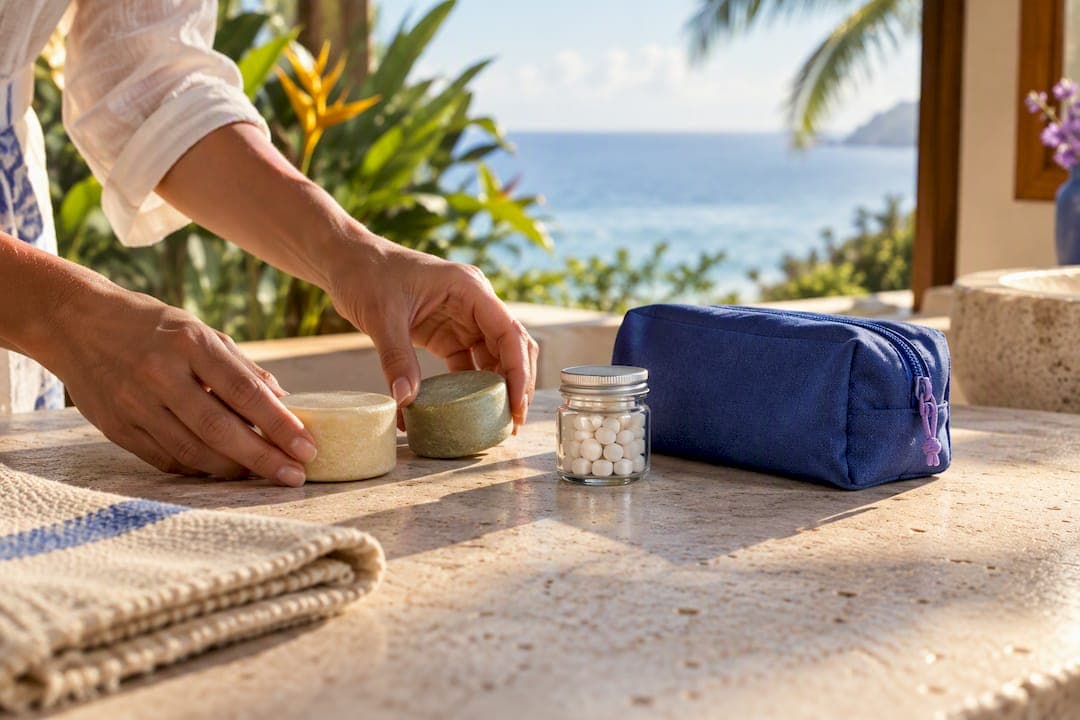
Switch to solid, refillable, or concentrated toiletries to cut plastic and shipping impact, and lean on TSA-friendly solids when you travel. Solid bars and powders sidestep the carry-on liquid limit of 3.4 ounces or less entirely; refillable systems ship less water and less packaging over time. Before you trust a label, look for a qualified claim backed by real evidence rather than a vague "eco-friendly" stamp.
TL;DR:
- Using solid or concentrated toiletries significantly reduces packaging and shipping impact, especially when choosing products with transparent ingredients and clear disposal instructions.
- Solid toiletries are TSA-friendly and avoid liquid limits, making them a practical choice for travel without risking leaks or extra regulations.
- Beware of greenwashing claims by checking for third-party certifications, specific disposal methods, and ingredient transparency before purchasing eco-friendly products.
- Refill and concentrate systems cut down on plastic use and transport-related emissions by shipping only the active ingredients or concentrates, not water-heavy bottles.
- Ingredient sourcing for natural products, such as sustainably farmed palm oil or organic materials, impacts overall environmental benefits, but vegan labels and organic certifications improve their sustainability profile.
Table of Contents
- 1. Eco-friendly toiletry swaps worth making first
- 2. Packing eco toiletries for a flight without hassle
- 3. Reading eco claims without falling for greenwashing
- 4. Refill and concentrate systems that reduce waste over time
- 5. Why ingredient sourcing changes how eco-friendly a product really is
- 6. Ingredients to watch for in your current toiletries
- 7. Which toiletry formulas actually break down faster
- 8. Natural toiletries: real benefits and allergy considerations
- 9. What sustainable travel taught us about packing light
- 10. Choosing a low-waste stay for your next trip
- Sources
- FAQ
1. Eco-friendly toiletry swaps worth making first
The easiest way to lower your bathroom's footprint is to swap liquids for solids or concentrates wherever you can. Each format below trades a little convenience for a real drop in packaging and shipping weight.
Solid shampoo and conditioner bars work like soap: wet your hair, rub the bar directly on your scalp or lather it in your hands first, then rinse. A bar typically lasts as long as two or three plastic bottles and stores best on a draining soap dish between uses. Toothpaste tablets and powders replace the plastic tube: you chew or wet the tablet, then brush as usual, and the packaging is usually a small glass jar or compostable pouch you can refill.
Solid soap, lotion bars, and cream or powder deodorants cut out the plastic bottle almost entirely, though anyone with sensitive skin should check ingredient lists for fragrance and essential oils that can irritate. Bamboo toothbrushes and refillable safety razors are low-tech, low-cost swaps that need no learning curve at all. For hand soap, a refillable glass dispenser paired with a powder or concentrate you mix at home avoids buying a new plastic bottle every few weeks.
When you are choosing among these, a short checklist helps:
- Packaging material: glass, metal, or compostable paper beats plastic, even "recyclable" plastic.
- Ingredient transparency: a full list on the label, not just "natural fragrance."
- Disposal instructions: the label should say exactly how and where to dispose of it.
- Certification: look for a named third-party certifier rather than a company's own seal.
None of these swaps demand a full bathroom overhaul overnight. Replacing one product at a time, starting with whatever you run out of first, gets you there without waste.
2. Packing eco toiletries for a flight without hassle
Air travel adds a wrinkle that home use doesn't: security rules. The TSA liquids rule limits carry-on liquids, gels, creams, and pastes to containers of 3.4 ounces or less, all fitting into a single quart-sized clear bag. Medically necessary liquids, including medications, breast milk, and formula, are exempt from that limit but must be declared and screened separately.
Solid toiletries skip this rule altogether since they aren't liquids, gels, or pastes, which makes them lighter to pack and removes any risk of a leaking bottle ruining your bag. If you do need liquids, duty-free purchases can travel in carry-on when sealed in a transparent, tamper-evident bag with a receipt within 48 hours; otherwise, anything over 3.4 ounces belongs in checked baggage.
A simple packing order keeps things moving at security:
- Pack solids first: bars, powders, and tablets in a tin or breathable pouch.
- Fit any remaining liquids into containers of 3.4 ounces or less inside one quart bag.
- Declare medications or breast milk separately rather than bagging them with everything else.
- Save duty-free liquids for checked bags unless they're properly sealed and receipted.
- Choose rigid travel bottles or metal tins over flimsy squeeze tubes to prevent spills.
3. Reading eco claims without falling for greenwashing
Labels love the word "eco-friendly," but the FTC's Green Guides warn that unqualified claims like "biodegradable," "compostable," or "recyclable" can mislead shoppers unless the company backs them with real evidence and clear limits, such as specifying home versus industrial composting or naming what percentage of communities can actually recycle the material.
Before you buy, check for:
- A named certifier, not a company's own green-sounding icon.
- Disposal specifics: does it need an industrial composting facility, or will it break down in a backyard bin?
- Recycled content percentage and whether your area actually accepts that material.
- A full ingredient list, free of vague terms like "plant-derived" with nothing else specified.
A well-qualified claim reads something like "compostable in industrial facilities within 90 days," while a deceptive-sounding one just says "eco-friendly packaging" with no further detail.
The FTC's guidance makes clear that decomposition claims need a reasonable, specified timeframe and clear qualifying language, according to the Green Guides summary, so a bare "biodegradable" claim without a timeline or disposal method doesn't meet that bar.
4. Refill and concentrate systems that reduce waste over time
Refill and concentrate systems tackle a part of the footprint most people never think about: shipping weight. Since most bottled toiletries are mostly water, shipping them means paying an environmental cost to move liquid that could just come from your own tap.
Options include in-store refill stations, mail-order sachets or powders you mix at home, bulk concentrates sold in small pouches, and starter kits that pair a glass dispenser with refill packs. The EPA's circular economy guidance points to reuse and refill systems as a stronger strategy than recycling alone, since they cut plastic production at the source rather than managing it after the fact.
A gradual approach works better than swapping everything at once:
- Pick one product to switch each month rather than overhauling your whole routine.
- Store refills in a cool, dry place away from direct sunlight to limit microbial growth.
- Label containers clearly so concentrates don't get mixed up with full-strength product.
Pro Tip: Fill your dispenser about halfway with water first, add the concentrate, then top it off. Adding water last, after the concentrate, tends to cause clumping and clogged nozzles.
5. Why ingredient sourcing changes how eco-friendly a product really is
A biodegradable formula still leaves a footprint if the raw ingredients behind it come from unsustainable farming or harvesting. Palm oil, a common base for soaps and shampoos, is a well-known example: how it's grown affects deforestation and habitat loss far more than the finished bar's packaging does. Ingredients labeled as sustainably or responsibly sourced usually mean the grower followed practices meant to limit land clearing and protect biodiversity, though the strength of that claim depends entirely on who verified it.
Organic certification adds another layer, since certified organic ingredients are grown without synthetic pesticides and fertilizers, which reduces runoff into waterways near farms. That said, "organic" describes farming practices, not packaging or shipping, so an organic body wash in a heavy plastic bottle still carries a plastic problem.
Shea butter, coconut oil, and essential oils are common in solid bars and lotions, and their environmental profile varies by where and how they're grown. A shea butter sourced through a cooperative that reinvests in local land management differs meaningfully from one grown on newly cleared acreage, even though both might appear identical on an ingredient list.
When you're comparing two similar products, checking for a named certification body, whether that's organic, fair trade, or a sustainable harvesting seal, tells you more than the word "natural" ever will. Ingredient sourcing rarely makes it onto the front label, but it often matters as much as the packaging choice you're making at checkout.

6. Ingredients to watch for in your current toiletries
Some common toiletry ingredients carry environmental costs that have nothing to do with packaging. Microbeads, once common in exfoliating scrubs and toothpaste, are tiny plastic particles that wash straight down the drain and into waterways, where they persist and can be ingested by aquatic life. Many products have phased them out, but it's worth checking labels on exfoliants and some toothpaste brands, since the ingredient sometimes appears as "polyethylene" rather than the word "microbead."
Sulfates, specifically sodium lauryl sulfate and sodium laureth sulfate, are the ingredients that create foam in shampoos and body washes. They aren't classified as toxic, but they can strip natural oils from skin and hair, and some formulations break down slowly enough to persist in wastewater systems longer than milder surfactants.
Synthetic fragrances are another gray area: the word "fragrance" on a label can hide dozens of individual chemical compounds, some of which are known skin irritants, and manufacturers aren't required to disclose the full mix. Triclosan, once common in antibacterial soaps, has drawn scrutiny for its persistence in water systems and its potential effects on aquatic organisms.
None of this means every conventional toiletry is harmful, but ingredient lists are worth a second look, especially for products marketed as gentle or natural that still contain sulfates or synthetic fragrance blends.
7. Which toiletry formulas actually break down faster
Biodegradability varies widely even among products marketed as "green." Plant-based surfactants, like those derived from coconut or sugar, tend to break down faster in wastewater treatment than synthetic, petroleum-based sulfates, though the difference depends heavily on the specific formulation and local water treatment conditions.
Solid bar soaps generally biodegrade more completely than liquid body washes packaged in plastic bottles, partly because bar soap contains fewer synthetic thickeners and stabilizers. Powdered and tablet formats, like toothpaste tablets or powdered shampoo, tend to have simpler ingredient lists than their liquid counterparts, which can also mean fewer synthetic additives that resist breakdown.
Packaging is a separate question from formula biodegradability, and this is where the FTC's Green Guides caution matters most: a "biodegradable" bottle might only break down under industrial composting conditions that aren't available in most curbside programs, so a bottle marked biodegradable that ends up in a landfill may behave no differently than plastic.
Life-cycle research on personal care products indicates that transport weight and the water used during a product's life matter as much as what happens to it after disposal, which is one reason concentrated and solid formats tend to score better overall than full liquid bottles shipped at scale. Comparing biodegradability claims side by side means checking both the formula and the specific disposal conditions the label describes, not just the word "biodegradable" itself.
8. Natural toiletries: real benefits and allergy considerations
Switching to natural or eco-friendly toiletries often means fewer synthetic fragrances and preservatives, which can be gentler for people with sensitive skin or fragrance sensitivities. Simpler ingredient lists also make it easier to identify exactly what's touching your skin, since a bar soap with five ingredients is far easier to evaluate than a body wash with thirty.
That said, "natural" doesn't automatically mean hypoallergenic. Essential oils, a common ingredient in natural soaps, lotion bars, and shampoos, are a frequent source of skin irritation and allergic reactions, sometimes more so than the synthetic fragrances they replace. Citrus oils, in particular, can increase skin sensitivity to sunlight. Plant extracts like tea tree oil, while popular for their antibacterial properties, can cause contact dermatitis in some people, especially at higher concentrations.
Anyone with known allergies or sensitive skin should patch test a new solid bar or lotion on a small area before full use, the same way you'd approach any new skincare product. Reading the full ingredient list still matters even when a product markets itself as natural, since plant-based doesn't mean risk-free for everyone.

9. What sustainable travel taught us about packing light
At Luana Inn, our guests often arrive with a bag full of solid toiletries and refillable bottles, and it shows in how little gets left behind. Packing solids first, then filling gaps with necessary liquids, makes for a lighter suitcase and a smoother security line. We've also written about spotting greenwashing while traveling and how composting works on a trip, both worth a read before your next stay.
— Nicole
10. Choosing a low-waste stay for your next trip
If you're already rethinking what's in your toiletry bag, the place you stay matters too. Look for lodging that offers refillable dispensers, composts food waste, and serves breakfast with low-waste practices in mind.
- Refill amenities cut down on single-use bottles left behind in guest rooms.
- Composting practices reduce what a property sends to landfill.
- Low-waste breakfast service limits packaging from disposable creamers, cups, and condiments.
Luana Inn sits in the foothills above Kealakekua Bay with these habits built into daily operations, and our wellness packages and rooms overview are a good starting point if a low-waste, wellness-focused stay fits your next trip.
Sources
- Liquids, aerosols, and gels rule | Transportation Security Administration
- Environmental claims: Summary of the Green Guides | Federal Trade Commission
- What is circular economy? | EPA
- Life-cycle assessment references — EPA (HeronetNext)
FAQ
What is the most eco-friendly toiletry brand?
There's no single brand that qualifies as the most eco-friendly, since impact depends on packaging, ingredient sourcing, and disposal instructions together. Look for brands that name a specific third-party certifier and give clear disposal guidance rather than relying on vague "eco-friendly" language.
What is the best environmentally friendly body wash?
The most environmentally friendly option is typically a solid bar soap rather than a bottled body wash, since it uses less packaging and often has a simpler ingredient list. If you prefer liquid, a refillable concentrate reduces the shipping weight and plastic that a full bottle requires.
What are some eco-friendly beauty and personal care swaps?
Common swaps include solid shampoo and conditioner bars, toothpaste tablets, bamboo toothbrushes, refillable razors, and powder or concentrate-based hand soap. Each reduces plastic packaging and, in the case of concentrates, cuts down on the shipping weight tied to bottled liquids.
Are natural toiletries safe for sensitive skin?
Natural toiletries can be gentler for some people since they often skip synthetic fragrances, but plant-based ingredients like essential oils can still trigger allergic reactions or irritation. Patch testing a new product on a small area of skin before regular use is the safest approach regardless of whether it's labeled natural.
Can I bring solid toiletries on a plane without following the 3-1-1 rule?
Yes, solid toiletries like shampoo bars, soap, and toothpaste tablets aren't classified as liquids, gels, or pastes, so the TSA's carry-on liquid limit of 3.4 ounces or less doesn't apply to them. This makes solids one of the simplest ways to avoid packing restrictions and reduce leak risk in a carry-on bag.