Eco lodging is accommodation designed to minimize environmental impact while maximizing benefits for local communities and guests. The term covers a wide range of properties, from small bed and breakfasts to wilderness retreats, all built around the same core idea: travel that gives back more than it takes. Sustainable accommodation, the recognized industry term, follows standards set by organizations like the Global Sustainable Tourism Council. The advantages of eco lodging go well beyond recycling bins and solar panels. You get cleaner air, fresher food, richer cultural connections, and the knowledge that your dollars support conservation rather than deplete it. This guide breaks down every major benefit so you can choose with confidence.
Eco lodging benefits explained: how it supports conservation
Eco lodging is one of the most direct ways travelers can fund environmental conservation. Genuine eco lodges manage energy use, reduce waste, hire locals, buy local food, and limit water consumption. Every one of those practices reduces the property's footprint and channels money toward protecting the land around it.
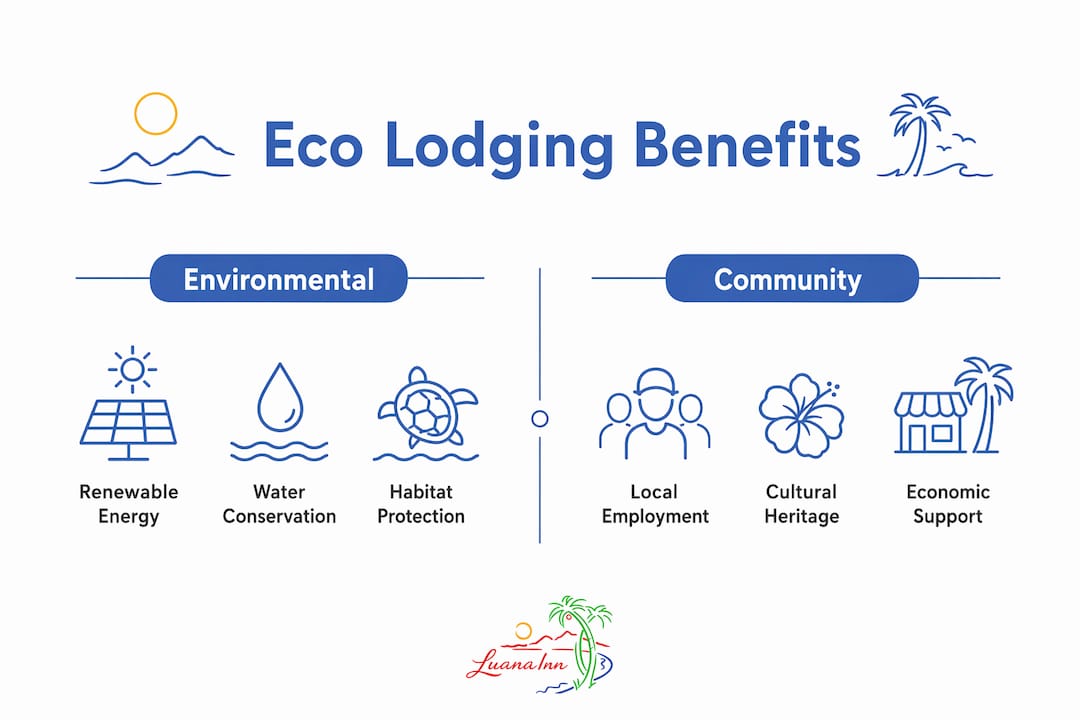
The environmental benefits of sustainable accommodation fall into three clear categories:
- Renewable energy use. Solar panels, wind turbines, and microgrid systems replace diesel generators. The result is quieter properties and lower carbon emissions per guest night.
- Water conservation. Low-flow fixtures, rainwater harvesting, and greywater recycling cut consumption significantly. In water-scarce destinations, this is the difference between a thriving ecosystem and a depleted one.
- Waste reduction. Composting programs, refillable toiletry dispensers, and farm-to-kitchen food loops keep waste out of landfills. Many eco lodges report near-zero food waste because menus are built around what is available locally.
Eco lodges divert revenue from harmful extractive activities toward habitat restoration and species monitoring. That funding pays for trail maintenance, wildlife surveys, and reforestation programs that would otherwise go unfunded.
Design choices also matter more than most travelers realize. Dark sky policies reduce light pollution, which protects nocturnal wildlife and gives guests an unobstructed view of the stars. Natural building materials like bamboo, reclaimed wood, and rammed earth lower embodied carbon compared to concrete and steel. These are not aesthetic choices. They are measurable environmental decisions.

Pro Tip: Ask any eco lodge you are considering for its annual energy and water consumption figures. A property that tracks and publishes those numbers is serious about sustainability. One that cannot answer the question probably is not.
Regenerative tourism takes this a step further. Rather than simply reducing harm, regenerative properties actively restore ecosystems, revive cultural practices, and strengthen local economies. Traveler choices can turn tourism into a positive force rather than a source of depletion.
How does eco lodging benefit local communities?
The economic advantages of eco lodging flow directly to the people who live near the property. A survey of 32,500 respondents across 35 countries found that 60% believe tourism has an overall positive impact, with economic growth cited by 59%, job creation by 46%, and leisure improvements by 41%. Those numbers reflect what happens when lodges prioritize local hiring and sourcing.
Here is how that plays out in practice:
- Local hiring. Eco lodges fill most roles, from housekeeping to guiding to cooking, with people from nearby communities. That keeps wages circulating locally rather than flowing to distant corporate headquarters.
- Local sourcing. Purchasing produce, crafts, and building materials from nearby farmers and artisans creates a multiplier effect. Every dollar spent at a local farm supports that farmer's family, their suppliers, and the broader village economy.
- Cultural preservation. Many eco lodges partner with indigenous communities to offer authentic cultural workshops, storytelling sessions, and traditional craft demonstrations. Visitor interest gives communities a financial reason to maintain and teach those traditions.
- Community empowerment. Some properties share ownership or profits with local cooperatives. That structure gives communities a direct stake in protecting the environment that draws visitors in the first place.
Sustainable travel supports cultural heritage and builds inclusive destination resilience. That matters especially as populations age and rural communities face economic pressure to convert natural land to industrial use.
The contrast with conventional resort models is sharp. A large chain resort may employ local staff in entry-level roles while importing food, management, and profits. An authentic eco lodge keeps the full economic chain local. Your stay at a property like Luana inn on the Big Island directly supports the surrounding community in Kealakekua.
What makes the guest experience at eco lodges different?
Eco lodges offer a guest experience that conventional resorts simply cannot replicate. Traditional resorts focus on amenities like water slides and entertainment programs. Eco lodges offer nature walks, cultural workshops, wildlife watching, and yoga instead. The difference is depth versus distraction.
| Experience element | Conventional resort | Eco lodge |
|---|---|---|
| Food sourcing | Imported, standardized menus | Local, seasonal, farm-to-table |
| Noise environment | Poolside music, crowds | Quiet, low-density, natural sounds |
| Activities | Organized entertainment | Wildlife watching, cultural workshops |
| Room design | Uniform, branded interiors | Natural materials, site-specific design |
| Privacy | Shared amenities, high occupancy | Intimate settings, fewer guests |
Sustainable hosting enhances guest experience by creating healthier, fresher environments. Low-scent cleaning products, refillable toiletries, and energy-efficient systems improve comfort and build trust. You sleep better when the air is clean and the room is quiet.
Modern eco lodges use microgrid technology and smart building management systems to achieve quiet, efficient, and genuinely comfortable stays. The technology is invisible. You notice the result: a cool room, steady lighting, and no generator hum at 2:00 AM.
Pro Tip: Look for eco lodges that list specific activities tied to the local ecosystem. A property offering guided tide pool walks or birdwatching with a local naturalist is investing in your experience, not just checking a green box.
The restorative travel experiences available at well-run eco properties go beyond relaxation. Guests return home with a genuine connection to a place, its people, and its wildlife. That is the kind of memory a swim-up bar cannot produce.
How do you spot greenwashing in eco lodging?
Greenwashing is the practice of marketing a property as eco-friendly without the practices to back it up. It is widespread, and it costs travelers money while delivering none of the benefits of genuine sustainable accommodation.
Transparent details on water use, waste management, and community partnerships signal authentic eco lodges. Vague claims often indicate greenwashing. Here is what to look for:
- Specific sustainability goals. A credible property publishes targets: liters of water saved per guest night, percentage of food sourced locally, kilowatt-hours generated from renewables. Numbers are hard to fake.
- Verifiable certifications. Look for recognized third-party certifications. In Hawaii, the Hawaii Tourism Authority's Malama Hawaii program recognizes properties committed to caring for the land and culture. Globally, the Global Sustainable Tourism Council sets the benchmark standard.
- Named community partnerships. Authentic eco lodges name the farms, cooperatives, and conservation organizations they work with. Generic phrases like "we support the local community" without specifics are a red flag.
- Honest reporting. The best properties share both achievements and areas where they are still improving. Perfection claims are a warning sign. Progress reporting is a credibility signal.
- Operational details. Ask how waste is handled, where water comes from, and how staff are recruited. A property with real practices answers these questions easily. One relying on marketing copy will deflect.
Verifiable metrics and operational details on water, waste, and local economic integration are the clearest way to distinguish genuine eco lodges from greenwashed options. If a property cannot or will not share those details, keep looking.
Key Takeaways
Eco lodging delivers the most value when it combines verified environmental practices, genuine local economic integration, and an immersive guest experience that conventional resorts cannot match.
| Point | Details |
|---|---|
| Environmental impact is measurable | Authentic eco lodges publish energy, water, and waste data you can verify before booking. |
| Local economies benefit directly | Local hiring and sourcing keep visitor spending in the community through a multiplier effect. |
| Guest experience is richer | Low-density design, farm-to-table food, and nature-based activities create deeper, more memorable stays. |
| Greenwashing is common | Demand specific certifications, named partners, and operational metrics to confirm authenticity. |
| Regenerative travel goes further | The best properties restore ecosystems and cultures rather than simply reducing harm. |
Why eco lodging changed how I think about travel
I used to measure a great trip by how much I could pack into it. The bigger the resort, the longer the activity list, the better the value. That math stopped adding up after my first stay at a genuine eco property.
What struck me was not the solar panels or the composting kitchen. It was the quiet. Real quiet, the kind you only get when a property is built to fit into its surroundings rather than override them. The food tasted different because it came from a farm I could see from the breakfast table. The guide who took me out at dawn knew every bird call because he grew up listening to them.
Most travelers miss this because they are comparing price per night without accounting for what they actually get. A conventional resort delivers a predictable, controlled experience. An eco lodge delivers a real one. The advantages of eco lodging are not abstract environmental points. They show up in how you feel at the end of each day.
The misconception I hear most often is that sustainable accommodation means sacrifice. Fewer amenities, less comfort, more inconvenience. The opposite is true at well-run properties. Comfort and sustainability are not in conflict. They reinforce each other when a property is designed with intention. Prioritize eco lodging not just for the planet, but because it is genuinely the better stay.
— Nicole
Luana inn: where sustainable travel feels like home
Luana inn sits in the foothills of Mauna Loa, overlooking Kealakekua Bay on Hawaii's Big Island. The views shift from pastel sunrises over the mountain to deep orange sunsets above the water, and the pace here is exactly what sustainable travel should feel like: unhurried, connected, and real.

Luana inn supports the local Kealakekua community through thoughtful sourcing and a genuine commitment to the land that surrounds it. Guests wake up to birdsong, not traffic. The eco-conscious rooms and amenities are designed for comfort without excess. Whether you are looking to kick back and soak up the Big Island sun or explore the pristine waters of the bay, Luana inn gives you a base that aligns with your values. Check out the vacation packages and book your stay at Luana inn today.
FAQ
What is eco lodging?
Eco lodging is accommodation built to minimize environmental impact through practices like renewable energy, water conservation, local hiring, and waste reduction. The industry standard term is sustainable accommodation, defined by bodies like the Global Sustainable Tourism Council.
How does eco lodging help the environment?
Eco lodges reduce carbon emissions through renewable energy, protect water sources through conservation systems, and fund habitat restoration with visitor revenue. Design choices like dark sky policies and natural building materials add further environmental benefits.
Is eco lodging more expensive than conventional hotels?
Eco lodges vary widely in price. Many are competitively priced with mid-range hotels, and the value per dollar is often higher because the experience, food quality, and privacy are superior to what a conventional property delivers at the same rate.
How do I know if an eco lodge is genuine?
Look for specific, verifiable sustainability metrics on energy, water, and waste. Check for recognized third-party certifications and named local community partnerships. Properties that publish progress reports rather than perfection claims are the most credible.
What activities do eco lodges typically offer?
Eco lodges typically offer wildlife watching, guided nature walks, cultural workshops, farm visits, and wellness programs tied to the local environment. These activities connect guests to the destination in ways that standard resort entertainment programs do not.