
Yes, ocean views produce measurable calm. Studies link visible water to lower psychological distress and short-term drops in heart rate, blood pressure, and stress hormones, alongside a real bump in heart rate variability. The Michigan State research on blue space and mental health and UC Davis's summaries of water-viewing experiments both point the same direction: a coastline view isn't just pretty, it changes what's happening in your body within minutes.
Here's the honest scope of that effect:
- Most of the strongest evidence covers short-term, momentary recovery, not permanent personality change.
- Lab and VR studies show quick shifts in heart rate variability and brainwave patterns.
- Population studies show people with a water view report less psychological distress over time.
- The effect stacks with other calming factors like quiet, fresh air, and slower pace.
Key Takeaways
Ocean views trigger fast, measurable calm through a combination of visual openness, wave sound, and reduced mental effort, and that effect is strongest when the water fills more of your field of view.
| Point | Details |
|---|---|
| Short-term effect is real | Heart rate variability rose 8.41 to 27.83 percent in VR coastal studies, a sign of nervous system recovery. |
| Water proportion matters | Wider visible water produced stronger heart rate and blood pressure drops in UC Davis research. |
| Micro-doses work | Brief 90-second seascape viewing shifted prefrontal brain activity and boosted subjective relaxation. |
| Design details amplify calm | Coastal scenes with walkways and greenery outperformed blank open water in restorative testing. |
| Long-term data is thinner | Population studies show lower distress near water, but durable, lasting change is less firmly established. |
Table of Contents
- The Role of Ocean Views in Calm: What the Research Shows
- How Ocean Views Reduce Stress: Sensory and Psychological Mechanisms
- Measurable Physiological Effects Tied to Seascape Exposure
- Impact on Sleep, Mood, Attention, and Creativity
- Getting Ocean-View Benefits Without Living on the Coast
- How Luana Inn Builds These Principles Into an Ocean-View Stay
- What the Research Gets Right, and Where It Oversells
- Sources
The Role of Ocean Views in Calm: What the Research Shows
The evidence splits into two camps: real-world population data and controlled lab experiments, and both point toward the same conclusion. Researchers at Michigan State found that people with a visible water view reported significantly lower psychological distress than neighbors without one, even after accounting for income, age, and neighborhood quality. That's an observational finding, not proof of cause and effect, but it's a hard pattern to explain away.
By the numbers: A 2025 VR trial found virtual coastal scenes increased heart rate variability (RMSSD) by 8.41 to 27.83 percent while EEG energy, a marker of mental arousal, dropped 0.83 to 9.10 percent. The coastal walkway scene, which combined water with a path and greenery, produced the biggest shift.
Add in UC Davis's lab work, where participants who viewed water showed lower heart rate and blood pressure than those looking at scenes without it, and a consistent picture forms:
- Observational studies show long-term association between water views and lower distress.
- Experimental studies show fast, physiological changes within a single viewing session.
- Wider visible water bodies tend to produce stronger effects than narrow glimpses.
How Ocean Views Reduce Stress: Sensory and Psychological Mechanisms
Attention Restoration Theory offers the clearest explanation for why staring at open water feels different from staring at a wall or a screen. Your brain runs on "directed attention," the effortful kind you use at work, and it gets tired. Open water asks for none of that effort, so it gives that exhausted attention system room to recover.
A far horizon does something else, too: it puts your daily stress in visual proportion. Small problems look smaller against a wide plane of water, which may be why open-water views correlate with lower rumination.
The sound matters as much as the sight. Wave rhythm sits in a frequency range that can gently pull your breathing and heart rate into a slower, steadier pattern, a process researchers call entrainment.
- Attention Restoration Theory: open water demands little focus, letting mental fatigue ease.
- Horizon lines offer perspective that can shrink the perceived size of everyday stress.
- Wave sounds can entrain breathing toward a calmer rhythm.
- Scenes with visual coherence (a walkway plus water plus greenery) often outperform blank ocean in restorative testing, according to research on virtual coastal landscapes.
Pro Tip: If you're choosing a room or a spot to sit, pick the one where the water fills the most of your field of view. Proportion of visible water, not just presence of it, seems to drive a bigger share of the calming effect.
Measurable Physiological Effects Tied to Seascape Exposure
Ocean views don't just feel calming, they show up on monitoring equipment. UC Davis studies recorded measurable drops in heart rate and blood pressure when participants viewed water compared to land-only scenes, with wider water producing a stronger drop.
By the numbers: A 2026 study in the journal Buildings had 44 adults view a seascape from a 29th-floor window and found increased left-dominant prefrontal cortex activity, a pattern tied to positive mood, along with higher subjective relaxation scores compared to a blinds-closed control.
A few markers worth knowing:
- Heart rate variability (specifically RMSSD) rises with seascape exposure, a sign the nervous system is shifting toward rest-and-recover mode.
- Left-right prefrontal activity differences increase with seascape viewing and track closely with how relaxed people say they feel.
- Heart rate itself doesn't always drop in lockstep with these other markers. Some viewers report deep calm while their heart rate ticks up slightly, a response UC Davis researchers associate with awe rather than stress.
These are small-to-moderate effect sizes in the data. They're not dramatic on paper, but they're exactly the kind of shift that matters for a stressed nervous system trying to reset in the moment.
Impact on Sleep, Mood, Attention, and Creativity
Calmer physiology tends to ripple outward. Lower stress before bed is one of the more reliable predictors of easier sleep onset, and short-term blue space exposure has been linked to that kind of pre-sleep wind-down, though most of the supporting evidence is observational rather than a controlled sleep trial.
Mood benefits show up more consistently. Positive affect, meaning the general sense of feeling good rather than the absence of feeling bad, tends to rise after time spent near open water, and attention restoration outcomes, like sharper focus after a break, appear across several blue-space studies.
- Sleep: better subjective sleep quality is associated with blue-space exposure, mostly in short-term or self-reported data.
- Mood: multiple studies report a lift in positive affect after coastal viewing.
- Attention: mental fatigue eases and focus often improves after a break spent looking at water.
- Creativity gains show up in some research but rest on thinner, less consistent evidence than the mood and attention findings.
Getting Ocean-View Benefits Without Living on the Coast
You don't need beachfront property to borrow from this research. A 2026 study in Buildings found that even brief seascape viewing, on the order of 90 seconds, produced a measurable shift in prefrontal brain activity and self-reported relaxation. That's a small enough dose to fit into a lunch break.
- Take 90-second viewing breaks. Step to a window, or open a photo of open water, and just look. Schedule it like you would a stretch break.
- Use VR or high-quality coastal video when a real window isn't an option. The same 2025 VR study that found the RMSSD gains used virtual scenes, not real ones, so a good screen and headset can genuinely substitute.
- Maximize the water in your field of view. If you're arranging furniture or picking a seat, angle toward the largest visible slice of water you can get.
- Layer in sound. Pairing a coastal image with recorded wave audio appears to amplify the calming response beyond what imagery alone delivers.
- Look for visual coherence over blank ocean. A view that includes a walkway or greenery alongside the water tends to score higher for restoration than featureless open water, so a well-designed coastal path can outperform a plain horizon.
Pro Tip: Set a recurring calendar reminder labeled "water break." Ninety seconds sounds too small to matter, but the research suggests it's enough to shift your nervous system.
How Luana Inn Builds These Principles Into an Ocean-View Stay
Luana inn sits in the foothills of Mauna Loa, overlooking Kealakekua Bay, where nearly every guest space frames a wide, uninterrupted stretch of water. That's the same design principle the research points to: more visible water, more of the calming effect.
The property backs that view with programming built for intentional stillness:
- A hot tub and infrared sauna positioned for quiet, unhurried recovery.
- Yoga and meditation spaces set up for the kind of slow, attentive viewing linked to lower rumination.
- Private entrances and quiet viewpoints for sunrise and sunset, so a guest can take that 90-second reset whenever the moment calls for it.
If you're mapping out a stay built around this kind of restoration, planning an oceanview retreat on the Big Island is a useful next step, and the wellness packages bundle spa time with exactly this kind of view-forward setting. For a deeper look at why elevation changes the view itself, see why foothills lodging offers views worth traveling for. Book directly through Luana inn to reserve a room built around the bay view.
What the Research Gets Right, and Where It Oversells
The strongest claim in this body of research isn't that ocean views heal you. It's smaller and more useful than that: they reset you, briefly and reliably, in ways you can actually measure. That distinction gets lost in a lot of wellness writing, which tends to treat a coastal view as some kind of cure. The data doesn't support that. What it supports is a nervous system that recovers a little faster when it has water to look at.
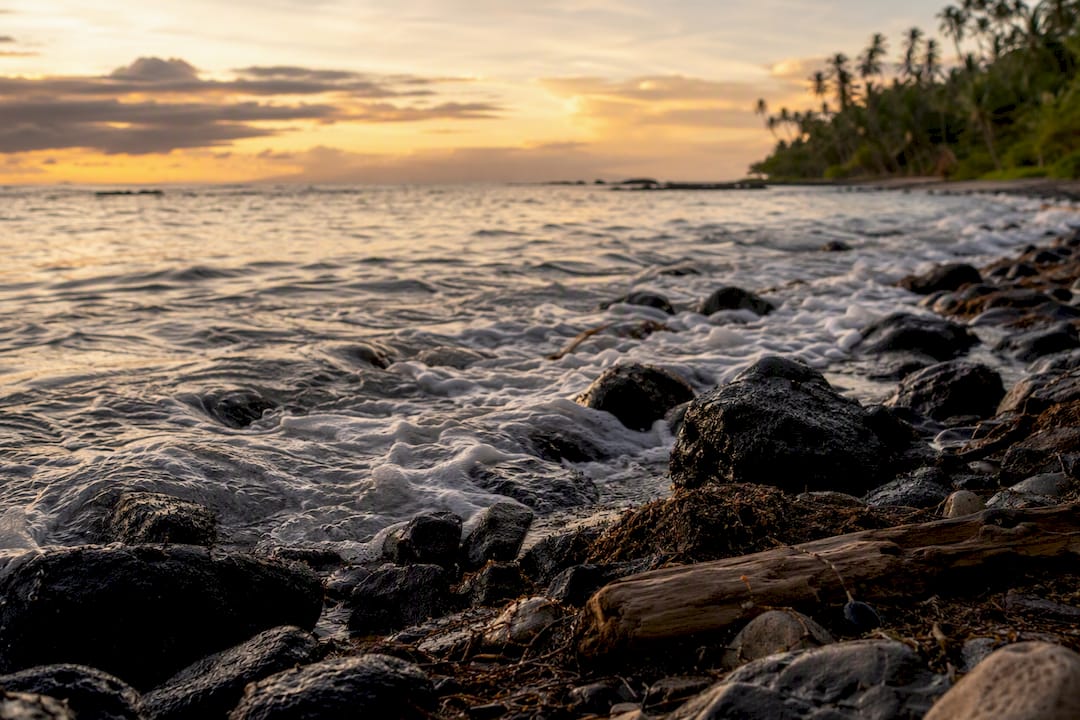
Where conventional advice falls short is in assuming you need the real thing, or a week-long vacation, to get anything out of it. The Buildings study on 90-second window breaks undercuts that assumption. So does the VR research showing EEG and HRV changes from a headset, not a beach. If you're waiting for a big trip to "finally relax," you're missing the smaller, repeatable version of the same mechanism sitting in a photo, a video, or a well-placed window.
If I had to prioritize one thing from all of this, it's proportion of view over frequency of exposure. A short, deliberate look at a wide stretch of water seems to matter more than a passive glance at a sliver of ocean for hours. Seek out the biggest, clearest view you can get, even briefly, over a lesser view held longer.
Sources
- Ocean views linked to better mental health | ScienceDaily
- The impact of virtual images of coastal landscape features on stress recovery based on EEG | Scientific Reports (2025)
- What Are the Health Benefits of Viewing Water? | UC Davis
- Visual Stimulation by Viewing a Seascape from a High-Rise Window Increases Subjective Relaxation and Left–Right Differences in Prefrontal Cortex Activity | Buildings (2026)