
Privacy is the defining amenity of modern luxury stays. It delivers autonomy, discretion, and the confidence to actually relax, and that confidence is what separates a good hotel room from a getaway you remember for years. The role of privacy in luxury stays now sits on three axes: physical seclusion, operational discretion, and digital data protection. Each one matters, and skipping any of them leaves a gap a guest will feel even if they can't name it.
- Physical: private entrances, soundproofing, arrival invisibility
- Operational: staff choreography, discreet service timing, confidentiality
- Digital: encrypted systems, limited data access, privacy by design
What follows breaks down why this shift happened, what it looks like on the ground, and how to ask the right questions before you book.
Key Takeaways
Privacy now functions as a core luxury amenity, built from physical seclusion, operational discretion, and digital data protection working together.
| Point | Details |
|---|---|
| Privacy is three-part | Evaluate any property on physical seclusion, operational discretion, and digital data protection together. |
| Arrival invisibility matters | Ask how check-in and transfers work before booking; a public lobby check-in undercuts everything else. |
| Digital controls are non-negotiable | Confirm network segregation and staff data-access policies, not just physical door locks. |
| Ask specific booking questions | Confidentiality training, service windows, and photography rules reveal a property's real privacy practices. |
| Luana Inn delivers scale-based privacy | Its private entrances, private bathrooms, and small footprint build seclusion into the property itself. |
Table of Contents
- The Role of Privacy in Luxury Stays: Why It Matters Now
- Physical and Architectural Privacy Features to Look For
- Digital Privacy and Privacy by Design in Guest Systems
- How to Evaluate Privacy Before You Book
- Luana Inn: A Boutique Approach to Privacy-First Hospitality
- What Privacy-First Travel Actually Looks Like in Practice
- Book a Privacy-First Stay at Luana Inn
- Sources
The Role of Privacy in Luxury Stays: Why It Matters Now
Something changed in how affluent travelers define a good trip. It's no longer about the biggest suite or the most staff on call. It's about who gets to see you arrive, what happens to your data, and whether you can move through a property without being watched. This is the trend behind "quiet luxury": low-density estates, private villas, and a deliberate pullback from flamboyant, high-visibility hospitality toward controlled, quiet depth.
The psychological payoff is real and specific. Privacy hands guests back a sense of autonomy: the ability to decide when to engage and when not to, without a performative version of themselves on display, which is why high-end properties need specialist management to maintain such operational discretion. That is why arrival invisibility — a transfer and check-in process that never puts a guest in a public queue — has become a top request among ultra-luxury travelers, alongside private dining routes that bypass shared spaces entirely.
Five practical pillars now define what privacy actually means at a high-end property:
- Time — control over your own schedule, with no imposed rhythm
- Calm — an environment engineered to lower stimulation, not add to it
- Control — the ability to say yes or no to interaction
- Discretion — staff who see everything and mention nothing
- Data Security — protection that extends past the front door into your devices
Physical and Architectural Privacy Features to Look For
Privacy starts before you ever unpack. It starts with how you arrive.
- Private transfers and arrival invisibility. The best properties route guests directly from airport to room, skipping shared lobbies and public check-in desks entirely.
- Low-density site design. Fewer rooms per acre means fewer sightlines into your terrace, pool, or window.
- Visual shielding. Hedgerows, elevation changes, and staggered building placement keep neighboring guests from ever seeing into your space.
- Private pools and terraces. A shared pool deck undercuts privacy no matter how nice the room is behind it.
- Acoustic separation. Real soundproofing between units, not just distance, keeps conversations and footsteps from carrying.
- Service-timing protocols. Housekeeping and turndown scheduled around guest movement, not around staff convenience, so paths never cross.
Pro Tip: Ask a property directly how check-in works for guests who prefer not to pass through a shared lobby. The answer tells you more about their actual privacy practices than any marketing page will.
This is where boutique properties often outperform sprawling resorts. Fewer rooms mean fewer opportunities for overlap, and smaller-scale hospitality tends to build privacy into the architecture rather than bolting it on with a "do not disturb" sign.

Digital Privacy and Privacy by Design in Guest Systems
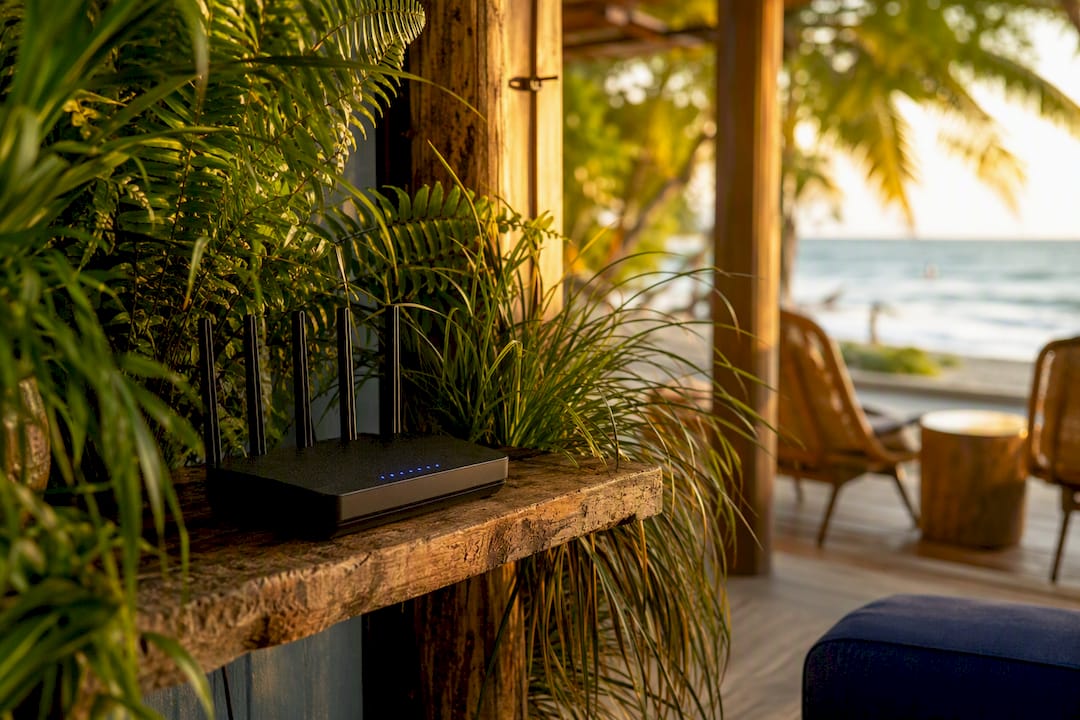
A locked door means nothing if the property's Wi-Fi network, guest app, or staff portal is porous. Affluent travelers increasingly evaluate hospitality brands the way they'd evaluate a bank: by how carefully they secure personal data and movement patterns, not just how nice the linens are.
The technical backbone of real digital privacy includes a handful of specific controls:
- Network segregation — guest devices sit on isolated connections, separate from staff and back-office systems
- Per-room encryption keys for any connected room technology, so one breach doesn't expose the whole property
- Role-based staff access, meaning a front-desk employee can't casually browse a guest's full profile or stay history
- Ongoing monitoring for unusual access patterns, not just a firewall installed once and forgotten
The stakes are higher than most travelers realize. The IBM Cost of a Data Breach Report shows breach costs run high across industries, and hospitality's mix of payment data, ID scans, and behavioral profiles makes it a frequent target. Before you book, it's worth asking directly what happens to your data once you check out, whether third parties get any access to it, and how a property's guest app handles location or payment information. A vague answer is itself useful information.
How to Evaluate Privacy Before You Book
Most privacy failures aren't dramatic. They're small operational gaps that add up: a shared elevator bank, a staff member who mentions your name to another guest, a check-in that happens in full view of a lobby. Catching these before you book beats discovering them mid-stay.
- Ask how arrival and check-in actually work. Does it happen in a private suite, or at a public desk?
- Ask about private dining routes. Can meals happen in-villa or on a private terrace, away from shared dining rooms?
- Ask about staff access policies. Who can see your reservation details, and is that access logged?
- Ask about social media and photography rules. Does the property restrict staff from posting guest-adjacent content?
- Ask about confidentiality training. Is discretion a written policy staff are trained on, or just an assumption?
- Ask about service windows. Are housekeeping and turndown scheduled to avoid overlapping with your presence?
Pro Tip: If a property can't answer a specific question about staff data access within a day, treat that hesitation as your answer. Genuine privacy-first operations have these policies memorized, not filed away.
Red flags worth walking away from: shared check-in desks with no alternative offered, staff who volunteer details about other guests unprompted, or a property that can't explain what its guest Wi-Fi network actually isolates.
Luana Inn: A Boutique Approach to Privacy-First Hospitality
Luana Inn sits in the foothills above Kealakekua Bay, and its scale does most of the privacy work before any policy kicks in. A small number of rooms, each with a private entrance and private bathroom, means none of the overlap that larger resorts have to engineer around after the fact.
- Private entrances and bathrooms remove the shared-hallway problem entirely
- A quiet, low-traffic setting on Napo'opo'o Road limits outside foot traffic and noise
- Farm-to-table breakfast and wellness offerings (spa treatments, an infrared sauna, a chlorine-free pool) can be scheduled around a guest's own rhythm rather than a fixed dining hour
Privacy at this scale isn't a feature added on top of a stay. It's the natural result of fewer rooms, fewer strangers, and a setting built around quiet mountain and ocean views instead of shared amenities.
That structure maps directly onto the physical axis of privacy this article opened with, and it's part of why boutique personalized travel experiences tend to deliver more genuine seclusion than properties with hundreds of rooms competing for the same pool deck.
What Privacy-First Travel Actually Looks Like in Practice
Not every trip needs the same level of seclusion. A milestone anniversary probably calls for arrival invisibility and private dining; a wellness reset might just need a quiet room and a schedule nobody else controls. The mistake I see travelers make is treating privacy as all-or-nothing, when it's really a dial you set based on what the trip is for.
Privacy doesn't have to mean isolation, either. It's the freedom to choose when to connect and when not to. Before your next booking, ask yourself what you actually want more control over: your schedule, your data, or simply who sees you arrive.
— Nicole
Book a Privacy-First Stay at Luana Inn
There's a real gap between what a five-star resort promises on privacy and what it delivers once you're standing in a shared lobby with forty other check-ins. Luana Inn skips that gap by design: a small property with private entrances, private bathrooms, and a setting where the loudest thing you'll hear is the wind coming off Mauna Loa.

The property's wellness packages pair spa treatments and infrared sauna sessions with a schedule you control, not one dictated by a resort's dining hours or activity board. If seclusion and a genuinely quiet setting matter more to you than a big-brand name, take a look at available rooms and check dates for your next stay.
Sources
- The New Luxury Status Symbol in 2026 Isn’t a Car. It’s Privacy - JustLuxe
- Balancing technology and human interaction in luxury hospitality: can AI enhance the guest experience without compromising the essence of service? - Metalab / ESSEC
- Quiet luxury hospitality: from flamboyance to quiet depth and meaning - Accor