
Plant-based travel dining means choosing whole-food, plant-forward meals while you're on the road and planning practical ways to get them wherever you go. Whether you're flying across the country or road-tripping along the coast, eating whole-food plant-based (WFPB) while traveling is absolutely doable with a little prep.
Here's your quick-start checklist before you leave home:
- Book your airline special meal at least 48–72 hours before departure (most carriers require this window).
- Pack a travel pantry with shelf-stable staples: rolled oats, nut butter packets, dried fruit, and roasted seeds.
- Download HappyCow to find vegan and vegan-friendly restaurants at your destination before you land.
- Notify your lodging of your dietary needs when you book, not the night before you arrive.
- Review TSA carry-on food rules so spreads and liquids don't get flagged at security.
- Check state agricultural restrictions if you're heading to Hawaii or another protected ecosystem.
Pro Tip: Book your airline's special vegan or plant-based meal option the moment you purchase your ticket. Many airlines close the special-meal window 24–48 hours before departure, and some require even more lead time.
Key Takeaways
Plant-based travel dining works best when you plan before you leave, pack a small pantry, and communicate your needs clearly to airlines, lodging, and restaurants.
| Point | Details |
|---|---|
| Book airline meals early | Request the vegan meal (VGML) at ticket purchase; most airlines close the window 24–48 hours before departure. |
| Know your TSA limits | Solid foods are generally allowed carry-on; spreads and gels must follow the 3.4 oz/100 mL rule. |
| Use HappyCow to find options | Search by city before you land and save results offline for use without data. |
| Notify lodging in advance | Send a written request at booking; give the kitchen several days' notice to source local plant-based produce. |
| Luana inn as a plant-friendly stay | Luana inn in Captain Cook, Hawaii offers farm-to-table breakfasts and wellness packages for guests who request plant-based meals at booking. |
Table of Contents
- What does plant-based travel dining actually mean?
- How to plan and pack for plant-based eating on any trip
- Simple WFPB meals you can make with almost no kitchen
- Nutrients to watch and food-safety basics on a plant-based trip
- How to get your hotel or B&B to actually feed you well
- The best tools and resources for plant-based travelers
- Why choosing plant-based meals while traveling matters beyond your plate
- A host's perspective on feeding plant-based guests well
- Wake up to a farm-to-table plant-based breakfast at Luana inn
- Sources
What does plant-based travel dining actually mean?
The phrase gets used loosely, so it's worth drawing a clear line. Plant-based travel dining, in the whole-food sense, means eating meals built around vegetables, fruits, legumes, whole grains, nuts, and seeds with minimal processing and no animal products. That's different from simply ordering anything labeled "vegan" on a menu.
Processed vegan food (think vegan cheese puffs, plant-based fast-food patties, or coconut-oil-heavy restaurant dishes) technically qualifies as vegan but misses the whole-food goal. When you're traveling, the distinction matters because processed options are everywhere and it's easy to default to them out of convenience.
Whole-food plant-based meals you'll actually find while traveling:
- A grain bowl with brown rice, roasted chickpeas, steamed greens, and tahini
- Lentil soup with crusty whole-grain bread (common in Mediterranean and Middle Eastern spots)
- Tofu bibimbap ordered without fish sauce or egg (ask specifically)
- Black bean tacos on corn tortillas with fresh salsa and avocado
- Oatmeal with fresh fruit and a handful of walnuts from a hotel breakfast bar
- A farmers market haul: cherry tomatoes, hummus cups, whole-grain crackers, and an apple
- Sushi rolls with cucumber, avocado, and pickled vegetables (hold the mayo)
The hidden-ingredient problem is real. Fish sauce sneaks into Thai and Vietnamese dishes, ghee into Indian breads, dashi into Japanese broths, and honey into dressings you'd never suspect. The Vegan Society's travel guidance recommends carrying a "vegan passport," a pictorial translation card that shows what you do and don't eat, to navigate menus in any language.
Pro Tip: When you sit down at a restaurant, ask your server two questions before ordering: "Is this dish cooked in butter or animal fat?" and "Does the sauce contain fish sauce, oyster sauce, or any seafood?" Those two questions catch the most common hidden ingredients.
How to plan and pack for plant-based eating on any trip
Good plant-based travel dining starts at home, not at the airport. Here's a prioritized sequence to work through before and during your trip.
Before you leave
- Research your destination's plant-based dining scene. Search HappyCow for your arrival city and bookmark 3–5 restaurants. Check Google Maps for nearby grocery stores and any farmers markets running during your stay.
- Book accommodations that can cook for you. Small inns and B&Bs often accommodate plant-based diets more readily than large hotels. Benefits of staying at a bed and breakfast include flexible meal arrangements that big-chain properties rarely offer.
- Request your airline special meal. Log into your booking, find the special meal section, and select the vegan meal (VGML) or raw vegan meal (RVML) option. PETA's vegan travel guide notes that Korean Air is among the carriers offering multiple distinct vegan meal selections on certain routes.
- Notify your lodging in writing. Send a brief email at booking and follow up three days before arrival. More on the exact script below.
- Assemble your travel pantry. Pack the items below in your carry-on or checked bag.
Your plant-based travel pantry
| Item | Why it travels well | TSA/Ag note |
|---|---|---|
| Single-serve nut butter packets | No refrigeration, high protein | Solid: carry-on OK |
| Rolled oats (zip-lock bag) | Breakfast anywhere with hot water | No restrictions |
| Roasted chickpeas or edamame | Crunchy, filling snack | No restrictions |
| Dried mango or dates | Natural sugar boost | No restrictions |
| Nutritional yeast (small shaker) | B12 source, adds flavor | No restrictions |
| Tamari packets | Flavor boost for plain meals | Liquid: 3.4 oz or less |
| Hummus (store-bought, sealed) | Protein-rich spread | Gel rule applies: 3.4 oz or less |
The TSA's 3-1-1 liquids rule applies to spreads and gels, including hummus. Keep any liquid or gel-like food in containers of 3.4 oz (100 mL) or less, all fitting in one quart-sized clear bag. Solid foods like whole fruit, nuts, and oats pass through without issue.
Hawaii travelers: The USDA's APHIS Hawaii agricultural restrictions page lists fruits, plants, and other items you cannot bring onto the island. Fresh produce from the mainland may be restricted to protect Hawaii's ecosystems. Check the list before you pack any fresh items.
When options run short
Travel delays happen. When they do, your best fallback is a grocery store, not a vending machine. Most Whole Foods, Trader Joe's, and regional co-ops stock ready-to-eat grain salads, pre-washed greens, canned beans, and fresh fruit. A portable travel pantry with a small spork and a reusable container lets you turn those grocery finds into a real meal in minutes.
Pro Tip: Save the offline map of your destination in Google Maps before you board. When your flight lands late and your data is spotty, you'll still be able to find the nearest grocery store.
Simple WFPB meals you can make with almost no kitchen
You don't need a full kitchen to eat well. These five assembly ideas work in a hotel room, a B&B suite, or a vacation rental with just a kettle and a spoon.
- Overnight oats in a mason jar. Combine rolled oats, plant milk (shelf-stable carton), chia seeds, and sliced banana. Seal and refrigerate overnight. Add a drizzle of maple syrup in the morning.
- Grain bowl from the grocery store. Pick up pre-cooked brown rice or quinoa, a can of black beans (rinse in the bathroom sink), fresh avocado, and salsa. Layer in a container and eat at room temperature.
- Peanut butter banana rice cakes. Three ingredients, zero cooking. Spread natural peanut butter on brown rice cakes, top with banana slices, and finish with a sprinkle of cinnamon.
- Lentil soup from a carton. Many grocery stores carry shelf-stable lentil or black bean soup in cartons. Heat in a kettle-safe mug (pour boiling water over the soup in a heat-safe bowl if no microwave is available) and pair with whole-grain crackers.
- Farmers market plate. Cherry tomatoes, cucumber slices, hummus, olives, and a piece of whole-grain bread. No cooking, no containers to wash.
For flavor on the road, pack a few hot sauce packets, a small bottle of apple cider vinegar, and tamari packets. Those three condiments transform bland hotel-room meals into something you'd actually want to eat.
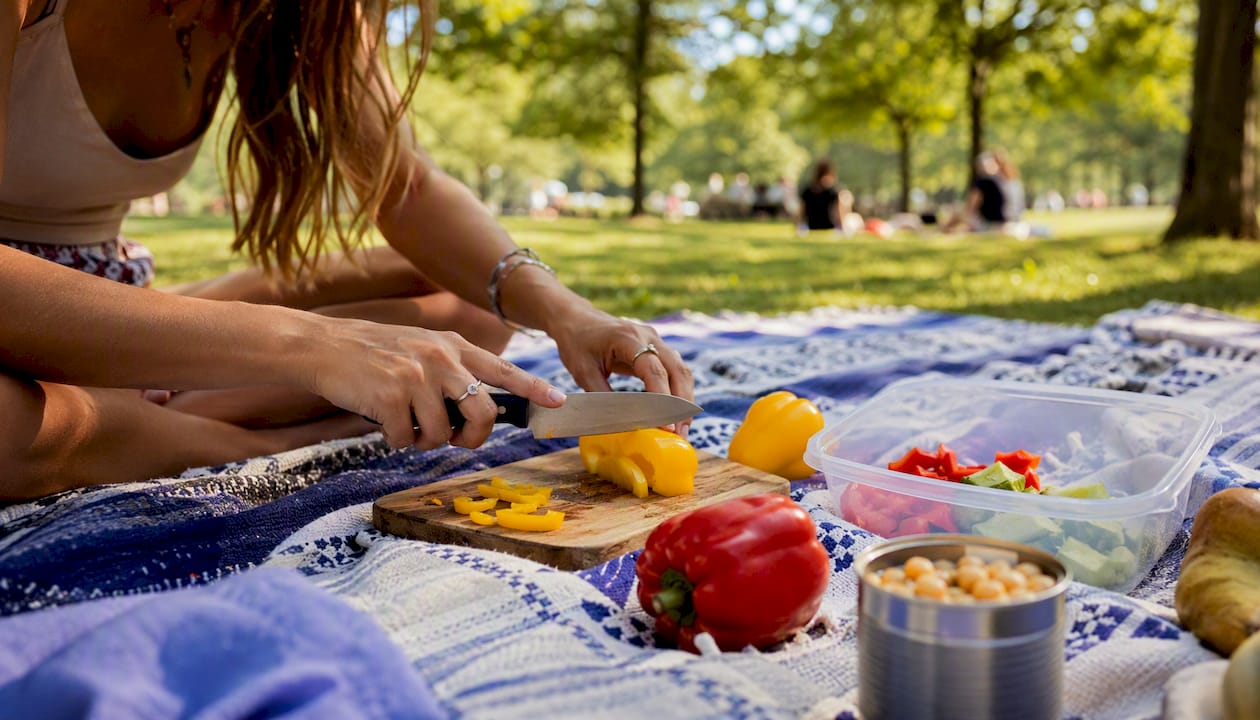
Pro Tip: A reusable silicone bag and a small cutting board weigh almost nothing and make grocery-store meal prep dramatically easier. Add a bamboo spork and you're set for any situation.
Nutrients to watch and food-safety basics on a plant-based trip
Eating WFPB on the road is healthy, but a few nutrients need deliberate attention when you're away from your normal routine.
Key nutrients to monitor:
- Vitamin B12: Not found in plant foods. Nutritional yeast is a travel-friendly source; a B12 supplement is the most reliable backup.
- Vitamin D: Sunlight helps, but supplementation is often needed, especially in winter or northern climates.
- Iron: Pair iron-rich foods (lentils, spinach, pumpkin seeds) with vitamin C (citrus, bell pepper) to improve absorption.
- Calcium: Fortified plant milks, tofu, and leafy greens are your best sources when dairy is off the table.
- Protein: Legumes, edamame, tofu, tempeh, and seeds cover this well if you're eating varied whole foods.
- Iodine: Often overlooked. Seaweed snacks or iodized salt fill the gap when you're not eating seafood.
Food safety matters just as much as nutrition. At restaurants, ask whether plant-based dishes are prepared on shared surfaces or in shared oil with meat or fish. Cross-contamination is common in busy kitchens. When you're storing grocery-store meals in your room, use the mini-fridge and consume refrigerated items within 24 hours.
The processed-vegan trap is the biggest trade-off to watch for. Vegan convenience foods are everywhere now, but many are high in sodium, refined oils, and additives. They're fine as an occasional fallback, but leaning on them for an entire trip leaves you feeling sluggish rather than energized.
This guide is general information, not a substitute for personalized medical or dietary advice. Consult a registered dietitian or your clinician before making significant changes to your diet or supplement routine, especially while traveling.
How to get your hotel or B&B to actually feed you well
Most properties will accommodate plant-based diets when you give them enough notice. Forbes reports that plant-based vacations are going mainstream and that hospitality professionals consistently recommend early communication as the single most effective way to get meals that meet your expectations.
Giving a kitchen several days' notice allows them to source local, seasonal produce and plan a balanced WFPB menu rather than improvising with whatever's on hand.
Sample email script (send at booking):
Questions to ask the kitchen or front desk:
- Are plant-based dishes prepared separately from meat and fish?
- Does the cooking oil contain butter or animal fat?
- Can oatmeal or a grain-based breakfast be prepared without dairy milk?
- Is there a farmers market or local produce supplier you source from?
For restaurants, a brief phone call the day before your reservation goes a long way. Ask to speak with the chef or kitchen manager, not just the host. Most chefs appreciate the heads-up and will prepare something genuinely good rather than a last-minute afterthought.
Luana inn, set on an eco-friendly property in Captain Cook, Hawaii, is an example of a small lodging that prepares farm-to-table breakfasts using local produce. Properties like this, where the kitchen is small and the host is hands-on, tend to be the most responsive to personalized dietary requests.
Pro Tip: When you call a restaurant, say "I have a food allergy" rather than just "I'm vegan." Kitchens treat allergy requests with stricter cross-contamination protocols, which benefits you even if your restriction is ethical rather than medical.
The best tools and resources for plant-based travelers
You don't need to figure this out alone. These resources solve specific on-trip problems fast.
- HappyCow: The go-to directory for vegan and vegan-friendly restaurants worldwide. Search by city, filter by "vegan only" or "vegan-friendly," and read user reviews before you commit to a spot. The app works offline if you save your search.
- TSA food guidance: The official page for what you can bring in carry-on and checked bags. Bookmark it before every flight.
- TSA liquids rule: The definitive source for the 3-1-1 rule. Check it if you're unsure whether a spread, sauce, or condiment will pass security.
- USDA APHIS Hawaii page: Required reading before bringing any fresh produce or plants to Hawaii.
- Airline special-meal pages: Search "[airline name] special meal request" to find the booking portal. Korean Air, among others, offers multiple vegan meal options on select routes.
- Vegan Society travel resources: Includes the vegan passport tool, which translates your dietary needs into dozens of languages.
- UNCHAINED TV plant-based travel guide: Covers digital tools, social media strategies, and local vegan group resources for finding up-to-date dining options.
- Local Facebook groups and Reddit communities: Search "[city name] vegan" for real-time tips from locals who know which restaurants actually deliver on their plant-based menus.
Why choosing plant-based meals while traveling matters beyond your plate
Every plant-based meal you choose on the road carries a smaller environmental footprint than its animal-based equivalent. Plant-forward diets generally require less land, less water, and produce fewer greenhouse gas emissions than diets centered on meat and dairy. When you're traveling, that choice ripples outward: you support local farms and markets that grow food without the resource intensity of animal agriculture, and you signal to restaurants and hotels that plant-based demand is real and growing.
There's an ethical dimension too. Sourcing meals from local farmers markets or farm-to-table properties means your food dollars go directly to growers rather than industrial supply chains. Eco-lodging properties that source local, seasonal produce extend that benefit further, connecting your stay to the land around you in a way that a chain hotel breakfast simply can't.
Plant-based travel dining also tends to align naturally with the kind of travel that feels good: slower, more intentional, more connected to place. Stopping at a farmers market, cooking a simple meal from local ingredients, or sitting down at a restaurant that actually knows where its food comes from makes the trip richer, not just the diet.
A host's perspective on feeding plant-based guests well
The guests who eat best at a small inn are almost never the ones who show up and hope for the best. They're the ones who sent a quick note at booking, described what they love to eat, and gave the kitchen a few days to think.
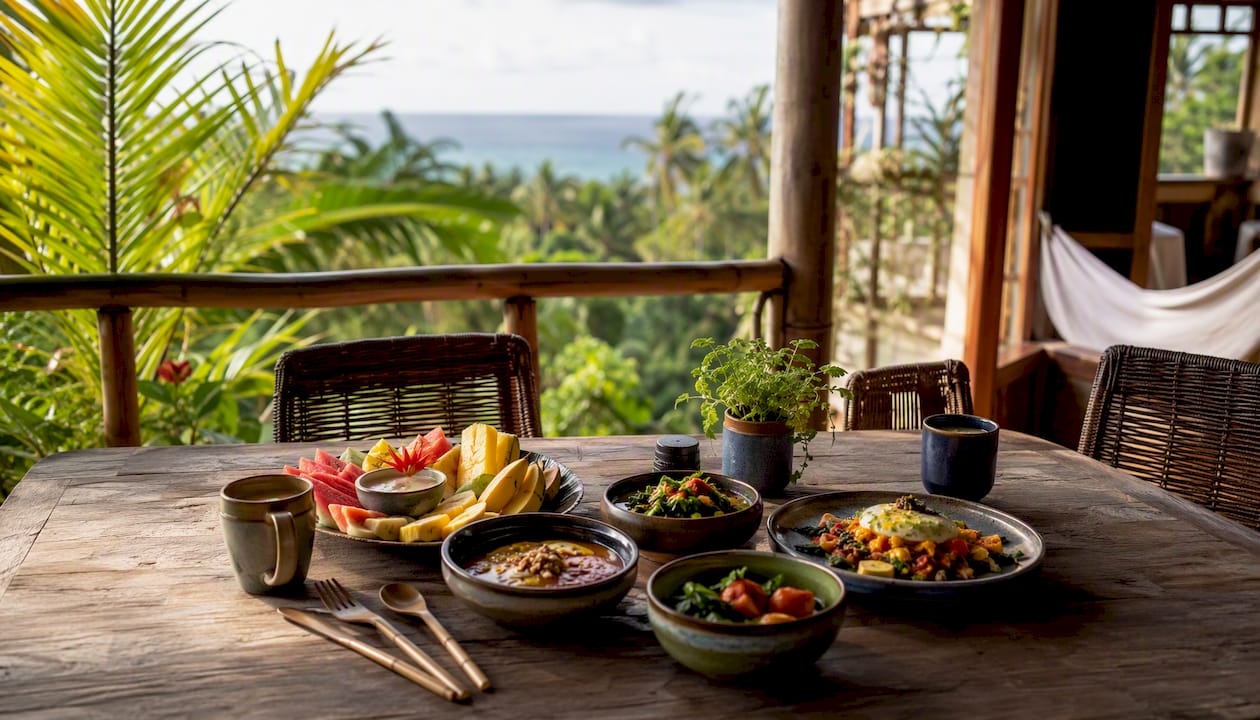
When a kitchen knows a guest follows a whole-food plant-based diet, the breakfast stops being a problem to solve and becomes something genuinely fun to prepare. A sample WFPB breakfast menu at a farm-to-table B&B might look like this:
- Fresh fruit plate with local papaya, mango, and pineapple
- Savory oat porridge with sautéed greens, roasted cherry tomatoes, and pumpkin seeds
- Whole-grain toast with smashed avocado and a squeeze of lemon
- Herbal tea or cold-brew coffee with oat milk
That menu takes about 20 minutes to prepare and uses ingredients most small properties already have or can source locally. The difference between a guest who gets this and a guest who gets a sad bowl of plain oatmeal is almost always the advance conversation.
What surprises most plant-based travelers is how willing small properties are to go the extra mile when asked directly and warmly. A B&B host who grows herbs in the garden or sources eggs from a neighbor's farm is usually delighted to redirect that same care toward a beautiful plant-based plate.
Wake up to a farm-to-table plant-based breakfast at Luana inn
Luana inn, perched above Kealakekua Bay on the Big Island of Hawaii, serves farm-to-table breakfasts that draw on the island's extraordinary local produce. Guests who notify the inn of their whole-food plant-based preferences at booking receive breakfasts built around fresh tropical fruit, local greens, and whole grains sourced from the surrounding region.
Beyond breakfast, Luana inn's wellness packages pair plant-friendly meals with spa treatments, infrared sauna sessions, and yoga amenities on an eco-friendly property that takes its connection to the land seriously. If you're looking for a stay where your dietary values are met without negotiation, check availability and book your room at Luana inn to start planning a trip that nourishes you from the first morning meal.
Sources
- Vegan Vacations: How Plant-Based Travelers Are Going Mainstream In 2023
- TSA liquids rule
- TSA: What food can I bring?
- HappyCow — Find Vegan & Vegetarian Restaurants Near Me
- Vegan Lifestyle | Vegan Travel | Vegan Abroad